Veneto packs more variety into one region than almost anywhere in Europe. You can ride a gondola through Venice's canals, hike the Dolomites, sip Prosecco on a UNESCO-listed hillside, watch opera in a 2,000-year-old Roman amphitheatre, swim in Italy's largest lake, and tour Renaissance villas designed by Andrea Palladio — often all in the same week.
This guide covers 24 of the best things to do in Veneto, organised by city and experience type. We include practical tips on opening hours, ticket prices, avoiding queues, and how to book carbon-positive accommodation through IMPT — where every hotel stay removes 1 tonne of CO₂ at the same price as Booking.com.
Venice — The Lagoon City
1. St Mark's Square & Basilica
Napoleon called Piazza San Marco "the drawing room of Europe" — and it is hard to argue. The square is dominated by St Mark's Basilica, whose 8,500 square metres of gold-ground Byzantine mosaics were created between the 11th and 13th centuries. The Pala d'Oro altarpiece, studded with 1,300 pearls and hundreds of precious stones, is one of the most valuable liturgical objects in Christendom. Climb to the Loggia dei Cavalli for close-up views of the four bronze horses that once stood in Constantinople's Hippodrome. The Campanile (bell tower, €10) offers the best 360-degree view of Venice and the lagoon. The Doge's Palace (€30 combined ticket including museums) lets you walk through the apartments of the Venetian doges and cross the Bridge of Sighs to the historic prisons. Pro tip: visit early morning (8:30am) for near-empty basilica and square.
2. Doge's Palace & the Bridge of Sighs
The Doge's Palace (Palazzo Ducale) was the seat of Venetian government for over 1,000 years. Its pink-and-white Gothic facade faces the lagoon entrance. Inside, the grand council chamber contains Tintoretto's Paradise, the largest oil painting on canvas in the world (7m x 22m). The Secret Itineraries tour (€30, 75 minutes) takes you through Casanova's prison cell and the hidden passages used by the Council of Ten. The Bridge of Sighs connects the palace to the New Prisons — named for the prisoners' last view of Venice before incarceration. Skip-the-line tickets are essential in high season.
3. Grand Canal Gondola Ride & Rialto Bridge
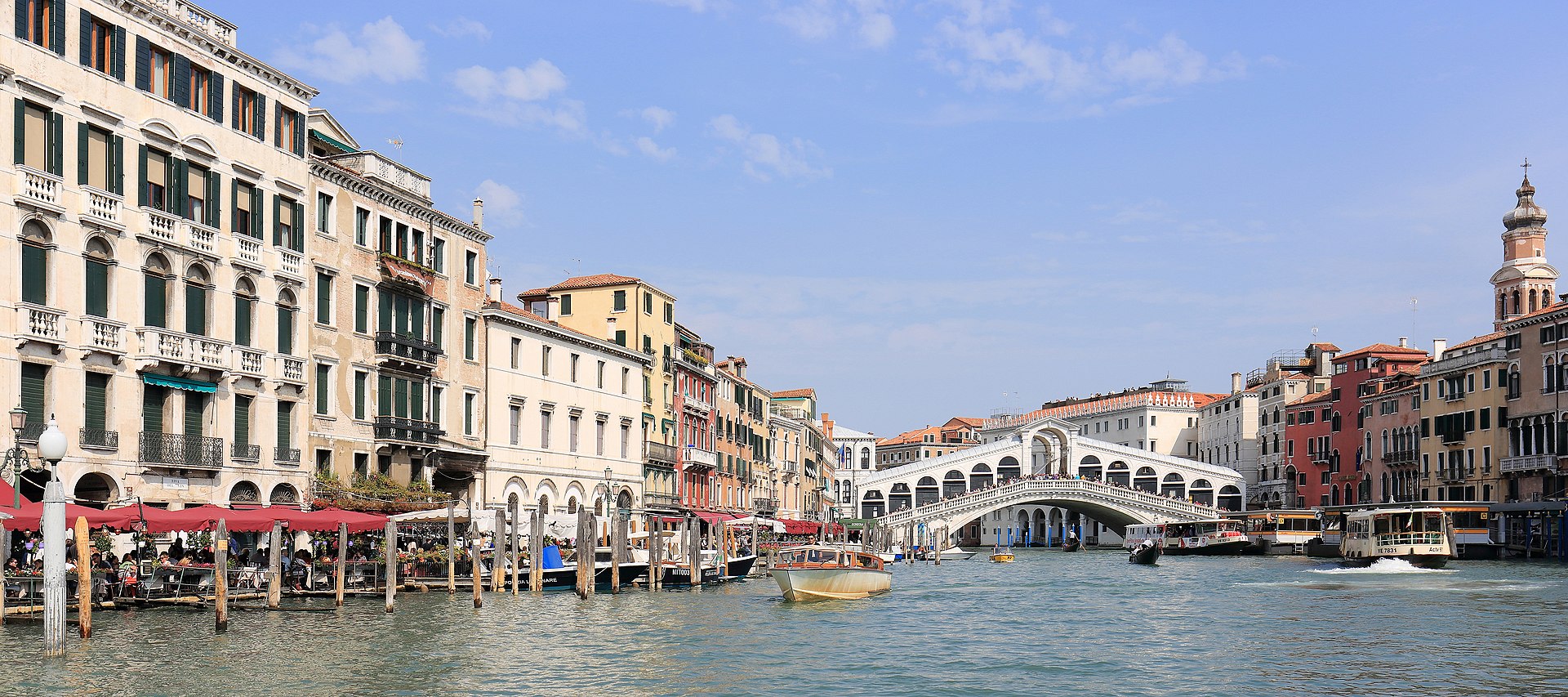
A gondola ride on the Grand Canal is a quintessential Venetian experience. Official rates are €80 for 30 minutes (daytime, up to 5 passengers) and €100 after 7pm. Always agree the route and price beforehand. For a cheaper alternative, use the traghetto (€2) — a stripped-back gondola that ferries passengers across the Grand Canal at seven points between railway station and St Mark's. The Rialto Bridge, built in 1591, is the oldest of Venice's four Grand Canal bridges and the most recognisable. The Rialto Market (morning fish market, vegetable market, Tuesday to Sunday mornings) is a feast for the senses and much more authentic than the souvenir stalls on the bridge itself.
4. Murano & Burano — The Lagoon Islands
A vaporetto ride (line 4.1 or 4.2 from Fondamente Nove) takes 15 minutes to Murano, the glass-blowing island. Watch master glassmakers at work in historic furnaces (free demonstrations at Mazzega, Berengo, or Formia). Visit the Glass Museum (€15) to see 4,000 years of glass art. Continue to Burano (vaporetto line 12, 40 minutes from Murano) for the most photogenic streets in Italy — brightly painted fishermen's houses in every colour of the rainbow. Complete your lagoon tour on Torcello, the original Venetian settlement, to see the 7th-century Cathedral of Santa Maria Assunta with its stunning 11th-century Byzantine mosaics of the Last Judgment. Combined vaporetto day pass: €25.
5. Peggy Guggenheim Collection
Housed in the Palazzo Venier dei Leoni on the Grand Canal in Dorsoduro, this is one of Europe's finest collections of 20th-century modern art. The collection includes works by Picasso, Kandinsky, Pollock, Dalì, Magritte, and Chagall, set on the Grand Canal with a terrace that was once the home of Peggy Guggenheim herself. The sculpture garden overlooks the canal. Admission €16. Open daily 10am–6pm except Tuesdays. The Dorsoduro neighbourhood around the gallery is Venice's best district for bacaro-hopping after your visit.
Verona — The City of Romance
6. Verona Arena & Opera Season
Built in AD 30, the Verona Arena is the third-largest Roman amphitheatre in Italy and one of the best preserved. Its 44 tiers of pink-and-white Veronese marble originally seated 30,000 spectators. Every June to September, it hosts spectacular open-air opera productions — Aida, Carmen, La Traviata, Nabucco — performed on a stage that fills the entire arena. Daytime visits (€10) let you explore the interior. Evening opera tickets range from €25 (upper tiers) to €220+ (marble steps close to the stage). Bring a cushion for the stone seats. Book 3–6 months ahead for popular performances. The arena is also a UNESCO World Heritage Site as part of the City of Verona.
7. Juliet's House & Balcony
The 13th-century house at Via Cappello 23 is Verona's most-visited landmark — the supposed home of Shakespeare's Juliet. The famous balcony was added in the 20th century, but the courtyard with its bronze Juliet statue draws visitors from around the world. Touching Juliet's right breast is said to bring luck in love. The interior museum (€6) displays Renaissance costumes, period furniture, and thousands of love letters addressed to Juliet. Arrive early morning (before 9am) to avoid the queues. Free to enter the courtyard. The nearby Piazza delle Erbe, built on the Roman forum, is Verona's most beautiful market square.
8. Piazza delle Erbe & the Roman Forum
In Roman times this was Verona's forum; today it is the city's most beautiful piazza, surrounded by medieval and Renaissance buildings with a central market of fruit, vegetable, and souvenir stalls. Notable features include the Madonna Verona fountain (1368), the Capitello (a medieval column where officials read decrees), the Torre del Gardello, and the painted facades of the Case Mazzanti. The adjacent Piazza dei Signori, Verona's government square, features a statue of Dante and the 14th-century Palazzo della Ragione. Climb the Torre dei Lamberti (84 metres, €6) for panoramic city views.
9. Valpolicella Wine Tour
Twenty minutes north of Verona, the Valpolicella Classica hills are one of Italy's great wine regions. Visit cantinas like Allegrini, Masi, or Tommasi for tastings of Amarone, Valpolicella Ripasso, and Recioto della Valpolicella. The vineyards are set among cypress trees, medieval villages, and Romanesque churches. The Valpolicella Wine Trail (Strada del Vino Valpolicella) is a well-marked route connecting the main producers. Tasting packages from €25 per person typically include 3–5 wines. Many cantinas require advance booking. Combine with a drive through the hills to the Santuario di San Giorgio before lunch at a family-run agriturismo.
Padua — Art, Science & Spirituality
10. Scrovegni Chapel — Giotto's Masterpiece
Padua's single greatest attraction is the Scrovegni Chapel (Cappella degli Scrovegni), a small 14th-century chapel whose interior is entirely covered by Giotto's fresco cycle — a revolutionary work that changed the course of Western painting. The 38 fresco panels tell the story of the lives of the Virgin Mary and Christ, painted by Giotto between 1303 and 1305. The deep blue sky, the Three Kings and the Mourning Christ scenes are among the most moving images in all of art. Book tickets months in advance (€15, including Museum of Eremitani). You enter in groups every 30 minutes, preceded by 15 minutes in the climate-controlled acclimatisation room.
11. Prato della Valle
One of Europe's largest public squares (90,000 m²), Prato della Valle is a stunning elliptical piazza surrounded by a canal lined with 78 statues of famous Paduans and dotted with a central green island known as Isola Memmia. The square was created in the 18th century on a marshy field and today serves as Padua's social heart — students from the nearby university (the second oldest in Italy, est. 1222) gather here on sunny afternoons. The adjacent Basilica of Santa Giustina is one of Italy's largest churches. The Saturday market on Prato della Valle is excellent for local produce and artisan goods.
12. Orto Botanico — World's Oldest Botanical Garden
Founded in 1545, the University of Padua's Botanical Garden (Orto Botanico) is the oldest academic botanical garden in the world still in its original location. A UNESCO World Heritage Site, it contains over 3,500 plant species, including a Mediterranean palm that inspired the poet Giacomo Leopardi and a plane tree that was planted in 1680. Highlights include the four-part garden of medicinal plants (following the classification of 16th-century botanist Francesco Bonafede) and the modern biodiversity greenhouse. Entry €13. Allow 1–2 hours.
Dolomites & Belluno — Mountain Adventures
13. Tre Cime di Lavaredo Hike
The most iconic day hike in the Dolomites, the circular trail around the Tre Cime (Drei Zinnen) covers 10 km with 580 metres of ascent, taking 3–4 hours. Start from Rifugio Auronzo at 2,320 metres (accessed via a toll road from Misurina, €30). The trail passes Rifugio Lavaredo and Rifugio Locatelli (2,405 m), where the classic postcard view of the three towers reflected in the small Lago dei Tre Cime opens up. The path is well-marked and suitable for moderately fit walkers. Open late June to early October. Arrive before 9am for parking. Pack layers, sun protection, and 1 litre+ of water.
14. Cortina d'Ampezzo & Dolomiti Superski
Cortina d'Ampezzo is the queen of the Dolomites — a glamorous mountain town that hosted the 2026 Winter Olympics. In winter, Dolomiti Superski offers 1,200 km of connected ski runs across 12 resorts via the Dolomiti Superski pass. Cortina's own slopes include Tofana (cable car to 3,244 m), Faloria, and Cristallo. In summer, Cortina transforms into a hiking hub with direct access to the Alta Via 1 and Alta Via 2 long-distance trails, via ferrata routes, and mountain bike trails. The town centre has high-end shopping, excellent restaurants (try El Camineto or Al Camin), and a lively apres-ski scene.
15. Lago di Braies
Just across the provincial border in Trentino-Alto Adige but easily accessed from Veneto, Lago di Braies (Pragser Wildsee) is the most photographed lake in the Dolomites. The emerald-green lake sits at 1,494 metres beneath the jagged peaks of the Seekofel massif. Rowboat rentals (€22/hour) let you paddle to the far end for views of the mountains reflected in the still water. The lakeside walking trail (3.5 km, 1 hour) is flat and easy. Arrive before 8:30am in summer to avoid the crowds and secure parking. The drive from Cortina takes 45 minutes through stunning mountain scenery.
Prosecco Hills & Treviso — Wine Country
16. Strada del Prosecco — Wine Route
The Prosecco and Conegliano Valdobbiadene wine route (Strada del Prosecco) runs 50 km between the two towns through the UNESCO-listed DOCG hills. This is sacred ground for sparkling wine lovers — the steep, south-facing slopes produce the Glera grapes that become Italy's favourite bubbly. Visit cantinas like Bortolomiol, Nino Franco, Bisol, and Val d'Oca for tastings (€10–€35). The Cartizze cru, near Valdobbiadene, covers just 107 hectares of the best south-facing hill and produces the finest Prosecco. The Osteria Senz'Oste in the hills is a famous self-service honesty bar — take a bottle, leave the money. Best visited by car or bicycle. Treviso is the gateway city (30 min by train from Venice).
17. Treviso's Medieval Centre & Canals
Treviso is a miniature Venice — criss-crossed by canals lined with ochre, pink, and yellow houses, with medieval walls, Romanesque churches, and a much quieter atmosphere than Venice. The historic centre is compact and walkable. Highlights include the Palazzo dei Trecento (13th-century town hall), the Duomo with Titian's Annunciation, and the stunning frescoes by Tomaso da Modena in the Church of San Nicolò. The Cagnan canal (canel of the buraneli) through the fish market is one of the most photogenic spots in the Veneto. Treviso is also the home of tiramisù — try it at the original Le Beccherie restaurant.
Vicenza — Palladio's City
18. Basilica Palladiana & Palazzo Chiericati
Vicenza is the UNESCO-listed city of Andrea Palladio (1508–1580), the Renaissance architect whose design principles influenced neoclassical architecture across Europe and America. The Basilica Palladiana in Piazza dei Signori is Palladio's defining urban work — a 16th-century loggia wrapping a medieval palace with his signature double-height arcade. The Palazzo Chiericati houses the city's art museum with works by Tiepolo, Veronese, and Tintoretto. The Teatro Olimpico (€15) is the world's oldest surviving indoor theatre (1585), with remarkable forced-perspective stage scenery that creates the illusion of a Roman city.
19. Villa Rotonda & the Palladian Villas
Just outside Vicenza, Villa Rotonda (Villa Almerico Capra) is Palladio's most famous villa and one of the most influential buildings in architectural history. Its perfectly symmetrical plan with a central dome and four identical porticos served as the inspiration for Thomas Jefferson's Monticello and countless neoclassical buildings worldwide. The villa is open for guided visits (€10, Tuesdays and Saturdays only as it is privately owned). Other Palladian villas in the area include Villa Barbaro (with Paolo Veronese's frescoes, €10), Villa Emo (€8), and Villa Foscari (La Malcontenta, €10). A Palladian villa tour by bicycle from Vicenza is one of the best things to do in Veneto for architecture lovers.
Lake Garda — Eastern Shore
20. Monte Baldo Cable Car — Malcesine
The Malcesine–Monte Baldo cable car (Funivia Malcesine Monte Baldo) ascends 1,650 vertical metres in stages to the 2,218-metre summit of Monte Baldo, known as the Garden of Europe for its 800+ documented plant species. The panoramic views from the top stretch across Lake Garda 50 km to the south, with the Dolomites visible to the north and the Po Valley to the west. The ridge trail along the summit is an easy 3–4 km walk with minimal elevation gain. Open daily year-round (closed for maintenance 2–4 weeks in November). Round-trip €22. Allow 3–4 hours for the full experience including the summit walk.
21. Bardolino & Lazise — Medieval Lake Towns
Bardolino and Lazise are two of the best-preserved medieval towns on Lake Garda's eastern shore. Bardolino is famous for its light red wine (Bardolino DOC), produced from Corvina and Rondinella grapes. The Zeni Wine Museum (€7) offers a self-guided tour through wine history with tasting included. Lazise's 13th-century Scaliger Castle and medieval harbour are among the most romantic sights on the lake. Both towns have excellent lakefront promenades, seafood restaurants (try the catch-of-the-day grilled fish), and ferry connections to Garda, Sirmione, and Limone across the lake. Best visited May–October.
Rovigo & the Po Delta
22. Po Delta Regioneal Park
The Po Delta in southern Veneto is a UNESCO-recognised biosphere reserve and one of Italy's most important wetland ecosystems. The park covers 53,000 hectares of lagoons, riverine islands, dunes, and salt pans. Birdwatchers can spot flamingos, herons, egrets, cormorants, and (seasonally) ospreys and storks. Explore by bicycle on the network of flat cycle paths, by canoe through the narrow channels, or on a boat tour from Porto Tolle or Porto Viro. The Roman town of Adria (eponymous name-giver to the Adriatic Sea) is nearby. The best months are spring and autumn for bird migration and mild weather.
Suggested Itineraries
Day 1: St Mark's Square, Basilica & Doge's Palace. Afternoon gondola ride + cicchetti crawl. Evening: dinner in Cannaregio.
Day 2: Morning: Accademia Gallery + Peggy Guggenheim Collection. Afternoon: Murano glass-blowing + Burano photo walk.
Day 3: Morning: Rialto Market + Scuola Grande di San Rocco (Tintoretto's masterpiece). Afternoon: Dorsoduro exploration + sunset at Punta della Dogana.
Day 1: Arrive Venice, explore St Mark's Square, gondola ride. Book IMPT eco hotel in Cannaregio.
Day 2: Venice morning (Rialto Market + Doge's Palace). Afternoon train to Verona (70 min). Evening: Verona Arena (if opera season) or Piazza delle Erbe dinner.
Day 3: Verona morning (Arena, Juliet's House, Piazza delle Erbe). Afternoon: drive to Valpolicella for Amarone tasting or to Malcesine for Monte Baldo cable car.
Day 4: Drive to the Dolomites. Hike Tre Cime di Lavaredo or explore Cortina d'Ampezzo. Stay in a mountain eco lodge.
Day 5: Padua morning (Scrovegni Chapel + Prato della Valle). Afternoon: Vicenza (Basilica Palladiana) en route to Venice Airport.
Practical Tips for Visiting Veneto
- Book skip-the-line tickets: Essential for St Mark's Basilica (includes free entry to the basilica + skip the queue), Doge's Palace, and Scrovegni Chapel. Book official tickets at the respective websites.
- Venice transport: The vaporetto (water bus) is the only public transport. A 24-hour pass (€25) pays for itself after 3 trips. ACTV tickets can be bought at tabacchi, vaporetto stations, and online.
- Museums Pass: Venice's Museum Pass (€40, valid 6 months) covers Doge's Palace plus 11 civic museums. The Chorus Pass (€15) covers 16 Venetian churches with major art works.
- Verona Card: €25 (1 day) or €33 (3 days) covers the Arena, Juliet's House, Torre dei Lamberti, and other city museums.
- Train connections: Venice Santa Lucia to Verona Porta Nuova (70 min, from €15), to Padua (25 min, from €5), to Vicenza (45 min, from €8). Use Trenitalia or Italo high-speed services.
- Car rental: Recommended for the Prosecco hills, Valpolicella, and Dolomites. Book through IMPT's partner network for carbon-positive travel.
Sustainable Travel Across Veneto
Every stay booked through IMPT removes 1 tonne of CO₂ from the atmosphere at the same price as Booking.com. With over 8,500 hotels across Veneto's seven provinces, you can build a completely carbon-positive Italian holiday. You also earn 5% cashback in IMPT tokens plus EUR5 free credit on your first booking. Whether you are hiking the Tre Cime, sailing Lake Garda, or exploring Palladian villas, every night contributes to verified carbon removal projects worldwide.
Book eco hotels in Veneto
Same price as Booking.com · 1 tonne CO₂ removed per booking · EUR5 free credit · 5% cashback in IMPT tokens
Read more: Best Time to Visit Veneto · Veneto Food Guide · Veneto Eco Hotel