Umbria · Assisi · Perugia · Spoleto · Norcia · Eco Hotels

Eco Hotels in Umbria

The green heart of Italy — medieval hill towns, Franciscan art, truffle forests, and gentle landscapes untouched by mass tourism. From €65/night.

8M+ hotels worldwide on IMPT
from €65 per night
1 tonne CO₂ removed per booking
Same price as Booking.com

The green heart of Italy — art, spirit & untouched landscapes

Umbria is Italy's only landlocked region south of the Po Valley, and that geographical isolation has been its greatest gift. While neighbouring Tuscany draws millions of visitors to Florence and Siena, Umbria remains quieter, greener, and more affordable — a place where medieval hill towns rise above oak and olive-covered slopes, where Franciscan monasteries stand in forests unchanged since the 13th century, and where the rhythms of rural Italian life survive largely intact. The Romans called this land Umbria felix — happy Umbria — and the nickname endures in Italy as il cuore verde d'Italia, the green heart of Italy, for its dense forests, wide valleys, and the emerald waters of Lake Trasimeno.

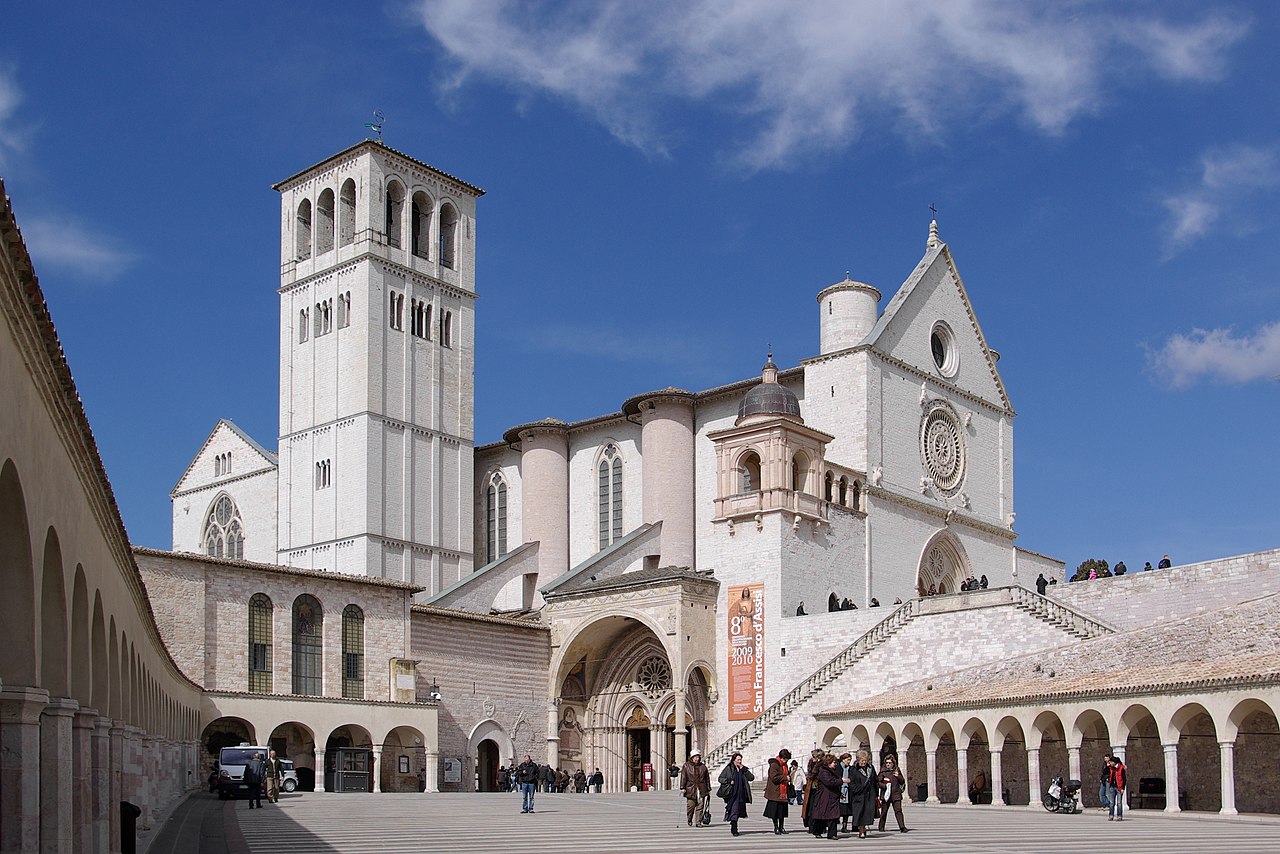
The region's artistic heritage is extraordinary for its modest size. Assisi's Basilica di San Francesco, a UNESCO World Heritage Site, contains Giotto's revolutionary fresco cycle depicting the life of Saint Francis — 28 scenes painted between 1297 and 1300 that fundamentally changed Western art by introducing naturalism, emotion, and spatial depth. Perugia's Galleria Nazionale dell'Umbria houses masterworks by Perugino (Raphael's teacher), Pinturicchio, and Piero della Francesca. Orvieto's Cathedral, begun in 1290, features Luca Signorelli's Last Judgement frescoes in the Cappella di San Brizio — work so powerful that Michelangelo studied it before painting the Sistine Chapel ceiling.

Spoleto, once a Lombard duchy capital, draws international audiences to the Festival dei Due Mondi each June and July — a performing-arts festival founded in 1958 by composer Gian Carlo Menotti. The town's ancient Ponte delle Torri, a 230-metre aqueduct bridge spanning a forested gorge, is one of central Italy's most dramatic engineering feats. To the east, Norcia — birthplace of Saint Benedict, founder of Western monasticism — is also the undisputed capital of Italian truffle culture, its Via Roma lined with norcini (butchers and delicatessens) selling black truffles, wild boar salami, and Castelluccio lentils. The Piano Grande above Castelluccio, a vast high-altitude plateau at 1,300 metres, erupts into one of Europe's most spectacular wildflower blooms every June, with fields of poppies, cornflowers, and lentil blossoms stretching to the Sibillini Mountains.

Lake Trasimeno, the largest lake in central Italy, lies on the Tuscan border and offers a gentler alternative to the hill towns — swimming, cycling the lakeside path, and visiting the islands of Maggiore and Polvese. The lake was the site of Hannibal's ambush of the Roman army in 217 BC, one of the bloodiest defeats in Roman history. Today, the shores are peaceful, dotted with fishing villages and olive groves. Every IMPT booking in Umbria removes 1 tonne of verified CO₂, at the same price as Booking.com. New members receive €5 free credit and 5% cashback in IMPT tokens on every stay.

Umbria at a glance

Region: Umbria

Country: Italy

Provinces: 2 (Perugia, Terni)

Capital: Perugia

Area: 8,456 km²

Population: 870,000

UNESCO Sites: Basilica di San Francesco d'Assisi, Longobards in Italy (Spoleto)

Key towns: Perugia, Assisi, Spoleto, Orvieto, Todi, Norcia, Gubbio, Terni, Torgiano, Montefalco

Famous for: Giotto's frescoes, black truffles, Sagrantino wine, Castelluccio lentils, Umbria Jazz, Festival dei Due Mondi, Cascata delle Marmore, olive oil, Perugina chocolate

Price range: from €65/night (agriturismi) to €400+/night (luxury hotels)

Travel tip: Book through IMPT for the same prices as Booking.com — every booking removes 1 tonne of CO₂. Umbria is best explored by car, though Perugia and Spoleto are on the Rome–Florence railway line. Perugia's San Francesco d'Assisi airport (PEG) has limited flights; Rome Fiumicino (2 hours by car) and Florence (2.5 hours) are the main international gateways. The region is compact — nowhere is more than 90 minutes from Perugia.

Why Umbria over Tuscany?

Umbria offers the same rolling green landscapes, medieval towns, and outstanding food and wine as Tuscany — but with significantly fewer tourists, lower prices, and a more authentic atmosphere. Where Tuscany's most famous towns can feel overrun in summer, Umbria's Spoleto, Todi, and Montefalco remain tranquil. The food is arguably even more interesting: Norcia's black truffles, Castelluccio's prized lentils, Montefalco's powerful Sagrantino wine, and the region's peppery olive oil are all world-class but less hyped. If Tuscany is Italy's greatest hits album, Umbria is the deep cut that rewards the curious traveller.


Best attractions & experiences in Umbria

Basilica di San Francesco — Assisi
UNESCO World Heritage Site and one of the most important pilgrimage churches in Christianity. The Upper Basilica contains Giotto's revolutionary 28-scene fresco cycle on the Life of Saint Francis (c. 1297–1300), which marked a turning point in Western art — introducing naturalistic figures, emotional depth, and three-dimensional space for the first time. The Lower Basilica has frescoes by Cimabue, Simone Martini, and Pietro Lorenzetti. The tomb of Saint Francis lies in the crypt. Free entry. Allow 2 hours minimum. Dress code enforced (covered shoulders and knees).
🏛️
Perugia — Etruscan Underground City
Umbria's capital is a vibrant university city with a layered past visible in its streets. The Palazzo dei Priori (13th century) houses the Galleria Nazionale dell'Umbria with works by Perugino, Pinturicchio, and Piero della Francesca. The Fontana Maggiore, carved by Nicola and Giovanni Pisano in 1278, is one of Italy's finest medieval fountains. Below street level, the Rocca Paolina reveals an entire Etruscan–medieval neighbourhood buried by Pope Paul III when he built his fortress in 1540. Walk the Corso Vannucci — Italy's finest passeggiata street — as evening falls.
Cascata delle Marmore — Roman Waterfall
At 165 metres, the Cascata delle Marmore is the tallest man-made waterfall in Europe, created by the Roman consul Manius Curius Dentatus in 271 BC to drain the marshy plains of Rieti by diverting the River Velino into the River Nera. The water flow is controlled — check the schedule before visiting, as the falls are only released at set times (usually weekends and summer afternoons). Two viewing platforms (upper and lower) are connected by a trail through spray-drenched forest. Entry €10. The lower belvedere offers the most dramatic view. Bring waterproof clothing.
🏰
Orvieto Cathedral
Perched on a volcanic tufa cliff 300 metres above the Paglia Valley, Orvieto's Duomo is one of Italy's great Gothic cathedrals. The façade, begun in 1290 by Lorenzo Maitani, is a masterpiece of polychrome marble, mosaics, and bas-relief sculpture. Inside, the Cappella di San Brizio contains Luca Signorelli's apocalyptic Last Judgement frescoes (1499–1504) — Michelangelo studied these before painting the Sistine Chapel ceiling. Don't miss the underground city: Orvieto Underground tours reveal Etruscan tunnels, medieval wells, and pigeon lofts carved into the tufa rock over 2,500 years.
🎭
Spoleto — Festival dei Due Mondi
Spoleto is a beautifully preserved medieval town dominated by the Rocca Albornoziana, a 14th-century papal fortress with panoramic views. The Ponte delle Torri, a 230-metre aqueduct bridge rising 76 metres above a forested gorge, connects the fortress to Monte Luco — one of central Italy's most dramatic engineering structures, dating to the 13th century on Roman foundations. Each June and July, the Festival dei Due Mondi (Festival of Two Worlds), founded in 1958, transforms the town with opera, theatre, dance, and concerts in stunning venues including the Roman amphitheatre and Piazza del Duomo.
🏔️
Norcia & Piano Grande — Truffle Country
Norcia is the birthplace of Saint Benedict (480 AD), founder of Western monasticism, and Italy's truffle capital. The Via Roma is lined with norcini — traditional butchers selling black truffles (tartufo nero), wild boar salami, prosciutto, and Castelluccio lentils. Above Norcia, the village of Castelluccio sits at 1,452 metres on the edge of the Piano Grande, a vast high-altitude plateau in the Sibillini Mountains. In late June, the plateau explodes with wildflowers — poppies, cornflowers, and lentil blossoms — in one of Europe's most spectacular natural displays, known as la fiorita.
🌊
Lake Trasimeno
The largest lake in central Italy (128 km²), Lake Trasimeno lies on the Tuscan border at 258 metres elevation. Its shallow, warm waters make it ideal for swimming, kayaking, and sailing. Ferry to Isola Maggiore, a tiny island with a Franciscan church and lace-making tradition, or Isola Polvese, now a nature reserve with swimming and picnic areas. The lakeside town of Castiglione del Lago has a medieval fortress connected to the Palazzo della Corgna by a covered walkway. The lake was the site of Hannibal's devastating ambush of the Roman army in 217 BC — one of the bloodiest battles in Roman history.
🏘️
Todi — Perfect Hill Town
In 1991, an American professor declared Todi the world's most livable city — a claim the town has gleefully promoted ever since. Whether or not you believe the hype, Todi's Piazza del Popolo is one of Italy's finest medieval squares, framed by the Palazzo dei Priori, Palazzo del Capitano, and the Romanesque–Gothic Duomo. Below the town, the Renaissance Temple of Santa Maria della Consolazione (1508–1607), attributed to Bramante, stands alone in a meadow — a perfect centrally-planned church that influenced St Peter's in Rome. Todi is small enough to explore in half a day, beautiful enough to linger for a week.
🍷
Montefalco — Sagrantino Wine
Known as the ringhiera dell'Umbria (the balcony of Umbria) for its panoramic views across the Valle Umbra, Montefalco produces one of Italy's most distinctive wines: Sagrantino di Montefalco DOCG. Made from the indigenous Sagrantino grape, it's one of the world's most tannic red wines, requiring years of ageing to reveal its dark fruit, leather, and spice complexity. Visit the Museo di San Francesco for Benozzo Gozzoli's vivid fresco cycle (1450–52), then walk to any of the surrounding wineries for tastings. The Sagrantino harvest festival in October is a highlight.

Best areas to book in Umbria

🏛️
Perugia — University City
Umbria's capital and largest city, Perugia has the best transport links, the liveliest nightlife, and a vibrant year-round atmosphere thanks to its two universities and 40,000 students. The medieval centro storico along Corso Vannucci is packed with restaurants, bars, and gelaterie. Perugia hosts Umbria Jazz in July and Eurochocolate in October. An excellent base for day trips to Assisi (25 min), Lake Trasimeno (20 min), and Todi (45 min). Hotels from €80/night in the centre.
Assisi — Pilgrimage & Art
The birthplace of Saint Francis is one of Italy's most visited pilgrimage towns, but stay overnight and you'll have the pink stone streets to yourself after the day trippers leave. Hotels and B&Bs with views across the Valle Umbra, many in converted medieval buildings. The Basilica di San Francesco and its Giotto frescoes are unmissable. Walk up to the Rocca Maggiore for sunset views. Hotels from €85/night. Best for art lovers, pilgrims, and walkers — several trails start from Assisi, including the Sentiero degli Ulivi.
🎭
Spoleto & Valnerina — Culture & Nature
Spoleto combines culture, history, and access to Umbria's wildest landscapes. The Valnerina (Nera Valley) stretches east from Spoleto toward Norcia, with the Cascata delle Marmore, Romanesque abbey churches, and dramatic gorge scenery. The Festival dei Due Mondi (June–July) fills every hotel — book months ahead. In quieter months, Spoleto is an excellent mid-range base. Hotels from €75/night. Perfect for combining hill-town culture with outdoor activities — rafting, hiking, and cycling in the Valnerina.
🏔️
Norcia & Sibillini Mountains
For food lovers and outdoor enthusiasts, Norcia and the Sibillini Mountains offer a completely different Umbria. This is truffle country — black truffles perfume everything from pasta to eggs. The Piano Grande above Castelluccio is stunning year-round but unforgettable during the June flower bloom. The 2016 earthquake damaged parts of Norcia, but the town has largely rebuilt, and its food culture is thriving. Hotels and agriturismi from €65/night. Ideal for hikers, food lovers, and those seeking authentic mountain Italy.
🌅
Todi, Orvieto & Western Umbria
Western Umbria's dramatic hilltop towns offer some of the region's finest views and quietest atmospheres. Todi sits above the Tiber Valley; Orvieto crowns a volcanic cliff above the Paglia. Both are well connected to Rome (Orvieto is just 70 minutes by train) and make excellent bases for exploring the less-visited western side of the region. The countryside around Todi is dotted with restored farmhouses and agriturismi with pools. Hotels from €70/night. Perfect for couples, wine lovers, and Slow Food devotees.

8 Eco Hotels in Umbria

Brufani Palace Perugia5-Star
Brufani Palace
Piazza Italia 12, Perugia
★★★★★
Hilltop positionEtruscan ruins under poolPanoramic views

Perugia's grandest hotel since 1884, perched on the hilltop with sweeping views across the Umbrian valley. The indoor swimming pool has a glass floor revealing Etruscan archaeological ruins beneath — one of Italy's most extraordinary hotel features. Elegant rooms blend 19th-century architecture with modern comfort. Steps from Corso Vannucci and the Galleria Nazionale.

from €190/night
Hotel Subasio Assisi4-Star
Hotel Subasio
Via Frate Elia 2, Assisi
★★★★
Beside BasilicaValle Umbra viewsHistoric

Directly beside the Basilica di San Francesco, the Subasio has hosted guests including Charlie Chaplin, King Albert of Belgium, and Andrea Bocelli. The terrace restaurant overlooks the Valle Umbra with views stretching to Perugia. Rooms in a converted 13th-century pilgrim hospice. The location is unbeatable — walk out the door and you're at Giotto's frescoes.

from €130/night
Relais Il CanalicchioCastle
Relais Il Canalicchio
Via della Piazza 4, Canalicchio di Collazzone
★★★★
Medieval castlePool & spaCountryside

A beautifully restored medieval castle set among olive groves and vineyards between Todi and Perugia. The 50 rooms and suites occupy the castle and its outbuildings, with an outdoor pool overlooking the Umbrian hills, a spa, and a restaurant serving locally sourced cuisine. Peaceful, romantic, and perfectly positioned for exploring central Umbria. The kind of place you book for two nights and stay for five.

from €140/night
Borgobrufa SPA Resort Torgiano5-Star Spa
Borgobrufa SPA Resort
Via del Colle 38, Torgiano
★★★★★
Infinity poolsVineyard viewsFull spa

A luxury spa resort amid the vineyards of Torgiano, 15 minutes south of Perugia. Multiple infinity pools (indoor and outdoor) overlook endless rows of vines with the Umbrian hills beyond. The 3,000 m² spa offers olive oil treatments, thermal circuits, and wine therapy. Suites have private pools and terraces. Torgiano itself is home to the excellent Lungarotti wine museum. One of central Italy's finest spa retreats.

from €220/night
Hotel Fonte Cesia TodiHistoric Centre
Hotel Fonte Cesia
Via Lorenzo Leoni 3, Todi
★★★★
14th-century palazzoRooftop terraceCentral Todi

A 14th-century palazzo in the heart of Todi, steps from the Piazza del Popolo. Rooms combine exposed stone walls and beamed ceilings with modern amenities. The rooftop terrace has sweeping views over the surrounding countryside and the Tiber Valley. The hotel's restaurant serves Umbrian cuisine with truffles, local meats, and Sagrantino wines. An intimate base for exploring one of Italy's most charming small towns.

from €120/night
Palazzo Seneca NorciaRelais & Châteaux
Palazzo Seneca
Via Cesare Battisti 12, Norcia
★★★★★
Relais & ChâteauxTruffle countryMichelin-recognised

A 16th-century palazzo in the centre of Norcia, Palazzo Seneca is Umbria's only Relais & Châteaux property. The restaurant, Vespasia, serves inventive Umbrian cuisine featuring Norcia's famous black truffles, Castelluccio lentils, and wild herbs. The building survived the 2016 earthquake and has been beautifully restored. The spa uses local botanical ingredients. Truffle-hunting excursions can be arranged through the hotel. An extraordinary gastronomic destination.

from €250/night
Hotel dei Duchi SpoletoViews
Hotel dei Duchi
Viale Giacomo Matteotti 4, Spoleto
★★★★
Rocca Albornoziana viewsGarden terraceFestival location

A 4-star hotel overlooking Spoleto's Rocca Albornoziana fortress and the wooded valley beyond. The garden terrace is one of the most pleasant breakfast spots in Umbria, with views of the fortress illuminated at night. Walking distance to the Duomo, the Roman Theatre, and the Ponte delle Torri. During the Festival dei Due Mondi (June–July), this is one of Spoleto's most sought-after hotels — book early. Reliable, comfortable, and beautifully positioned.

from €110/night
Locanda della Posta PerugiaHistoric
Locanda della Posta
Corso Vannucci 97, Perugia
★★★
Oldest hotel in PerugiaCorso VannucciCentral

Perugia's oldest hotel, operating since 1786, when it served as the city's main post office and coaching inn — hence the name. Goethe, Hans Christian Andersen, and Frederick III of Prussia all stayed here. The location on Corso Vannucci, Perugia's main passeggiata street, is unbeatable. Rooms are simple but characterful, with high ceilings and period furniture. The best-value central hotel in Perugia. An authentic slice of Italian hospitality history.

from €85/night

Best walks & trails in Umbria

Assisi to Spoleto
Sentiero degli Ulivi (Olive Tree Trail)
65 km total (do sections)ModerateMulti-day or day stages

One of Umbria's finest long-distance trails, winding through the olive groves of the Valle Umbra between Assisi and Spoleto. The full route takes 3–4 days, but individual sections of 10–15 km make excellent day walks. The trail passes through Spello (Roman gates and Pinturicchio frescoes in Santa Maria Maggiore), Foligno, Trevi (perched dramatically on a hillside), and Campello sul Clitunno. The landscape is quintessential Umbria — silver-green olive trees, stone farmhouses, and distant hill towns. Well-marked with CAI red-and-white blazes. Best walked March–June and September–November.

Sibillini Mountains
Piano Grande Loop from Castelluccio
8 kmEasy–Moderate2.5 hours

A gentle loop across the Piano Grande, the vast high-altitude plateau (1,300 m) below the village of Castelluccio in the Sibillini Mountains National Park. In late June, the plateau erupts with one of Europe's most spectacular wildflower displays — la fiorita — as poppies, cornflowers, and lentil blossoms carpet the fields in bands of red, blue, and gold. The walk crosses flat grassland with views to the surrounding peaks, including Monte Vettore (2,476 m), the highest in the Sibillini range. Even outside flower season, the landscape is dramatic and the air crystalline. Bring layers — the altitude means cool temperatures even in summer.

Terni Province
Cascata delle Marmore Trail
3 kmEasy1 hour

A short but spectacular trail connecting the upper and lower viewing platforms of the Cascata delle Marmore, the 165-metre waterfall created by the Romans in 271 BC — the tallest man-made waterfall in Europe. The path winds through spray-drenched woodland, with several viewpoints offering different perspectives of the three-tier cascade. The lower belvedere (Belvedere Inferiore) delivers the most dramatic view, looking straight up at the full height of the falls. Check the water release schedule before visiting — the falls only flow at set times. Bring waterproof clothing; the spray near the base is intense. Entry €10.

Mount Subasio
Monte Subasio from Assisi
12 kmModerate4 hours

A rewarding circular walk from Assisi to the summit of Monte Subasio (1,290 m), the mountain that dominates the town. The route passes the Eremo delle Carceri, the hermitage where Saint Francis retreated to pray in the forest — a peaceful spot with an ancient holm oak wood. Higher up, the landscape opens into wide alpine meadows carpeted with wildflowers in spring and early summer: orchids, gentians, and narcissus. From the summit, views extend across the entire Valle Umbra to the Sibillini Mountains. The descent via Spello offers an alternative route through olive groves. Best walked April–June and September–October.


Explore neighbouring regions

Tuscany
12,000+ hotels · from €70/night
Florence, Siena, Chianti, Val d'Orcia — Italy's most celebrated region shares Umbria's western border
Lazio
750+ hotels · from €65/night
Rome, Tivoli, Viterbo — Umbria's southern neighbour, with Orvieto just 70 minutes from Rome by train
Marche
480+ hotels · from €60/night
Urbino, Adriatic beaches, Sibillini Mountains — shares the eastern mountain border with Umbria
Abruzzo
350+ hotels · from €55/night
Gran Sasso, wild Apennines, Adriatic coast — Italy's greenest region by protected land area

Explore Umbria's provinces & cities


Umbria Eco Hotels — FAQs

Are there eco-friendly hotels in Umbria?
Yes. Umbria has hundreds of eco-friendly hotels listed on IMPT, from restored medieval agriturismi producing their own olive oil and wine, to boutique palazzo hotels in historic centres, to five-star spa resorts with sustainable practices. Many hold green certifications including Green Key, EU Ecolabel, and Legambiente Turismo. The region's rural character means many properties are inherently low-impact — stone-built, locally sourced, and small-scale. IMPT partners with 25,000+ green-certified properties worldwide. Every booking removes 1 tonne of verified CO₂ on-chain at the same price as Booking.com.
How much do eco hotels in Umbria cost?
Umbria is significantly more affordable than neighbouring Tuscany. Prices range from €65/night for countryside agriturismi and B&Bs to €250–400+/night for five-star luxury properties like Palazzo Seneca in Norcia (Relais & Châteaux) or Borgobrufa SPA Resort in Torgiano. Perugia city-centre hotels start from approximately €80/night; Assisi from €85/night; Spoleto, Todi, and smaller towns from €65–110/night. IMPT matches Booking.com prices exactly — the carbon removal is funded from our booking commission, not added to your price. New IMPT members receive €5 free credit on their first booking and earn 5% cashback in IMPT tokens on every stay.
What is the best area to stay in Umbria for a first visit?
For a first visit, Perugia is the best base — Umbria's capital has the strongest transport links, the liveliest restaurant and bar scene, and easy day-trip access to Assisi (25 minutes by bus or car), Lake Trasimeno (20 minutes), Todi (45 minutes), and Spoleto (1 hour). Stay 2–3 nights in Perugia, then move south to Spoleto or Norcia for the Valnerina gorge and truffle country, or west to Todi/Orvieto for hilltop-town quietude. If you have a car, consider a central agriturismo in the countryside between Perugia and Spoleto — you can reach most of Umbria within 90 minutes. Book through IMPT and each stay removes 1 tonne of CO₂ at no extra cost.
When is the best time to visit Umbria?
Spring (April to June) and autumn (September to November) are ideal. Late June brings the famous Castelluccio flower bloom — la fiorita — when the Piano Grande plateau erupts with poppies, cornflowers, and lentil blossoms. July offers Umbria Jazz in Perugia (one of Europe's biggest jazz festivals) and the Festival dei Due Mondi in Spoleto (opera, theatre, and dance). October features Eurochocolate in Perugia and the start of black truffle season in Norcia (October through December). Summer is warm but Umbria is less oppressively hot than Tuscany thanks to its higher average elevation. Winter is quiet, atmospheric, and excellent for truffle hunting and thermal baths at a fraction of peak-season prices.
How does IMPT's carbon removal work for Umbria bookings?
Every booking through IMPT retires 1 tonne of verified CO₂ credits on-chain via Ethereum — approximately 28 times the carbon footprint of an average hotel night. This is funded from our booking commission, so you pay the same price as Booking.com with zero green premium. With 8M+ hotels worldwide and 25,000+ green-certified partners, IMPT is building the world's largest carbon-positive travel platform. You also earn 5% cashback in IMPT tokens on every stay and receive €5 free credit as a new member. Umbria's naturally sustainable tourism model — small-scale, locally rooted, and low-impact — makes it an ideal destination for carbon-conscious travellers.
Book eco hotels in Umbria
The green heart of Italy · 1 tonne CO₂ removed · Same price as Booking.com · €5 free credit · 5% cashback
Search Umbria Hotels →

Read more: Best time to visit Umbria · Umbria Food Guide · Things to Do in Umbria

Book your next stay: hotels worldwide with 5% cash back · city breaks in Europe · eco-friendly hotels — every stay offsets 1t CO₂.