🌿 IMPT Eco Hotel

HomeItalyUmbriaPerugia

Eco Hotel a Perugia

Stay sustainably in Umbria's ancient hilltop capital — every booking removes 1 tonne of CO₂

Medieval architecture Umbria Jazz Etruscan heritage Chocolate capital University city Hilltop views
8M+
Hotels
From €45
Per Night
1 Tonne
CO₂ Removed
100%
Price Match

Perché Soggiornare a Perugia

Perugia is one of those cities that stops you mid-step. Perched on a chain of hills some 450 metres above the Tiber valley, the capital of Umbria commands views across a landscape of olive groves, sunflower fields, and the distant blue silhouette of the Apennines. Its origins run deep — the Etruscans built their settlement here around the 6th century BC, and their monumental gateway, the Arco Etrusco, still frames one of the entrances to the old town. Walk through it and you pass beneath stones that were laid more than 2,300 years ago.

The medieval layer sits on top of the Etruscan foundations, quite literally. The Centro Storico is a labyrinth of narrow streets, covered passageways, and sudden piazzas that open onto panoramic terraces. At its heart is Piazza IV Novembre, where the 13th-century Fontana Maggiore — sculpted by Nicola and Giovanni Pisano — faces the imposing Gothic facade of the Palazzo dei Priori. Inside the palazzo, the Galleria Nazionale dell'Umbria houses the finest collection of Umbrian art anywhere, with masterworks by Perugino, Pinturicchio, Piero della Francesca, and Fra Angelico.

Perugia is equally a city of living traditions. The Università per Stranieri, founded in 1921, draws thousands of international students each year to study Italian language and culture, giving the city a youthful, cosmopolitan energy that belies its ancient bones. The evening passeggiata along Corso Vannucci — the elegant main street named after the Renaissance painter Pietro Vannucci, known as Perugino — is a ritual that hasn't changed in centuries: locals and visitors alike stroll between cafés, gelaterias, and the warm glow of shopfronts as the sun drops behind Monte Malbe.

Then there is chocolate. Perugia has been Italy's chocolate capital since Luisa Spagnoli created the first Baci Perugina in 1922 — the hazelnut-centred kisses wrapped in silver foil with love notes inside. The tradition continues with the annual Eurochocolate festival each October, when Corso Vannucci transforms into an open-air chocolate market drawing over a million visitors. And in July, the same streets host Umbria Jazz, one of Europe's premier jazz festivals, founded in 1973 and consistently attracting world-class performers from Wynton Marsalis to Diana Krall.

In Breve

Regione
Umbria
Regionee
Perugia
Elevation
493 m above sea level
Population
~166,000
Nearest Airport
San Francesco d'Assisi (PEG) — 12 km east
Train Station
Perugia Fontivegge (main line) & Perugia Ponte San Giovanni

Come Sfruttare al Meglio Your Stay

How to Get There

Perugia's own airport, San Francesco d'Assisi (PEG), lies 12 km east of the city near Assisi. It handles a limited number of domestic and seasonal European routes. For most international travellers, Rome's Fiumicino (FCO) is the gateway — from Roma Termini, Trenitalia regional trains reach Perugia Fontivegge in approximately 2 hours, while the faster Frecciarossa service covers the route in about 2 hours 15 minutes with a change at Firenze Santa Maria Novella. From Florence, direct regionale veloce trains run in roughly 2 to 2.5 hours. Sulga and FlixBus coaches connect Rome, Florence, and Perugia's Piazza Partigiani bus station daily.

If you're driving, the E45 superstrada runs north–south through Umbria, linking Perugia to the A1 motorway at Orte (south, for Rome) and Cesena (north, for Bologna). Parking in the old town is extremely limited — the smart move is to leave your car at Pian di Massiano and ride the MiniMetro up.

Getting Around

The MiniMetro is Perugia's pride: an automated, driverless cable-car system that climbs from the Pian di Massiano parking area to the Pincetto station near the old town in about 12 minutes. Built by Leitner and opened in 2008, it runs every 1–3 minutes during peak hours and costs €1.50 per ride. Within the Centro Storico, the city is best explored on foot — but be prepared for hills. Public escalators and covered walkways (the Rocca Paolina escalators are famous for passing through the ruins of a 16th-century fortress) connect the lower and upper parts of town. Busitalia Umbria operates city buses for reaching suburbs and nearby towns.

Best Areas to Stay

The Centro Storico is the obvious choice for first-time visitors: you'll be steps from Corso Vannucci, the major museums, and the best restaurants. The Elce quarter, northwest of the centre near the main University of Perugia campus, offers a lively student atmosphere with more affordable accommodation and good local trattorie. Ponte San Giovanni, in the valley 5 km south, sits near the railway junction and is practical for road-trippers. For a quieter retreat, the medieval hilltown of Corciano, 12 km west, provides rural Umbrian charm within easy reach of the city.

Day Trips

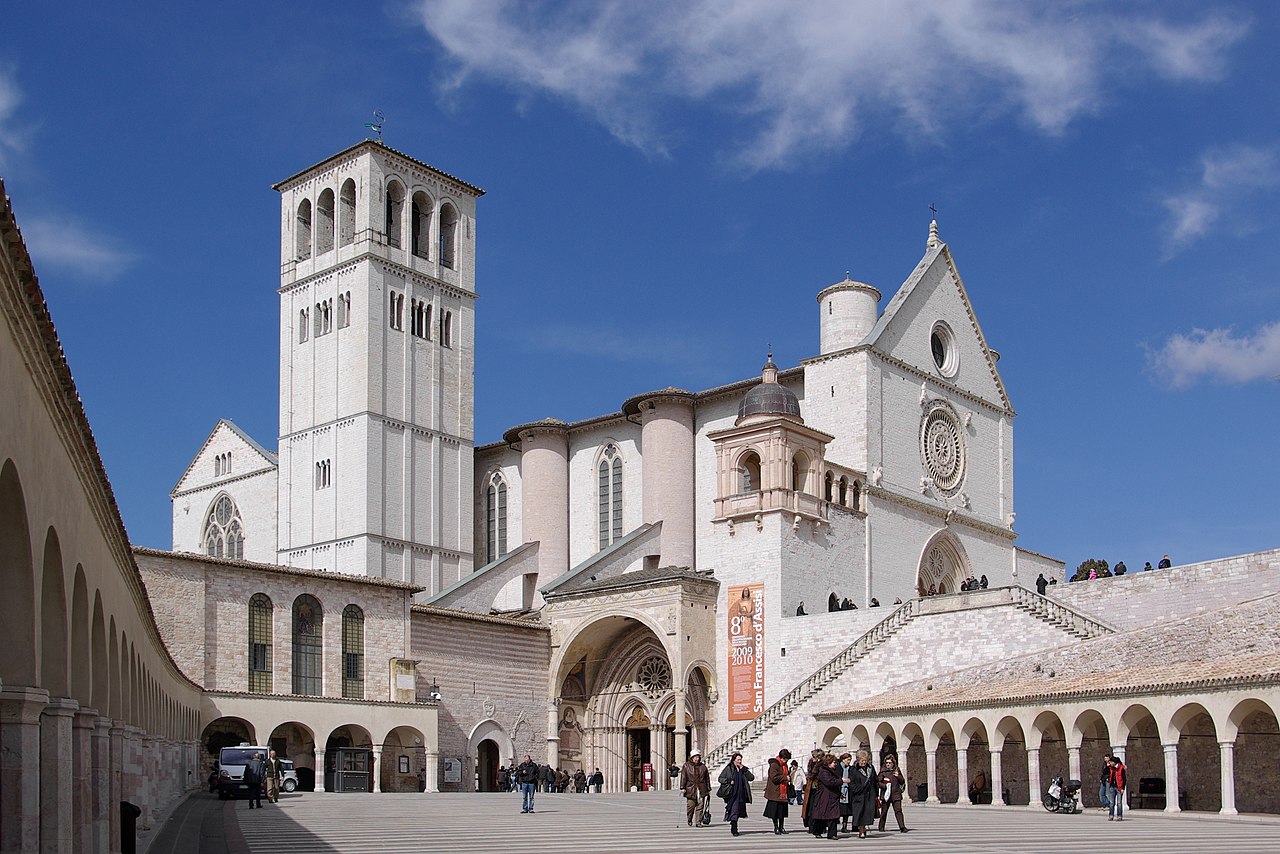
Perugia is perfectly placed as a base for exploring Umbria. Assisi, with its Basilica di San Francesco and Giotto frescoes, is just 25 km east (30 minutes by car or train). Spoleto, home to the Festival dei Due Mondi and the spectacular Ponte delle Torri aqueduct, lies 63 km south. Orvieto, with its magnificent Gothic cathedral, is 76 km southwest. And Lake Trasimeno — Umbria's largest lake, ideal for swimming, cycling, and boat trips to Isola Maggiore — is only 30 km west of the city.

Dove Alloggiare — Areas

Centro Storico

The historic heart of Perugia — walk to Corso Vannucci, Piazza IV Novembre, and every major monument. Atmospheric medieval streets, the best dining, and the city's top hotels. Perfect for a first visit.

Elce

The university quarter northwest of the old town. Lively bars, affordable restaurants, and a younger vibe. Walking distance to the centre but with lower hotel prices and good local character.

Ponte San Giovanni

In the valley 5 km south, near the railway junction. Ideal for drivers and those exploring wider Umbria by car. More modern, with business hotels and easy access to the E45 motorway.

Corciano

A quiet medieval hilltown 12 km west of Perugia. Stone houses, panoramic views, and authentic rural Umbria. Best for travellers seeking tranquility with a car for city excursions.

Eco Hotel a Perugia

Hotel Brufani Palace ★★★★★

Centro Storico · Piazza Italia, 12 · 5-star

Perugia's most storied hotel occupies a commanding position on Piazza Italia with sweeping views over the Umbrian valley. Built in 1884, the Brufani is celebrated for its glass-bottomed rooftop swimming pool, which floats directly above excavated Etruscan ruins — you can look down at 2,500-year-old walls while doing laps. Rooms blend period furnishings with modern comfort, and the Collins Restaurant serves refined Umbrian cuisine.

Rooftop pool Etruscan ruins Spa Valley views Restaurant Historic building
Verifica Disponibilità

Sina Brufani ★★★★★

Centro Storico · Piazza Italia, 12 · 5-star luxury

Operated under the Sina Hotels banner, this is the same landmark property managed to luxury-chain standards. The Sina Brufani offers 94 individually styled rooms and suites, many with direct Piazza Italia views. The subterranean spa incorporates Etruscan stonework, and the hotel's position at the terminus of Corso Vannucci means you step directly onto the passeggiata. Conference facilities and a private garden terrace add to its appeal for both leisure and business travellers.

Piazza views Luxury spa Conference rooms Garden terrace Concierge
Verifica Disponibilità

Hotel Fortuna ★★★

Centro Storico · Via Luigi Bonazzi, 19 · 3-star

A welcoming three-star hotel tucked into a 13th-century palazzo just off Corso Vannucci. Hotel Fortuna offers excellent value in the heart of the old town: rooms are simply furnished but clean and characterful, with exposed brick and beamed ceilings in several categories. The rooftop terrace provides a lovely spot for breakfast overlooking the terracotta rooftops. Staff are famously helpful with local recommendations.

Rooftop terrace Historic palazzo Central location Free Wi-Fi Breakfast included
Verifica Disponibilità

Sangallo Palace Hotel ★★★★

Centro Storico · Via Luigi Masi, 9 · 4-star

A modern four-star sitting on the edge of the historic centre, the Sangallo Palace is named after the Renaissance architect Antonio da Sangallo the Younger, who designed the nearby Rocca Paolina fortress. The hotel features a panoramic terrace restaurant with views stretching to Monte Subasio, an indoor pool, sauna, and well-equipped gym. Rooms are contemporary and spacious, and the Rocca Paolina escalators are steps away for easy access to the lower town.

Panoramic terrace Indoor pool Gym & sauna Restaurant Parking
Verifica Disponibilità

Castello di Monterone ★★★★

Strada Montevile, 3 · 3 km south of centre · 4-star castle hotel

For something truly special, this 13th-century castle hotel sits on a wooded hillside just 3 km south of Perugia. The Castello di Monterone has been restored with extraordinary care, blending medieval architecture — stone arches, frescoed ceilings, an ancient tower — with modern luxury. There are 18 rooms and suites, each unique, plus an acclaimed restaurant serving Umbrian cuisine with locally sourced ingredients. The grounds include gardens and olive groves with views of the valley.

13th-century castle Gardens & olive groves Restaurant Frescoed rooms Rural setting
Verifica Disponibilità

Alla Posta dei Donini ★★★★

Ponte San Giovanni · Via Deruta, 43 · 4-star country hotel

Set in a restored 18th-century villa surrounded by parkland, Alla Posta dei Donini offers a refined countryside experience just south of Perugia near Ponte San Giovanni. The 48 rooms feature period furniture and modern amenities, while the restaurant emphasises traditional Umbrian cooking with ingredients from local producers. An outdoor pool, spa, and extensive grounds make this an excellent choice for a relaxed stay with easy access to both Perugia and the wider region via the nearby E45.

18th-century villa Parkland setting Outdoor pool Spa Restaurant Free parking
Verifica Disponibilità

Cosa Fare a Perugia

Fontana Maggiore

The centrepiece of Piazza IV Novembre, the Fontana Maggiore was completed in 1278 by Nicola and Giovanni Pisano to celebrate the arrival of water to the hilltop city via a new aqueduct. Its two concentric polygonal basins are adorned with 50 bas-relief panels depicting the months of the year, liberal arts, Aesop's fables, and biblical scenes. A bronze basin crowns the top, supported by three water-bearing nymphs. It remains one of the finest medieval fountains in Italy.

Galleria Nazionale dell'Umbria

Housed on the upper floors of the Palazzo dei Priori — itself a masterpiece of Gothic civic architecture — the Galleria Nazionale dell'Umbria is the region's premier art museum. Its collection spans the 13th to 19th centuries, with particular strength in Umbrian and Tuscan painting. Highlights include Piero della Francesca's polyptych of Sant'Antonio, Perugino's luminous Adorazione dei Magi, and works by Pinturicchio, Benozzo Gozzoli, and Fra Angelico. The building's Sala dei Notari, with its magnificent vaulted ceiling, is worth seeing on its own.

Rocca Paolina

This vast 16th-century fortress was built on the orders of Pope Paul III in 1540 to assert papal authority over rebellious Perugia. The architect Antonio da Sangallo the Younger demolished an entire medieval neighbourhood — the Baglioni quarter — and incorporated its streets, houses, and towers into the fortress foundations. Today, you can walk through these eerie underground streets via a system of escalators connecting the lower town to Piazza Italia above. It is one of Perugia's most atmospheric experiences.

Basilica di San Pietro

Founded in the 10th century by the Benedictine monk Pietro Vincioli, the Basilica di San Pietro stands at the southern tip of the old town. Its interior is extraordinary: a forest of ancient columns salvaged from Roman and Etruscan buildings supports the nave, and the walls hold over 70 paintings from the 16th and 17th centuries. The wooden choir stalls, intricately carved in the early 16th century, are considered among the finest in Italy. The adjoining cloister is a haven of calm.

Arco Etrusco (Porta Augusta)

The Arco Etrusco, also known as the Porta Augusta, is a monumental gateway dating from the 3rd century BC. Its massive travertine blocks — fitted without mortar — testify to the engineering skill of the Etruscans who built Perugia's original city walls. The upper portion was added by the Romans after Augustus conquered the city in 40 BC and renamed it Augusta Perusia. A Renaissance loggia crowns the top. It stands at the northern end of Via Ulisse Rocchi, marking the boundary between the ancient and medieval city.

Oratorio di San Bernardino

Tucked into Piazza San Francesco al Prato, the Oratorio di San Bernardino boasts one of the most beautiful Renaissance facades in central Italy. Designed by Agostino di Duccio in 1457–1461, the polychrome marble and terracotta facade features delicate relief sculptures of angels, musicians, and saints. The interior is simpler but houses a 4th-century Early Christian sarcophagus that serves as the altar. The adjacent ruined church of San Francesco al Prato — its collapsed roof open to the sky — adds to the atmospheric setting.

Casa del Cioccolato Perugina

Located in the suburb of San Sisto, about 7 km west of the centre, the Casa del Cioccolato Perugina is both museum and factory tour. The visit traces the history of the Perugina brand from its founding in 1907 by Francesco Buitoni to the creation of Baci by Luisa Spagnoli in 1922 — allegedly inspired by a clandestine love affair with Giovanni Buitoni. The tour includes a walk along the production line (you'll see Baci being made and wrapped), a chocolate-making workshop, and a generous tasting session. Book ahead, especially in October during Eurochocolate.

Ipogeo dei Volumni

One of the most important Etruscan burial sites in Italy, the Ipogeo dei Volumni lies beneath the modern suburb of Ponte San Giovanni, about 5 km south of the city centre. Discovered in 1840, this 3rd-century BC hypogeum (underground tomb) belongs to the Velimna (Volumni) family and is carved from the rock to resemble a Roman house, complete with a central atrium and side chambers. The urns and carved figures inside — particularly the reclining figure of Arnth Velimnas — are remarkable. A small museum above displays finds from the surrounding necropolis.

Walking & Trails

Corso Vannucci Evening Passeggiata

1.2 km · Easy · Allow 30–60 minutes

Join the locals for the most civilised walk in Umbria. Start at Piazza Italia, stroll north along the broad, pedestrianised Corso Vannucci — lined with cafés, bookshops, and the grand entrance to Palazzo dei Priori — and end at Piazza IV Novembre where the Fontana Maggiore catches the evening light. Stop for a gelato at Gelateria Gambrinus or an aperitivo at Sandri, a historic pastry shop dating to 1860. Best between 6 pm and 8 pm when the whole city seems to be out.

Medieval Aqueduct Walk to Monte Pacciano

5 km one way · Moderate · Allow 2 hours

This unique trail follows the route of the 13th-century aqueduct that once brought water from Monte Pacciano to the Fontana Maggiore. Start at Piazza Grimana (behind the Università per Stranieri) and walk north along Via dell'Acquedotto — a remarkable elevated path that runs along the top of the medieval aqueduct arches, with rooftops below you on both sides. The path continues through olive groves and woods to the springs at Monte Pacciano. Return the same way for spectacular sunset views over the old town.

Lake Trasimeno Circuit from Castiglione del Lago

12 km circuit · Moderate · Allow 3.5–4 hours

Drive or take the train 30 km west to Castiglione del Lago, a fortified town on a limestone promontory jutting into Lake Trasimeno. This circuit follows the lakeshore path south through reed beds and olive groves, passes the fishing village of San Feliciano (stop for a lunch of tegamaccio, the local fish stew), and returns via gentle hills with views across Umbria's largest lake. The lake is shallow and warm, ideal for a swim in summer. Watch for grebes, herons, and cormorants in the wetland areas.

Explore Nearby

🏛️
Terni
80 km south · Industrial city, Cascata delle Marmore
Assisi
25 km east · Basilica di San Francesco, UNESCO
🌉
Spoleto
63 km south · Festival dei Due Mondi, Ponte delle Torri
🏰
Orvieto
76 km southwest · Gothic cathedral, underground tunnels

Domande Frequenti

What is the best time to visit Perugia?

The best time to visit Perugia is from April to June and September to October. Spring brings mild temperatures around 15–22°C, blooming countryside, and fewer crowds. Autumn offers warm days, truffle season, and the famous Eurochocolate festival in October. July is peak season with Umbria Jazz, while August can be hot (up to 35°C) and many locals leave for the coast. Winter is cold but atmospheric, with fewer tourists and the possibility of snow dusting the medieval rooftops.

How do I get from Rome to Perugia?

The fastest option is the direct Trenitalia regional train from Roma Termini to Perugia Fontivegge, taking approximately 2 hours. FlixBus and Sulga coaches also run the route in around 2.5–3 hours and depart from Rome's Tiburtina station. By car, take the E45 motorway northbound — the drive is roughly 175 km and takes about 2 hours. The nearest airport is San Francesco d'Assisi (PEG), 12 km east of the city, but it has limited flight connections. Most international visitors fly into Rome Fiumicino (FCO) and take the train.

When is Umbria Jazz held in Perugia?

Umbria Jazz takes place annually in mid-July, typically running for about 10 days. Founded in 1973, it is one of the most important jazz festivals in Europe. Performances are held across multiple venues: the Arena Santa Giuliana for headliner concerts, Teatro Morlacchi for evening shows, and free open-air stages in Piazza IV Novembre and along Corso Vannucci. Past performers include Miles Davis, B.B. King, Herbie Hancock, and Wynton Marsalis. Book accommodation well in advance if visiting during the festival.

Is Perugia walkable?

Yes, Perugia's compact Centro Storico is very walkable, though the hilltop terrain means steep climbs in places. The city has addressed this with the MiniMetro — an automated cable car connecting the lower parking areas at Pian di Massiano to the upper town in about 12 minutes. Public escalators and covered walkways also connect various levels, including the famous Rocca Paolina escalators that pass through 16th-century fortress ruins. Once you reach the old town, Corso Vannucci and the surrounding streets are mostly pedestrianised. Comfortable shoes are a must.

Can I visit the Perugina chocolate factory?

Yes, the Casa del Cioccolato Perugina is located in San Sisto, about 7 km west of the city centre. The museum and factory tour takes roughly 90 minutes and includes the history of Baci Perugina, a walk through the production process, and a tasting session. Advance booking is recommended, especially during peak season and around Eurochocolate in October. Tickets cost approximately €12 for adults. The factory shop offers exclusive products not available elsewhere.

Book Eco Hotel a Perugia
Same prices as Booking.com — every stay removes 1 tonne of CO₂. EUR 5 free credit on your first booking plus 5% cashback in IMPT tokens.
Prenota Ora →

Perugia Travel Guide

🗓️
Best Time to Visit Perugia
Seasonal guide — weather, festivals, crowds
🍝
Perugia Food Guide
Umbrian cuisine, restaurants, wine
🎭
Top Cosa Fare a Perugia
Complete guide — attractions, day trips, nightlife
Book your next stay: hotels worldwide with 5% cash back · city breaks in Europe · eco-friendly hotels — every stay offsets 1t CO₂.