Eco Hoteles en Madrid 🌿
The highest capital in Europe sits on a 650-metre plateau at the dead centre of Spain — a city of world-class art museums and grand Habsburg squares, of tiny tapas bars and summer nights that don't end until dawn, surrounded by three UNESCO cities within an hour's train ride.
Por Qué Alojarse en Madrid?
Madrid is the capital of contrasts. It is Europe's highest capital city (650 metres above sea level), built on a plateau in the exact geographic centre of the Iberian Peninsula — a decision made by Philip II in 1561 not because the location was obvious (it wasn't — Madrid was a small frontier town) but precisely because it was central. That decision shaped the city's character: Madrid is a capital that looks inward, towards Spain, rather than outward towards Europe like Barcelona. The result is a city that feels profoundly Spanish in a way that has been polished away in more cosmopolitan cities.
The art alone justifies the trip. The Golden Triangle of Art — the Prado, the Reina Sofía, and the Thyssen-Bornemisza museums, all within a 10-minute walk of each other — is one of the world's greatest concentrations of painting. The Prado holds Velázquez's Las Meninas, Goya's Black Paintings, Bosch's Garden of Earthly Delights, and the world's finest collection of Spanish and Italian masters. The Reina Sofía has Picasso's Guernica, the 20th century's most powerful anti-war painting. The Thyssen fills in everything else, from medieval Italian primitives to 20th-century American abstraction. No other city offers this density and quality of art in such a compact area.
Beyond the museums, Madrid is a city of neighbourhoods. Barrio de las Letras, where Cervantes and Lope de Vega lived and died, is a warren of cobbled streets and tapas bars where you can still find their houses. La Latina, the old Moorish quarter, fills every Sunday morning with the Rastro flea market and every evening with a tapas crawl that rivals Logroño's Calle Laurel. Malasaña, the epicentre of the Movida Madrileña — the post-Franco cultural explosion of the 1980s — is now a hipster paradise of vintage shops, craft beer bars, and street art. And the Habsburg and Bourbon Madrid of the centre — the Plaza Mayor, the Royal Palace, the grand boulevards — is one of Europe's great historic cityscapes.
The surrounding region of the same name — the Comunidad de Madrid — offers escapes from the urban energy. The Sierra de Guadarrama, a mountain range 45 minutes north of the city, provides hiking, climbing, and in winter, skiing. The royal sites of Aranjuez (the Versailles of Spain) and El Escorial (Philip II's vast monastery-palace) are easy day trips. And within an hour by high-speed AVE train, you reach Toledo (the medieval capital of Spain, a UNESCO World Heritage city) and Segovia (with its 2,000-year-old Roman aqueduct). Booking your Madrid hotel through IMPT means 1 tonelada de CO₂ eliminada por reserva, at the same price as Booking.com, with 5% cashback in IMPT tokens and EUR5 free credit.
Qué Hacer en Madrid
1. Museo del Prado
One of the world's greatest art museums, built around the Spanish royal collection. The highlights are so numerous it's almost absurd: Velázquez's Las Meninas (1656), arguably the most analysed painting in Western art; Goya's La Maja Desnuda and La Maja Vestida, and the haunting Black Paintings; Bosch's The Garden of Earthly Delights; and major works by El Greco, Rubens, Titian, Raphael, and Caravaggio. The building itself, designed by Juan de Villanueva in 1785, is a neoclassical masterpiece. Allow at least 3 hours; art lovers should plan a full day. €15 (free Mon–Sat 18:00–20:00, Sun 17:00–19:00). Audio guide €4.
2. Museo Reina Sofía — Picasso's Guernica
The modern art counterpart to the Prado, housed in a former 18th-century hospital with a striking Jean Nouvel extension. The centrepiece is Picasso's Guernica (1937), the monumental anti-war canvas painted in response to the bombing of the Basque town during the Spanish Civil War. The surrounding galleries show the preparatory sketches and photographs of the painting in progress — an extraordinarily moving experience. The permanent collection also includes major works by Dalí, Miró, and Juan Gris. Allow 2–3 hours. €12 (free Mon/Wed–Sat 19:00–21:00, Sun 12:30–14:30).
3. Royal Palace (Palacio Real)
Europe's largest functioning royal palace with 3,418 rooms, built on the site of the old Alcázar which burned down in 1734. The current Bourbon palace, completed in 1764, is used for state ceremonies — the royal family lives at the more modest Zarzuela Palace outside the city. The tour takes you through the Throne Room (with Tiepolo's ceiling fresco), the Royal Armoury (one of the world's finest collections of medieval and Renaissance arms), and the Royal Pharmacy. The adjacent Almudena Cathedral and the Plaza de Oriente with its statue of Philip IV on horseback make this the city's most monumental square. €13 (free for EU citizens Mon–Thu 16:00–18:00). Allow 2 hours.
4. Buen Retiro Park (UNESCO)
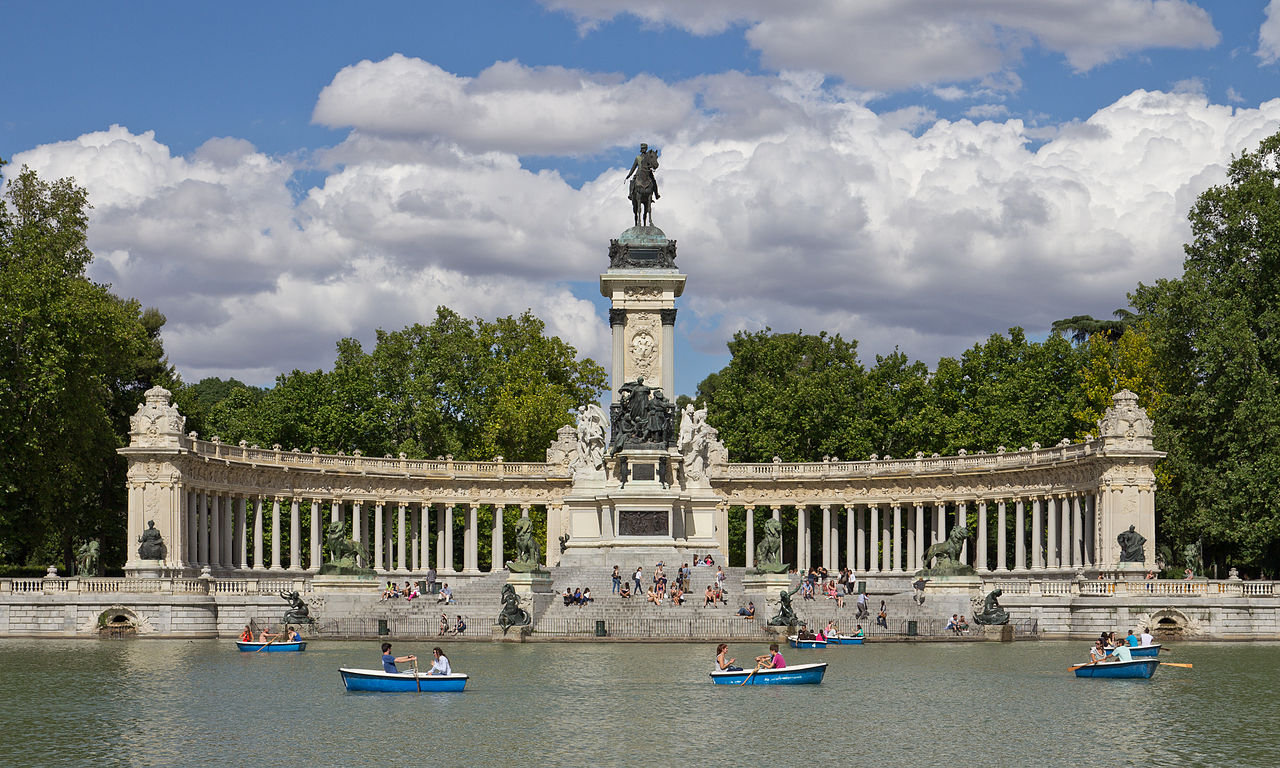
Madrid's great green lung, 125 hectares of formal gardens, wooded paths, boating lake, and follies that was originally the private gardens of the Buen Retiro Palace (destroyed in the Napoleonic Wars). The highlights: row a boat on the Estanque Grande in front of the Alfonso XII monument; visit the Palacio de Cristal (Crystal Palace, 1887), an iron-and-glass pavilion built as a greenhouse that now hosts Reina Sofía contemporary art installations; and the Rosaleda (rose garden) in full bloom in May–June. The park is a UNESCO World Heritage site as part of the Paseo del Prado and Buen Retiro landscape. Free, open daily 06:00–00:00 (summer), 06:00–22:00 (winter).
5. Plaza Mayor & the Madrid of the Habsburgs
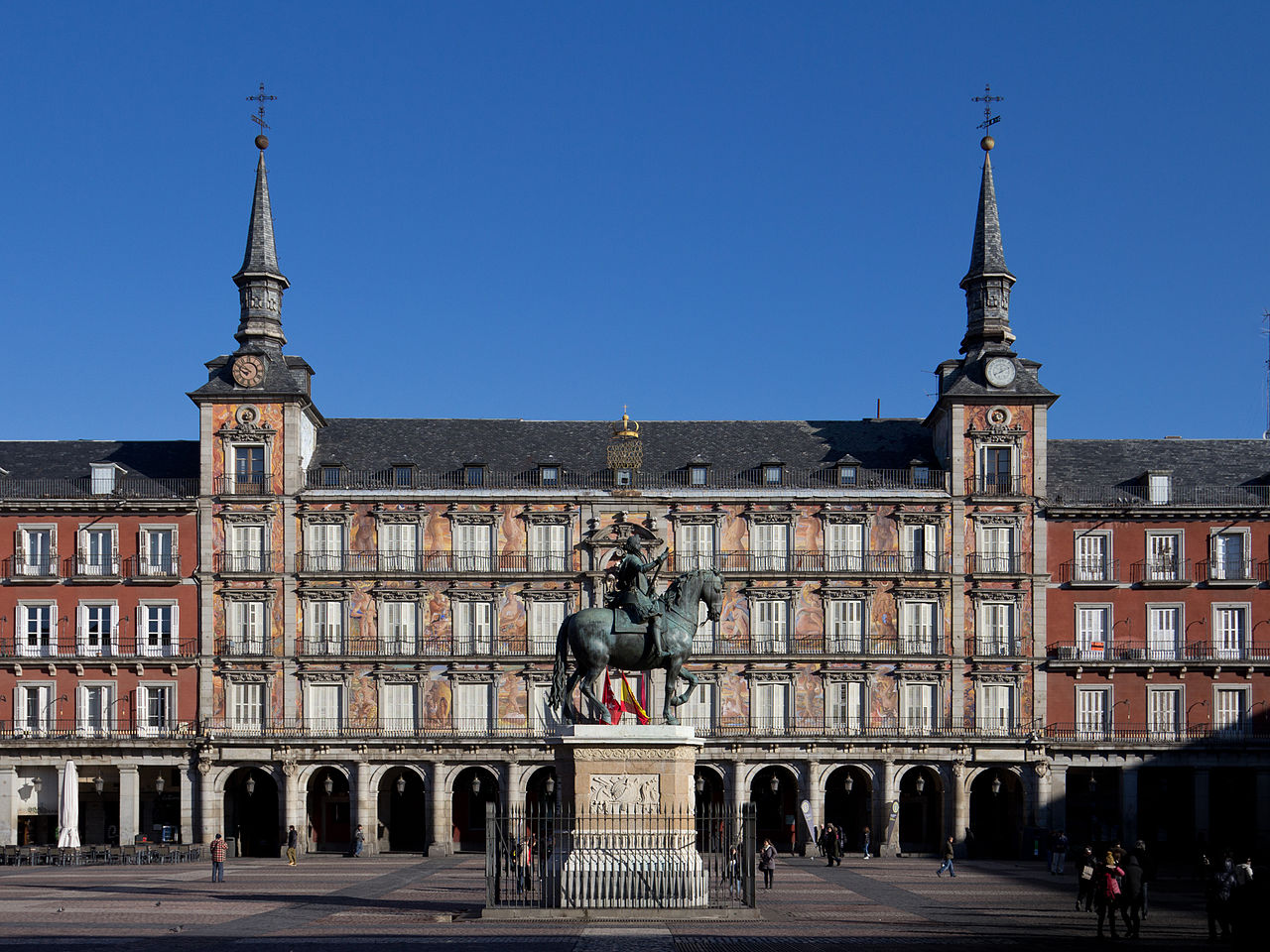
The grandest of Madrid's squares, built by Philip III in 1619 and rebuilt after a fire in 1790. The frescoes on the Casa de la Panadería, the arcaded ground floor with its cafés and restaurants, and the statue of Philip III on horseback at the centre make this the city's most iconic public space. The surrounding streets form the Madrid de los Austrias (Habsburg Madrid) — the oldest part of the city, with the Mercado de San Miguel (a gourmet food market), the Plaza de la Villa (medieval town hall), and the 17th-century churches and convents that have survived the city's many transformations.
6. Barrio de las Letras & the Literary Quarter
The streets around Calle Huertas are where Cervantes (Don Quixote) and Lope de Vega lived, wrote, and died in the early 17th century — Spain's Golden Age of literature. The streets are now pedestrianised, with quotes from their works inlaid in gold letters in the cobblestones, and packed with some of the city's best tapas bars and independent shops. Cervantes' house (where he died in 1616) and Lope de Vega's house (where he lived for 25 years) are both open as museums. The atmosphere shifts from quiet daytime to buzzing evening — this is one of Madrid's best areas for the tapeo (tapas crawl).
Dónde Alojarse — Areas
Barrio de las Letras (Huertas)
The best central neighbourhood: cobbled streets, literary history, tapas bars, walking distance to the Prado, Thyssen, and Plaza Mayor. Hotels range from boutique townhouses to larger renovated buildings. Quieter than Sol or La Latina but still lively. Best for first-time visitors and culture-focused stays.
La Latina & Lavapiés
The old Moorish quarter and the multicultural melting pot, respectively. La Latina is the Sunday morning Rastro flea market and evening tapas capital — Calle Cava Baja is the city's best tapas street. Lavapiés offers the most diverse food scene (Senegalese, Indian, Syrian alongside Spanish) and an edgy, creative energy. Best for food and nightlife.
Malasaña & Chueca
The hip districts north of Gran Vía. Malasaña is the creative quarter: vintage shops, craft beer bars, street art, and the spirit of the 1980s Movida. Chueca is Madrid's LGBTQ+ neighbourhood, with excellent bars, restaurants, and a famously inclusive atmosphere. Best for nightlife, shopping, and a younger vibe.
Salamanca
The upmarket district east of the centre, with wide boulevards, grand 19th-century apartment buildings, designer shopping on Calle Serrano, and the National Archaeological Museum. Quieter, more expensive, and more residential. Best for luxury shopping, fine dining, and a more sedate pace.
Hotels in Madrid



Walking & Day Trips Around Madrid
1. Paseo del Prado — Art Walk
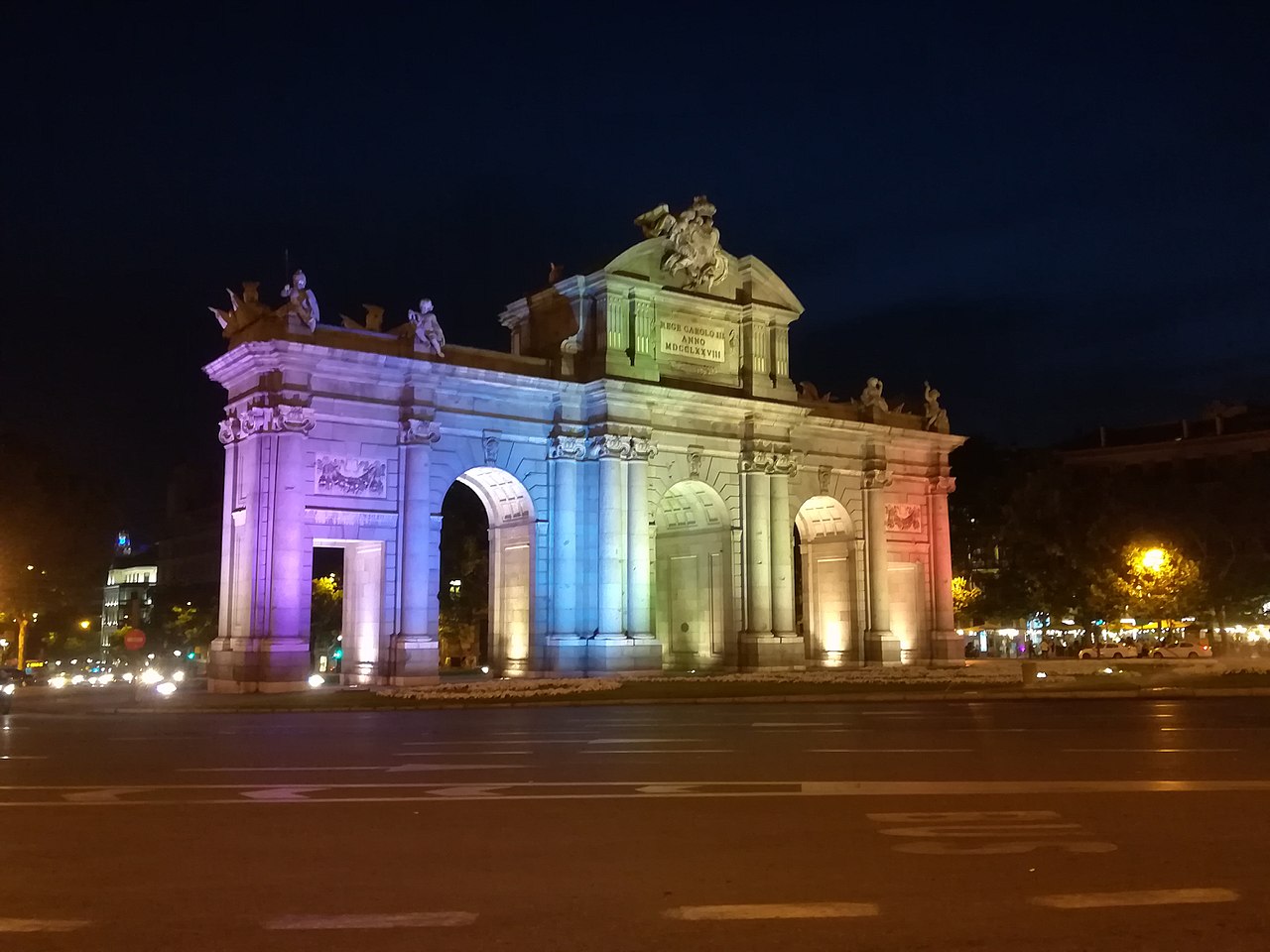
Madrid's grandest avenue, now part of a UNESCO World Heritage landscape that includes the Prado Museum, the Royal Botanical Garden, and Retiro Park. The tree-lined boulevard runs from Atocha Station to Plaza de Cibeles, flanked by the Prado, the Thyssen, the Botanical Garden, and the Naval Museum. The pedestrianised central strip, with its fountains (Neptune, Cibeles, Apollo) and benches, is the classic Madrid paseo — best walked in the late afternoon when the light turns golden. The route continues to the Puerta de Alcalá and enters Retiro Park. 2 km, easy, 1–2 hours with museum stops.
2. Sierra de Guadarrama — La Pedriza
La Pedriza is the most dramatic section of the Sierra de Guadarrama National Park, a wilderness of sculpted granite boulders, clear streams, and pine forests 50 km north of Madrid. The area is a paradise for hikers, climbers, and day-trippers seeking a complete contrast to the city. The classic hike is the Charca Verde route (8 km round trip, 2.5 hours, moderate), following the Manzanares River upstream through granite formations to a natural swimming hole. Access by car only; park at the Canto Cochino car park (arrive early on weekends — it fills by 10:00).
3. El Escorial Monastery (UNESCO)
Philip II's vast monastery-palace-basilica-library complex in the foothills of the Sierra de Guadarrama, 45 km northwest of Madrid. Built between 1563 and 1584 to commemorate Spain's victory over France at the Battle of St Quentin, it is an extraordinary fusion of religious institution, royal palace, pantheon (almost all Spanish monarchs since Charles V are buried here), and library (with 40,000 volumes including manuscripts by St Augustine and St Teresa). Allow 3 hours. Bus from Madrid Moncloa (50 min) or a 45-minute drive. €12.
Nearby Regións


Cities in Madrid
Preguntas Frecuentes
What is Madrid's climate like?
Madrid has a continental Mediterranean climate with hot, dry summers (32–38°C July–August) and cool winters (8–12°C daytime, occasionally below freezing at night). The altitude (650 m) means temperature swings of 10–15°C between day and night, even in summer — pack a jacket for evenings. Spring (April–June) and autumn (September–October) are the most pleasant, with temperatures of 18–26°C. Madrid is dry (only about 400 mm of rain annually), with most rain falling in autumn and spring. The city gets about 2,800 hours of sunshine per year — among the sunniest cities in Europe. The extreme summer heat (above 40°C is not uncommon in July) means August is the month when locals flee to the coast; many independent shops and restaurants close for the entire month.
How does Madrid compare to Barcelona?
Madrid is more Spanish, Barcelona more Mediterranean-international. Madrid's art museums are better (Prado, Reina Sofía vs MACBA, MNAC), Barcelona has Gaudi's architecture and beaches. Madrid has the better tapas culture and nightlife, Barcelona the better location (coast, mountains). Madrid is cheaper for hotels and dining. Madrid is inland and landlocked (the nearest beach is 350 km away), Barcelona is on the Mediterranean. Madrid is the political and administrative capital; Barcelona is more industrial and entrepreneurial. Both are world-class cities. If you only have time for one, choose based on priorities: art, food, and Spanish culture → Madrid. Architecture, beaches, and Mediterranean lifestyle → Barcelona.
What is the best time to visit Madrid?
April–June and September–October are the sweet spots. Spring brings mild weather, the city's trees and gardens in bloom (especially Retiro Park's rose garden in May–June), and cultural events including San Isidro (mid-May), Madrid's biggest festival with bullfights, concerts, and street parties. September–October offer warm days without summer heat, and the city's cultural season kicks into gear. Avoid August if you can: temperatures above 38°C are common, and many independent shops and restaurants close while locals flee to the coast. December is magical with Christmas lights (Madrid does Christmas brilliantly), but cold. January–February is the cheapest period, with hotel rates at their lowest, though the weather is cold and grey.
Is Madrid's tap water drinkable?
Yes. Madrid has some of the best tap water in Spain, sourced from the Sierra de Guadarrama. It's completely safe and tastes good. The phrase 'agua del grifo' (tap water) will get you a glass of water for free in restaurants — it's rude to refuse it, and paying for bottled water when the tap water is this good is unnecessary. Carry a reusable bottle; there are public drinking fountains scattered throughout the city.
What is the Madrid Tourist Card and is it worth it?
The Madrid Card (formerly Madrid Tourist Card) offers unlimited public transport in Zone A (the entire city) plus skip-the-line entry to many museums and attractions. The 24-hour card costs €47, 48-hour €60, 72-hour €72. It's good value if you plan to visit multiple attractions in a short period, especially the Prado (€15), Royal Palace (€13), and Reina Sofía (€12). It also includes the Paseo del Arte Pass combining the Prado, Reina Sofía, and Thyssen (€32 value). The main downside: many museums have free entry hours, and strategic planning can reduce costs significantly. If you're visiting 3+ museums and using public transport heavily, the card pays for itself.