

Sustainable Travel · Italy · Apennines
Eco Hotel a Abruzzo — Your 2026 Guide to Italy's Wildest Regionee
Tucked between Rome and the Adriatic, Abruzzo is Italy's best-kept ecological secret. A third of the region falls within three national parks — including Italy's oldest, the Abruzzo, Lazio & Molise National Park, founded in 1923 — protecting a landscape of beech forests, limestone massifs, and glacial lakes that harbours Marsican brown bears, Apennine wolves, golden eagles, and Apennine chamois in numbers found nowhere else in Europe. Majella's UNESCO Global Geopark status, the medieval hilltop villages of the inner valleys, and the thermal springs of Caramanico make Abruzzo the complete slow-travel destination. Every hotel booked through IMPT retires a full tonne of verified CO₂ on Ethereum at no extra cost to you.
Abruzzo's Three National Parks: Where to Base Yourself
Abruzzo, Lazio & Molise National Park — Pescasseroli & Civitella Alfedena
Italy's oldest national park, founded in 1923, protects 500 km² of Apennine beech forest at the heart of Abruzzo. The village of Pescasseroli sits within the park boundary and functions as its primary visitor hub. Agriturismi here serve locally sourced food from herds that have grazed these valleys for centuries — think slow-roasted lamb with wild herbs, handmade pasta with black truffle from Scanno, and Montepulciano d'Abruzzo wine. Most accommodation is small-scale, family-run, and enrolled in the park's Carta Europea del Turismo Sostenibile.
Civitella Alfedena, 10 km south on the shore of Lago di Barrea, is the gateway to the wolf sanctuary — a semi-wild enclosure where you can observe the Apennine wolf at close range before venturing onto the Camosciara trail for the real thing. The village church dates to the 13th century; the piazza café still serves coffee at prices from another era.
Majella National Park — Caramanico Terme & Guardiagrele
Majella is the Apennines' second-highest massif after Gran Sasso, rising to 2,795 m at Monte Amaro. Its designation as a UNESCO Global Geopark in 2021 recognised the exceptional geological record — Cretaceous limestone riddled with hermit caves used by medieval mystics, including Pietro da Morrone (later Pope Celestine V) who lived in a rock hermitage here for years. The park counts over 2,700 plant species, making it one of the botanically richest areas in Italy.
Caramanico Terme, a thermal spa town in a beech-forested valley, is the practical base. The spa waters — sulphate-bicarbonate-calcic — have been used medicinally since Roman times. Eco-hotels here increasingly pair wellness stays with guided wildlife walks, foraging excursions for wild herbs and mushrooms, and night-sky astronomy sessions on the high plateau.
Gran Sasso e Monti della Laga — Campo Imperatore
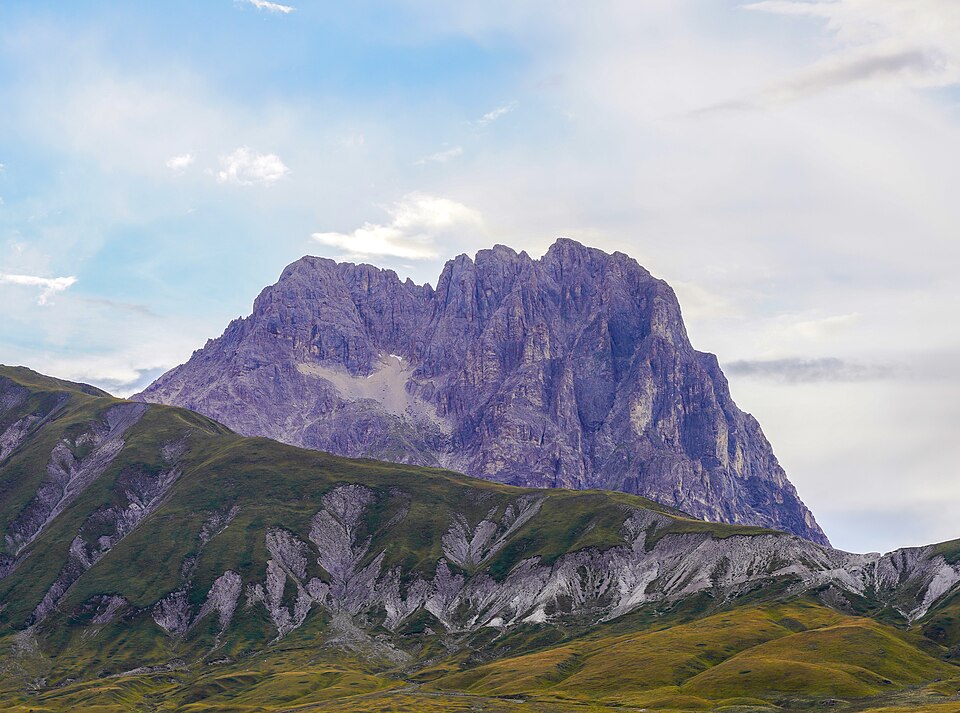
Campo Imperatore is a high plateau at 1,500–1,800 m elevation — sometimes called the "Little Tibet of Italy" — with an almost surreal flatness punctuated by medieval castle villages perched on surrounding ridges. The Gran Sasso peaks above it, and the plateau itself is one of Europe's most important botanical sites for endemic species of alpine flora. L'Aquila, rebuilt after the 2009 earthquake with international architectural input and now home to a vibrant university-city culture, is the base for exploring this northern section.
🐻 Wildlife fact: The Marsican brown bear is a genetically distinct subspecies found almost exclusively in central Italy. Current estimates put the population at 50–60 individuals. Conservation measures introduced in the 1920s have prevented extinction and the population is slowly increasing. Night camera traps in the park log bear movements year-round.
Conservation & Sustainability: Abruzzo's Ecological Legacy
Abruzzo's conservation record is one of Europe's most impressive. The national park system created here a century ago served as the template for Italy's entire national park network. Key programmes running today include:
- Marsican Bear LIFE Project: EU-funded programme monitoring bear corridors extending from Abruzzo south through Molise and into Calabria — aiming to connect the core population with historical range across the Apennines
- Wolf Recolonisation Monitoring: Apennine wolves have naturally recolonised northward into the Alps and eastward into Croatia from their core Abruzzo range — among the most watched wildlife recovery stories in Europe
- Lynx Reintroduction Proposal: Conservationists are actively studying reintroduction of the Eurasian lynx to Majella — last present in central Italy in the 19th century
- Agroforestry & Transhumance: Traditional transhumance routes (tratturi) — ancient drove roads crossing Abruzzo — are being revived as both wildlife corridors and cultural tourism paths
- Organic Agriculture: Over 15% of Abruzzo's farmland is certified organic — above the Italian average — and much of the output reaches eco-tourism accommodation directly
The region's Adriatic coast adds a marine dimension: the Torre del Cerrano marine protected area near Pescara protects loggerhead sea turtle nesting beaches and Posidonia seagrass meadows. Ethical snorkelling and volunteering during the June–August nesting season are possible through the Torre del Cerrano protected area authority.
What to Do: Eco-Activities in Abruzzo
Wildlife Watching
Dawn walks on the Camosciara circular trail (7 km, moderate, near Civitella Alfedena) offer the highest probability of Marsican bear sightings in spring and early summer. Golden eagles nest on limestone cliffs above Villetta Barrea. The Camoscio trail on Majella accesses chamois herds and, in late autumn, rutting stag encounters. Night outings with park-licensed guides target Apennine wolves in the Opi valley.
Trekking the Via Verde Adriatica
The 131 km Via Verde Adriatica follows a disused railway along Abruzzo's Adriatic coastline between Vasto and San Salvo — flat, traffic-free, and entirely scenic. The route passes through marine reserves, pinewood, and historic fishing villages. Best cycled or walked in spring and autumn when the coast is uncrowded. E-bike hire available at multiple points.
Truffles, Wine & Slow Food
Abruzzo's gastronomy is deeply tied to its landscapes. Black truffles (tuber melanosporum) from the Scanno and Sulmona valleys appear in autumn menus from October. Montepulciano d'Abruzzo and Trebbiano d'Abruzzo DOC wines are produced by small estates many of which offer cellar-door visits and overnight stays. Saffron from L'Aquila — certified PDO, among Italy's most prized — colours the region's signature pasta dishes.
Skiing with a Conscience
Roccaraso–Rivisondoli ski area is the largest in southern Italy, with 120 km of pistes at 1,250–2,140 m. Unlike the heavily marketed northern Alps, infrastructure here remains human-scale, accommodation is family-run, and the resort communities have invested in snowmaking efficiency and electricity from renewable sources. Campo Imperatore on Gran Sasso is the choice for cross-country skiing and ski-touring through empty plateau wilderness.
How IMPT Makes Your Abruzzo Stay Carbon-Negative
Here's the maths. Una notte media in hotel produce circa 35 kg of CO₂ — from heating, laundry, lighting, and food service. When you book any Abruzzo hotel through IMPT, we retire 1,000 kg of UN-verified carbon removal credits. That's 28 times what your stay produces. Not carbon neutral — carbon-negative.
The cost to you? Zero. IMPT funds the removal from its booking commission. You pay the standard nightly rate — the same as you'd pay elsewhere. The carbon credits are tokenised on Ethereum, retired against a named project, with a public retire code anyone can verify. No double-counting. No greenwashing. Just verified carbon removal, every night.
- €5 di credito gratuito when you sign up — applied to your first Abruzzo booking
- 5% back on every stay — 3% funds carbon projects, 2% as travel credit
- 8M+ hotels worldwide, 195 countries — Abruzzo is just the start
- Cancellazione gratuita on most rates, typically up to 48 hours before check-in
Beyond Hotels — More Ways IMPT Works in Abruzzo
Gift a wildlife trip to Abruzzo — IMPT's gift experiences let you send a €100/€200/€500 hotel credit to anyone. Perfect for the nature lover in your life who hasn't yet discovered Italy's wild interior. Or choose a tree-planting gift — each tree planted is GPS-tagged, photographed, and linked to a named farming family.
Shopping for trekking gear before your Abruzzo trip? Use IMPT's cashback shopping through 25,000+ retail partners to earn cashback on outdoor clothing and equipment while contributing to carbon removal on every purchase.
For corporate sustainability teams running retreats in Abruzzo's national parks, IMPT's B2B Aziende Travel platform provides automatic Scope 1/2/3 ESG reporting, corporate invoicing, and carbon tracking per delegate. The Starter tier is free. Interested in running IMPT across Italy? Country Ownership offers 50% revenue share on all Italian-user transactions. Book a call →
Domande Frequenti
What makes Abruzzo Italy's premier eco-tourism destination?
Abruzzo hosts three national parks covering a third of its territory — Abruzzo, Lazio & Molise National Park (Italy's oldest, founded 1923), Majella National Park (a UNESCO Global Geopark), and Gran Sasso e Monti della Laga. This concentration of protected land sustains Italy's largest populations of Marsican brown bears (about 50–60 individuals), Apennine wolves, Apennine chamois, and golden eagles.
Where is the best base for eco-travel in Abruzzo?
Pescasseroli, inside the Abruzzo, Lazio & Molise National Park, is the classic base for wildlife-focused visitors. Civitella Alfedena on Lago di Barrea offers smaller-scale agriturismo accommodation near the wolf sanctuary. For Majella, Caramanico Terme with its thermal spa heritage and mountain backdrop is ideal. All three have eco-certified accommodation options bookable via IMPT.
Can I see Marsican bears in Abruzzo?
Yes, with patience. The Marsican bear is a subspecies of brown bear genetically distinct from all other European bears, found almost exclusively in and around the Abruzzo national park. Dawn and dusk walks on the Camosciara trail in May–June, when bears move to lower elevations to feed on beech buds and wild cherries, offer the best sighting chances. Park rangers lead licensed wildlife-watching sessions.
When is the best time to visit Abruzzo for sustainable travel?
May–June is prime: wildflowers blaze across the high plateau meadows, Marsican bears emerge from hibernation, and Apennine chamois kids are visible. September brings truffle season and the grape harvest in the Montepulciano d'Abruzzo wine valleys. Winter (December–March) transforms the Gran Sasso and Maiella into ski terrain, with Roccaraso and Campo Imperatore among Italy's most underrated ski resorts.
How do I get to Abruzzo from Rome?
Abruzzo is just 90 minutes from Rome by car via the A24 autostrada through the Gran Sasso tunnel. By train, Pescara (the regional capital on the Adriatic coast) is 2.5–3 hours from Roma Termini. From Pescara, local buses serve the national park villages. L'Aquila, rebuilt after the 2009 earthquake into a model of sustainable urban renewal, is 1 hour 20 minutes from Rome by express bus.
← Back to Italy Eco-Hotels · Explore Rome · Naples · Florence · Browse All Countries · Aziende Travel · Gift a Trip