Sustainable Travel · Italy
Eco Hotel a Naples — Your 2026 Guide to Soggiorni Sostenibili
Naples is Italy at its most unfiltered — a city of three million people in the wider metropolitan area, pressed between a UNESCO-listed historic centre packed with 400 churches and the brooding presence of Vesuvius across the bay. It invented pizza. It has one of the world's great archaeological museums (the Museo Nazionale, home to Pompeii's most significant finds). It has the Spaccanapoli — a ruler-straight Greek street that slices the entire city and hasn't changed alignment in 2,500 years. And it has an energy, a noise, and a beauty that cities twice its size struggle to match. For sustainable travellers, Naples rewards staying centrally and using Italy's excellent rail connections: Pompeii is 35 minutes and €2.90 by regional train; the Amalfi Coast is accessible by boat and bus. Book through IMPT and every night removes 1 tonnellata di CO₂ verificata from the atmosphere.
Naples's Neighbourhoods: Dove Alloggiare
Centro Storico (Spaccanapoli & Via dei Tribunali)
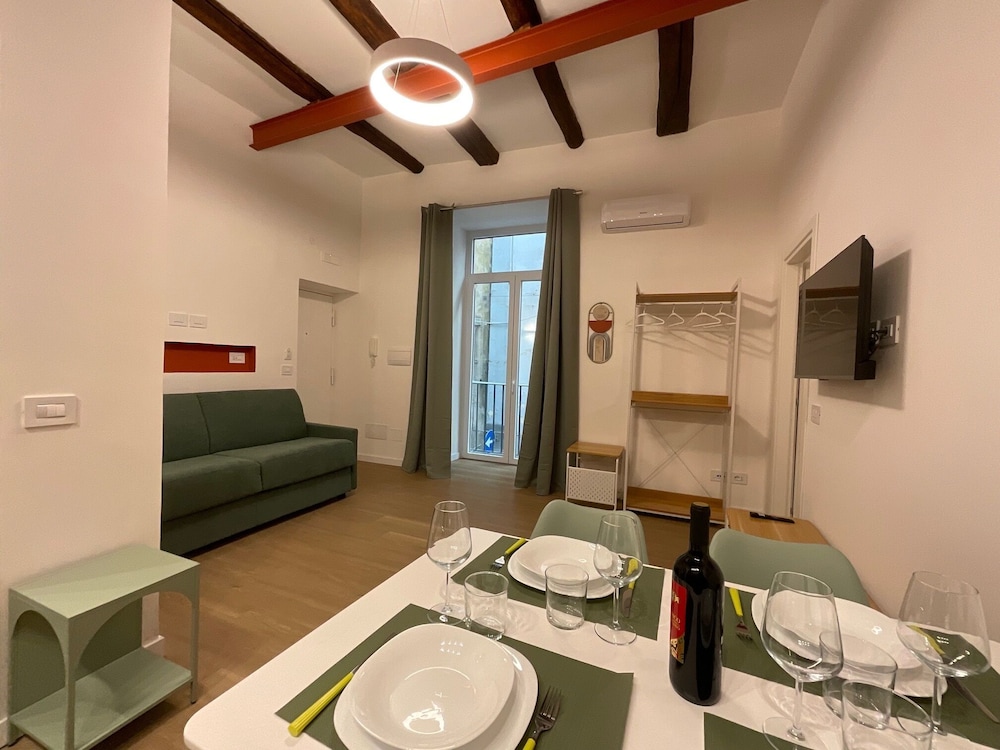
The historic centre — UNESCO-listed since 1995 — is Naples at its most intense and most rewarding. Staying here means waking to the sound of motorini, espresso, and the clatter of the morning markets. The Decumano Maggiore (Via dei Tribunali) and Spaccanapoli (Via San Biagio dei Librai and its extensions) are the two great east-west axes of the original Greek grid, still running ruler-straight through two-and-a-half millennia of accumulated city. Hotels here range from artfully restored historic buildings to smaller B&Bs in palazzo apartments — the latter often offering the most authentic Naples experience.
Chiaia — Elegant Naples by the Sea
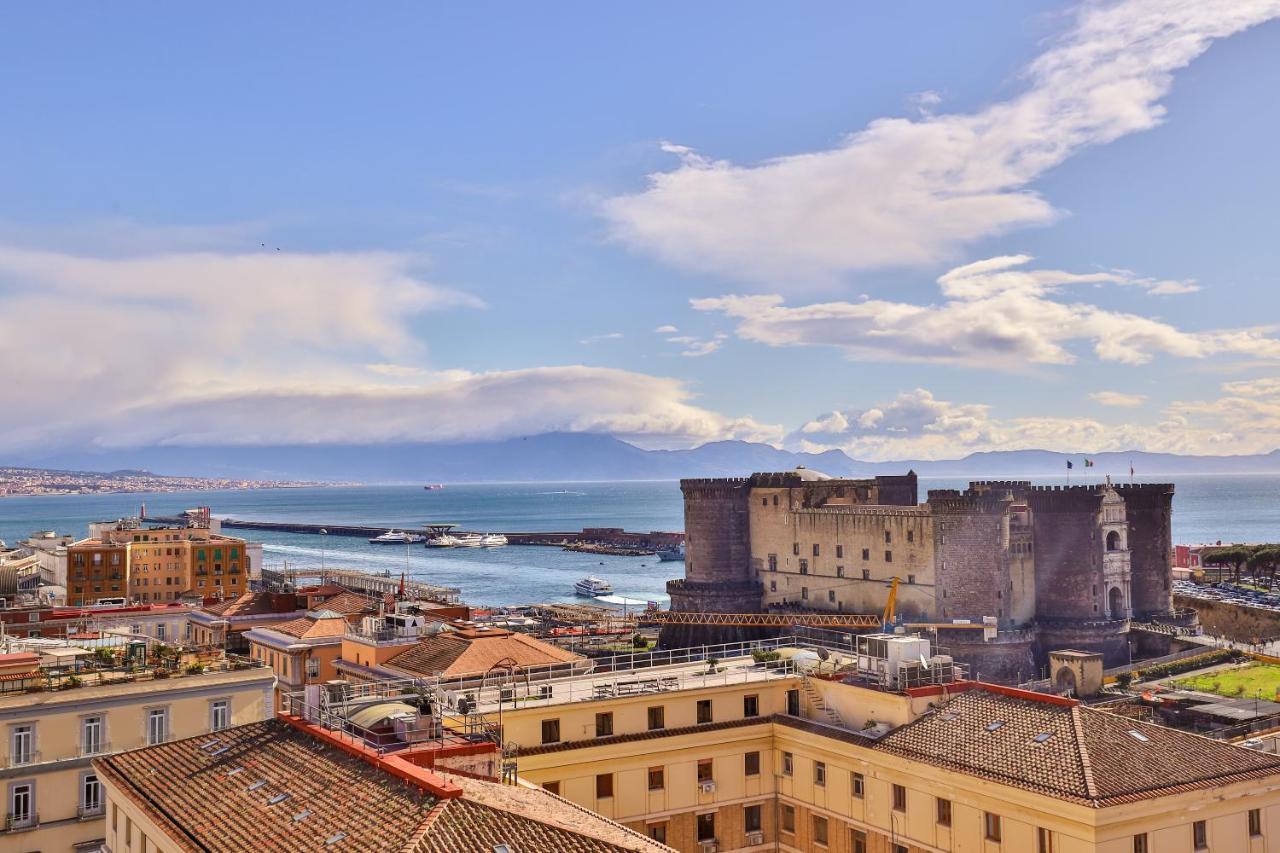
West of the historic centre, Chiaia stretches along the seafront from the Castel dell'Ovo to the Mergellina marina. This is Naples's most affluent neighbourhood — boutique shopping on Via dei Mille, aperitivo culture along the lungomare, and a concentration of Naples's better boutique hotels. The views across the bay to Vesuvius are spectacular in the early morning before the haze develops.
Vomero — Hill Town Above the City
Reached by three funicolari from the centre, Vomero occupies a high ridge above Naples with significantly cleaner air and quieter streets. The Castel Sant'Elmo and the Certosa di San Martino — a Baroque monastery turned museum with the finest view in Naples — are both here. A good choice for travellers who want a calm base with easy downhill access to the chaos below.
🍕 A true Neapolitan pizza costs €4–€8. A coffee costs €1. This is Italy's most affordable major city for travellers who eat as Neapolitans do — standing at the bar, at neighbourhood spots rather than tourist-priced piazza restaurants.
Getting Around Naples and the Regione Sustainably
Naples has an improving public transport network. The city metro — particularly Lines 1 and 6 — connects key areas, and the funicolari serve Vomero and Posillipo. For the wider region, Naples is one of Italy's great rail hubs:
- Circumvesuviana: Regioneeeal train to Pompeii (35 min, €2.90), Herculaneum (15 min, €1.90), and Sorrento (65 min, €4.20)
- High-speed trains (Trenitalia/Italo): Rome 1h 10min, Florence 3h, Milan 4.5h — no need to fly within Italy
- Ferry from Molo Beverello: Fast hydrofoils to Capri (45 min), Ischia (60 min), Sorrento, and Amalfi
- Metro Lines 1 & 2: Cover the centre, Piazza Garibaldi (main station), and the university area
- Funicolari: Central, Chiaia, and Montesanto funiculars connect the lower city to Vomero
The ferry network to the islands and Amalfi Coast is particularly important for sustainable travel: a hydrofoil to Capri or the Amalfi ports generates a fraction of the carbon of road travel along the cliff road, and is faster in season when the coast road jams.
Naples's Must-Do Experiences for Eco Travellers
Museo Nazionale Archeologico
The National Archaeological Museum holds the world's finest collection of Graeco-Roman antiquities — including the Farnese Hercules, the Alexander Mosaic from Pompeii's House of the Faun, and the erotica from Pompeii's Secret Cabinet. Entry €20, but the breadth of material means you need at least three hours. The museum alone justifies Naples as a destination.
Catacombs of San Gennaro
The second-century catacombs beneath the basilica of San Gennaro extra Moenia were cut through the volcanic tufa rock and contain some of the earliest Christian art in the western world. The guided tour (€9) supports the La Paranza cooperative — a social enterprise that employs local young people from the Rione Sanità neighbourhood as guides and cultural ambassadors. One of Naples's most purposeful tourism experiences.
Pompeii and Herculaneum
The Circumvesuviana delivers you to Pompeii in 35 minutes for €2.90. The excavated city — frozen by the 79 AD eruption of Vesuvius — is one of the most extraordinary archaeological sites in the world. Book timed entry tickets online to avoid the queues (€18 for adults). Herculaneum (15 minutes, €1.90) is smaller, better-preserved, and often quieter — a more manageable half-day for visitors with limited time.
💡 Use IMPT's trip credit gifting to bring someone to Naples. Pair it with a carbon voucher to offset flights. For Italian business travel, IMPT B2B has CSRD reporting built in.
How IMPT Makes Your Naples Stay Carbon-Negative
Una notte media in hotel produce circa 35 kg of CO₂. When you book any Naples hotel through IMPT, we retire 1,000 kg of UN-verified carbon removal credits — funded from IMPT's commission at no extra cost. That's 28 times your stay's footprint, tokenised on Ethereum and permanently verifiable.
- €5 di credito gratuito when you sign up — applied to your first Naples booking
- 5% back on every stay — 3% funds carbon projects, 2% as travel credit
- 8M+ hotels worldwide including Naples, Sorrento, Positano, and the Amalfi towns
- Cancellazione gratuita on most rates up to 48 hours before check-in
Beyond Hotels — More Ways IMPT Works in Naples
Shop through IMPT's cashback platform to offset travel spend further. Gift a Naples trip credit — a perfect experience gift for the Italy lover in your life. Carbon vouchers from $40 let friends retire their own CO₂ in a named project. For corporate travel to Italy, IMPT B2B provides ESG reporting, CSRD dashboards, and corporate hotel rates. Italy's Country Ownership is available — 50% revenue share on Italian-registered transactions. Book a discovery call →
Domande Frequenti
Is Naples's historic centre a UNESCO World Heritage Site?
Yes. Naples's historic centre has been a UNESCO World Heritage Site since 1995. The designation recognises over 2,000 years of continuous urban history, from Greek Neapolis through Roman, Byzantine, Norman, and Bourbon rule. The decumani — the original Greek street grid — are still the city's main arteries. Over 400 historic churches are packed into the centre.
How does IMPT make my Naples hotel booking carbon-negative?
Every Naples hotel booking through IMPT retires 1 tonne of UN-verified CO₂ removal on Ethereum — funded from IMPT's booking commission at zero extra cost. A hotel night produces approximately 35 kg of CO₂. IMPT removes 1,000 kg — making your stay 28× carbon-negative, publicly verifiable on-chain.
What are the best neighbourhoods to stay in Naples?
The Centro Storico around Spaccanapoli and Via dei Tribunali is the most culturally immersive. Chiaia is Naples's elegant seafront neighbourhood, best for boutique hotels. Vomero, reached by funicolare, offers calmer streets, better air, and panoramic bay views.
How do I reach Pompeii and the Amalfi Coast sustainably from Naples?
Pompeii is 35 minutes from Naples Centrale by the Circumvesuviana regional train (€2.90). The Amalfi Coast is served by bus from Sorrento (30 min from Naples by Circumvesuviana) or by ferry from Naples port — scenic, low-carbon, and timetabled.
Where is the best pizza in Naples?
Naples invented pizza. Classics include L'Antica Pizzeria da Michele (Margherita and Marinara only, reliably extraordinary), Sorbillo on Via dei Tribunali, and Di Matteo (also on Via dei Tribunali). A Neapolitan pizza typically costs €4–€8 — among the best value-per-experience ratios in European travel.
← Back to Italy Eco-Hotels · Also see Rome · Florence · Venice · Milan
Eco Hotel
Mostrando 12 hotel ecologici. Prenota su IMPT — garanzia miglior prezzo — stesso prezzo di Booking.com o migliore.



📱 Daily hotel deals on Telegram
Join @IMPThotels →