Sustainable Travel · France
Éco-Hôtels à Marseille — Your 2026 Guide to Séjours Durables
Marseille is France's oldest city and its most underrated. Founded by Greek sailors in 600 BCE, it has always been a city of the sea — and the sea is precisely what makes sustainability urgent here. The Calanques National Park, flanking the city's eastern edge, is one of the most biodiverse coastal ecosystems in Europe: its limestone fjords, posidonia seagrass meadows, and endemic marine species are under direct threat from overtourism, plastic pollution, and Mediterranean temperature rise. Choosing to stay and travel consciously in Marseille isn't abstract virtue-signalling — it has measurable local impact. Every hotel booking through IMPT retires 1 tonne of CO₂ on-chain at no extra cost. The garantie du meilleur prix — même prix que Booking.com ou mieux, plus 5 € de crédit gratuit pour les nouveaux membres. Marseille's bouillabaisse, its Vieux-Port dawn light, and the Calanques from a kayak are waiting.
Marseille Neighbourhoods: Où Séjourner Sustainably
Marseille is structured around its harbour, the Vieux-Port — from here, the city fans out in arrondissements that each have a distinct character. The RTM metro, tram, and ferry network connects most of them without needing a car.
Le Panier — The Ancient Hilltop Village
Le Panier (the basket) is the oldest continuously inhabited neighbourhood in France, spreading across the hill above the Vieux-Port. Its narrow lanes are lined with peeling ochre and terracotta-painted houses, artisan workshops, and the occasional centuries-old well. The Vieille Charité — a 17th-century baroque hospice — now houses two museums and is one of France's finest architectural gems. Hotels in Le Panier are almost exclusively boutique — small-scale, independently owned, and mostly in renovated historic buildings. The neighbourhood is entirely pedestrianised in its upper reaches, so staying here means zero car dependency for most of your visit.
Cours Julien & Noailles — Bohemian Market District
South of the station, Cours Julien is Marseille's equivalent of Paris's Canal Saint-Martin — street art, vintage boutiques, record shops, and independent restaurants surrounding a broad open square with a colourful Wednesday morning organic market. The adjacent Noailles neighbourhood is Marseille's most multicultural quarter, where North African, Syrian, and Southeast Asian groceries sit alongside Lebanese bakeries and Senegalese restaurants. The Marché du Noailles is one of the finest daily food markets in France — sourced directly from Provençal producers.
L'Estaque & The North — The Sea Without the Crowds
L'Estaque is a former fishing village absorbed into northern Marseille, made famous by Cézanne and Braque who painted its terracotta rooftops and industrial chimneys obsessively in the early 20th century. Hotels here are rare but the ferry connection to the Vieux-Port makes it a genuine alternative to central accommodation. The L'Estaque beach is quieter than the city beaches; the surrounding hills have walking trails rarely walked by tourists.
⛵ Marseille Transport Tip: The RTM network's Ferry Boats (vedettes) cross the Vieux-Port every few minutes for €0.60 — the world's oldest public transport service, running continuously since 1880. The Frioul ferry from Quai des Belges reaches the Château d'If island prison (Alexandre Dumas' inspiration for The Count of Monte Cristo) and the Frioul island archipelago in 20 minutes.
The Calanques: Europe's Urban National Park
The Calanques National Park is unique globally: a national park within a major city. Its 520 km² of protected land and sea begin less than 10 km from the Vieux-Port, accessible by public bus (Line 21 from the Castellane metro to Luminy) or by kayak from the Prado beaches. The calanques — narrow limestone inlet coves — drop into water of extraordinary clarity, with posidonia seagrass meadows that are among the Mediterranean's most important carbon sinks and marine nurseries.
The park authority applies strict visitor management: in summer, access to the most sensitive calanques (Sugiton, Morgiou, Sormiou) requires a free timed-entry permit booked in advance. Fire risk closures operate when the mistral reaches certain speeds. These rules exist because the ecosystem is fragile — and visitors who respect them are actively protecting one of Europe's most remarkable wild places.
Sustainable Activities in Marseille
- Calanques by kayak: Departing from Marseille's Prado beach — sea-kayak tours with accredited guides who teach marine ecology alongside paddling technique
- Vieux-Port fish market: Every morning from 6am, direct-landed catch from local fishing boats — one of France's last functioning traditional fish markets
- MuCEM (Museum of European and Mediterranean Civilisations): In a spectacular J4 port building connected to the Fort Saint-Jean by a bridge — one of the world's most stunning museum buildings, powered by renewable energy
- La Friche la Belle de Mai: A vast former tobacco factory repurposed as a cultural campus — concerts, restaurants, urban gardens, and independent cinema in a regenerated industrial building
- Olive oil tasting in the Aix-en-Provence hinterland: 30 minutes by TGV — the Bouches-du-Rhône's olive groves produce AOC-certified oils using sustainable farming methods unchanged since antiquity
How IMPT Makes Your Marseille Stay Carbon-Negative
Here's the maths. Une nuit d'hôtel moyenne produit environ 35 kg of CO₂ — from air conditioning, laundry, lighting, and food service. When you book any Marseille hotel through IMPT, we retire 1,000 kg of UN-verified carbon removal credits. That's 28 times what your stay produces. Not neutre en carbone — carbon-negative.
The cost to you? Zero. IMPT funds the removal from its booking commission. You pay the standard nightly rate — the garantie du meilleur prix — même prix que Booking.com ou mieux on the same room. The carbon credits are tokenised on Ethereum, retired against a named project, with a public retire code anyone can verify. No double-counting. No greenwashing. Just verified carbon removal, every night.
- 5 € de crédit gratuit when you sign up — applied to your first Marseille booking
- 5% back on every stay — 3% funds carbon projects, 2% as travel credit
- 8M+ hotels worldwide, 195 countries — Marseille is just the start
- Annulation gratuite on most rates, typically up to 48 hours before check-in
Beyond Hotels — More Ways IMPT Works in Marseille
Shop through IMPT's 25,000+ retail partners for cashback on purchases that also offset carbon. Shop at app.impt.io/shop before your Marseille trip and earn cashback that funds verified climate projects.
For business travel, Marseille is France's leading port city and growing tech hub. IMPT's B2B Entreprises Travel platform provides automatic ESG reporting and CSRD-aligned Scope 1/2/3 data for every booking. Starter free; Business $99/mo; Enterprise $250/mo.
Interested in the French Country Ownership opportunity? Country Ownership gives 50% revenue share on all IMPT transactions from French-registered users, lifetime and transferable. Book a consultation →
Book a carbon-offset flight to Marseille Provence Airport through IMPT — flights with carbon removal built in at checkout, launching H2 2026.
Questions Fréquentes
Which Marseille neighbourhood is best for an eco-conscious stay?
Le Panier, Marseille's oldest neighbourhood above the Vieux-Port, has the highest concentration of independent boutique hotels in walkable distance of the ferry port and central market. The Cours Julien district in the 6th arrondissement is also excellent — creative, walkable, and well-served by the RTM metro and tram.
How do I get from Marseille Provence Airport to the city sustainably?
The Navette Marseille airport shuttle runs every 20 minutes to Saint-Charles railway station in the city centre (25 minutes, €10.20). The metro connects Saint-Charles to all major neighbourhoods including the Vieux-Port and Le Panier.
Is the Mediterranean coast near Marseille good for sustainable outdoor activities?
Outstanding. The Calanques National Park — limestone fjords and turquoise coves stretching 20 km east of Marseille — is reachable by metro plus walking (45 min), by ferry, or by bike. The park enforces strict daily visitor limits in summer to protect marine biodiversity. Entry is free; access is managed to avoid overcrowding.
Does IMPT cost more than booking on Booking.com for Marseille hotels?
No — IMPT matches Booking.com prices exactly. Carbon removal (1 tonne per booking) is funded from IMPT's commission. New members receive 5 € de crédit gratuit, and earn 5% back on every stay (3% to carbon projects, 2% as travel credit).
Can I book Marseille corporate hotel stays through IMPT with ESG reporting?
Yes. IMPT's B2B Entreprises Travel platform provides automatic Scope 1/2/3 carbon reporting, aligned with GHG Protocol and CSRD requirements. Business tiers: Starter free, Business $99/mo, Enterprise $250/mo.
What is the best time to visit Marseille sustainably?
May–June and September–October offer the best weather with fewer crowds and lower carbon footprint from mass tourism. The Calanques are cooler and less fire-risk-prone in shoulder seasons. Marseille is warm enough to swim from May through October.
Does IMPT offer gift options for Marseille trips?
Yes. IMPT Trip Credits ($100/$200/$500) can be gifted and redeemed across 8M+ hotels including all Marseille properties. Carbon Offset vouchers ($40–$150) and Plant-Trees gifts are also available — all delivered by email or printable card.
← Back to France Eco-Hotels · Also see: Paris · Nice · Lyon · Browse All Countries · Entreprises Travel · Gift a Trip · Carbon Vouchers
Eco Hotels
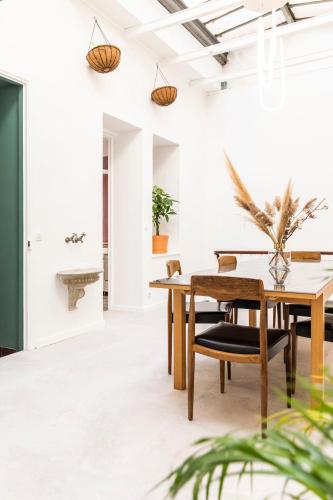
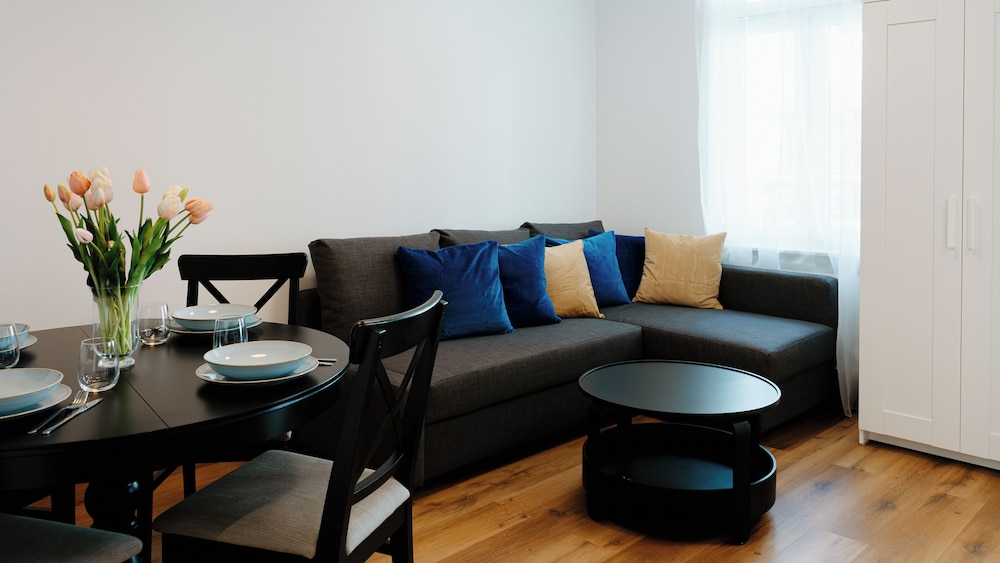
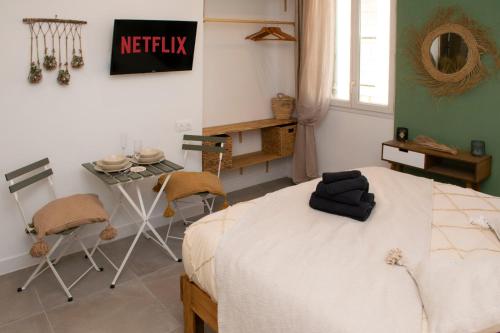
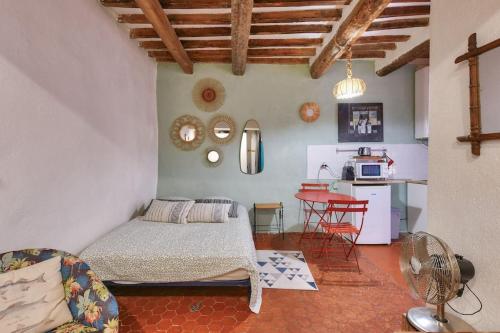
Showing 12 eco-friendly hotels. Book on IMPT — the same price as Booking.com.