Sustainable Travel · France
Éco-Hôtels à Nice — Your 2026 Guide to Séjours Durables
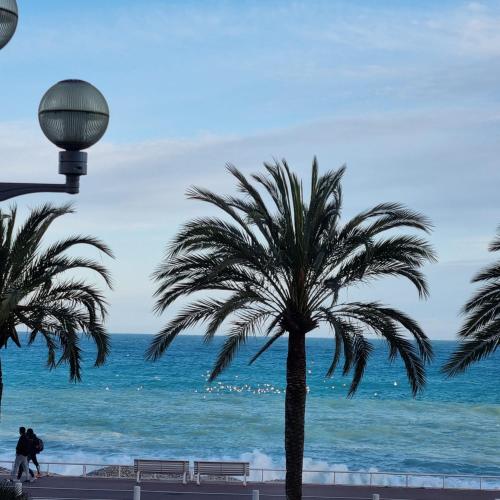
Nice is the crown jewel of the French Riviera — a city where the turquoise Mediterranean laps against a seven-kilometre stretch of pebble beach, where the old town is a labyrinth of sun-bleached alleys and open-air markets, and where the Alps rise in the background like a natural postcard. As a UNESCO World Heritage site recognised for its winter resort architecture and its seamless blend of sea, city, and mountain, Nice is uniquely suited to low-impact travel. The city's compact centre is walkable from end to end, its tram line connects the airport to the train station, and the surrounding region — Monaco, Antibes, Cannes, and the hillside villages of the arrière-pays — is all accessible by regional rail. When you book through IMPT, every single night removes 1 tonne of UN-verified CO₂ from the atmosphere — 28 times more than your stay produces — at no extra cost. The rate is the same as Booking.com.
Why Nice for Sustainable Travel
Nice has transformed its transport infrastructure remarkably over the past decade. The Tramway de Nice now runs from the airport to the city centre and the port, with an extension reaching the Nice-Ville main train station. Electric buses supplement the network, and the city has banned diesel vehicles from the city centre during peak hours. The Promenade des Anglais, one of the world's most famous coastal roads, has had its speed limits reduced and sections converted to pedestrian and cyclist priority.
The Nice Côte d'Azur airport, the third-busiest in France, has invested heavily in sustainability — solar panels on terminal roofs, electric ground vehicles, and mandatory engine shut-off during boarding. The airport's direct tram link means you can land and be in the city centre within 25 minutes without ever needing a taxi or rental car.
Nice's food culture is another sustainability asset. The Cours Saleya market in the old town is one of the most famous produce markets in France, selling seasonal fruits, vegetables, and flowers from Provençal farms. The Niçoise diet — fresh vegetables, olive oil, fish, and herbs — is inherently low-carbon and overwhelmingly local. The city's commitment to reducing food waste is demonstrated by its network of zero-waste grocery stores and its support for the local circuits courts (short supply chain) movement.
IMPT gives you Nice the same price as Booking.com. The difference? IMPT retires 1 tonne of verified carbon credits on-chain for every booking. No green premium. Real, auditable carbon removal funded from our commission. Search Nice hotels now →
Best Areas for Eco-Conscious Stays in Nice
Vieux Nice — The Old Town
Vieux Nice is a maze of narrow, pedestrianised streets that have barely changed in 300 years. The Cours Saleya market anchors the neighbourhood with its daily flower and produce stalls. Accommodation here is almost exclusively in historic buildings — converted aristocratic palaces, former monasteries, and tall townhouses with terracotta roofs and shuttered windows. The neighbourhood's density and narrowness mean natural shade and airflow, reducing air conditioning needs. Everything — the beach, the tram, the train station — is within a 15-minute walk.
Le Port — Authentic & Affordable
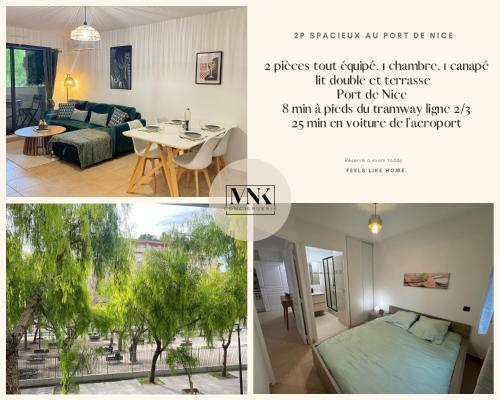
Nice's port district has a completely different character from the old town. It's a working harbour with ferry connections to Corsica, but its back streets are filled with independent bistros and family-run hotels. The area is less touristy, better value, and connected to the city centre by tram and a pleasant 15-minute walk along the Promenade des Anglais. The nearby Carrefour de la Libération market hall is where locals shop for organic produce, and the Port Lympia waterfront has been redeveloped with cycle lanes and pedestrian areas.
Cimiez — Hilltop Tranquillity
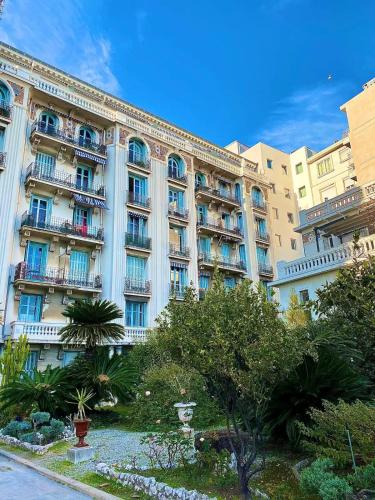
Cimiez sits on a hill above Nice, home to the Matisse Museum, Roman arena ruins, and the magnificent Hôtel Regina — a 19th-century palace that once housed Queen Victoria. Hotels here tend to be boutique properties with gardens and views, often in buildings with thick stone walls that stay cool naturally. Cimiez is quieter than the centre, but bus line 15 connects it to the old town in 10 minutes, and the walk down through the olive groves of the Parc du Busca is stunning.
How IMPT Makes Your Nice Stay Carbon-Negative
Here's the maths. Une nuit d'hôtel moyenne produit environ 35 kg of CO₂ — from air conditioning, laundry, lighting, and food service. When you book any Nice hotel through IMPT, we retire 1,000 kg of UN-verified carbon removal credits. That's 28 times what your stay produces. Not neutre en carbone — carbon-negative.
The cost to you? Zero. IMPT funds the removal from its booking commission. You pay the standard nightly rate — the same as Booking.com. The carbon credits are tokenised on Ethereum, retired against a named project, with a public retire code anyone can verify. No double-counting. No greenwashing. Just verified carbon removal, every night.
- 5 € de crédit gratuit when you sign up — applied to your first Nice booking
- 5% back on every stay — 3% funds carbon projects, 2% as travel credit
- 8M+ hotels worldwide, 195 countries — Nice is just the start
- Annulation gratuite on most rates, typically up to 48 hours before check-in
Sustainable Que Faire à Nice and the Riviera
Nice itself is a walking destination. The Promenade du Paillon is a 12-hectare linear park that connects Place Masséna with the sea, containing gardens, playgrounds, and a giant water mirror for children. The Colline du Château — Castle Hill — is not actually a castle but a limestone promontory topped with a park and one of the best panoramic views on the Mediterranean coast. Its waterfall and gardens are free to visit, and the climb from the old town takes about 15 minutes.
The regional TER trains are one of Europe's best public transport bargains. From Nice-Ville station, a €5 ticket takes you to Monaco in 18 minutes, Cannes in 30 minutes, or Antibes in 20 minutes. The train runs along the coast with stunning sea views — arguably a better experience than driving, and certainly a lower-carbon one.
For a deeper adventure, the Mercantour National Park — a 30-minute bus ride from Nice — offers hiking trails through alpine meadows, ancient forests, and the Vallée des Merveilles with its 30,000-year-old rock engravings. The park is accessible entirely by public transport from Nice.
And when you're done exploring? Shop through IMPT's 25,000+ retail partners for cashback on purchases that also offset carbon. Or send someone a trip credit gift to visit Nice themselves — IMPT plants trees with named farmers, GPS-tagged and photo-verified.
Entreprises Travel to Nice? IMPT Has You Covered
If you're booking Nice hotels for a team or a conference, IMPT's B2B Entreprises Travel platform gives you access to exclusive business rates, automatic ESG reporting across Scope 1, 2 and 3, and a single dashboard tracking every booking's carbon impact. Start free — no setup cost, no integration needed. Just generate a coupon code and your team books at corporate rates while IMPT handles the carbon.
Business plans start at $99/month with department labels, corporate invoicing, and an extra 5% hotel discount on top of already competitive rates. For companies with CSRD compliance requirements, IMPT's automated sustainability reporting is ready out of the box.
Own the IMPT Franchise in France
Believe in what IMPT is building? Country Ownership lets you become the sole IMPT representative in France — earning 50% of every IMPT transaction from French-registered users, for life. With 8% APY staking yield over two years and a transferable digital asset you can pass on or resell, it's a sustainability business opportunity unlike anything else in the market. Book a call with the rollout team →
Questions Fréquentes
Are hôtels écologiques in Nice more expensive?
No. IMPT hotels in Nice cost the same as Booking.com. The carbon offset of 1 tonne of CO₂ per booking is funded from IMPT's commission, not your pocket. You get the same room at the same rate, but every night removes 28 times the carbon your stay produces.
What is the best area to stay in Nice for eco-conscious travellers?
The city centre around Jean Médecin and the old town (Vieux Nice) are most walkable and close to the tram. Cimiez, on the hill above the city, offers quieter boutique hotels with gardens and sea breezes. The Port district provides better value accommodation with excellent access to coastal cycle paths and ferry connections to Corsica and Saint-Tropez.
Is Nice easy to explore without a car?
Very. Nice's tram line runs from the airport through the city centre to the main train station. The old town and Promenade des Anglais are completely pedestrian-friendly. The Vélo Bleu bike-share scheme has 175 stations. From Nice-Ville station, TER trains connect to Monaco (18 min), Cannes (30 min), and Antibes (20 min) — no car needed for the entire Riviera.
How does neutre en carbone hotel booking work in Nice through IMPT?
When you book a Nice hotel through IMPT, 1 tonne of UN-verified CO₂ is physically removed from the atmosphere — funded from IMPT's booking commission. An average hotel night produces about 35 kg of CO₂. IMPT removes 1,000 kg, making your stay deeply carbon-negative. The removal is retired on Ethereum with a public receipt anyone can verify.
What sustainable activities are there in Nice?
Nice's old town (Vieux Nice) is a UNESCO World Heritage site — a maze of narrow streets best explored on foot. The Promenade du Paillon is a 12-hectare linear park from Place Masséna to the sea. The Colline du Château park offers panoramic views. Day trips by train to the Mercantour National Park or the perched villages of Èze and Saint-Paul-de-Vence require zero driving.
← Back to France Eco-Hotels · Browse All Countries · Entreprises Travel · Gift a Trip · Carbon Vouchers
Éco-Hôtels
Affichage de 12 hôtels écologiques. Réservez sur IMPT — garantie du meilleur prix — même prix que Booking.com ou mieux.
📱 Daily hotel deals on Telegram
Join @IMPThotels →