About the Wild Atlantic Way
What is the Wild Atlantic Way?
The Wild Atlantic Way is the world's longest defined coastal touring route — approximately 2,500 kilometres of Atlantic-facing coastline stretching from Malin Head in County Donegal to Mizen Head in County Cork. Launched as an official tourism route in 2014, it passes through nine counties: Donegal, Leitrim, Sligo, Mayo, Galway, Clare, Kerry, Cork — and is bookended by two of the most dramatic headland views in Europe.
The route traverses UNESCO Geoparks, Wild Atlantic Way Discovery Points, World Heritage Sites, and ancient Gaeltacht (Irish-speaking) communities. It follows clifftops where puffins nest 600 feet above the Atlantic, through limestone karst landscapes where Mediterranean and Arctic flowers grow side by side, and past monastic islands that were Ireland's first universities. Three of Ireland's five national parks are accessible directly from the route.
Choosing sustainable accommodation along the Wild Atlantic Way matters — these landscapes are among the most climate-sensitive in Europe. Rising Atlantic sea temperatures, shifting seabird populations, blanket bog drying, and coastal erosion are all measurable and ongoing. Every booking through IMPT removes 1 tonne of verified CO₂ from the atmosphere — approximately 28× the carbon produced by the average hotel night — at the lowest price guarantee — same as Booking.com or better.
New members also receive €5 free credit on their first booking, with 5% cashback in IMPT tokens on every subsequent stay.
Eco hotels by stop
Eco Hotels by WAW Stop
Every major stop on the Wild Atlantic Way — from Donegal's sea cliffs to Cork's hidden headlands — has green-certified accommodation on IMPT.
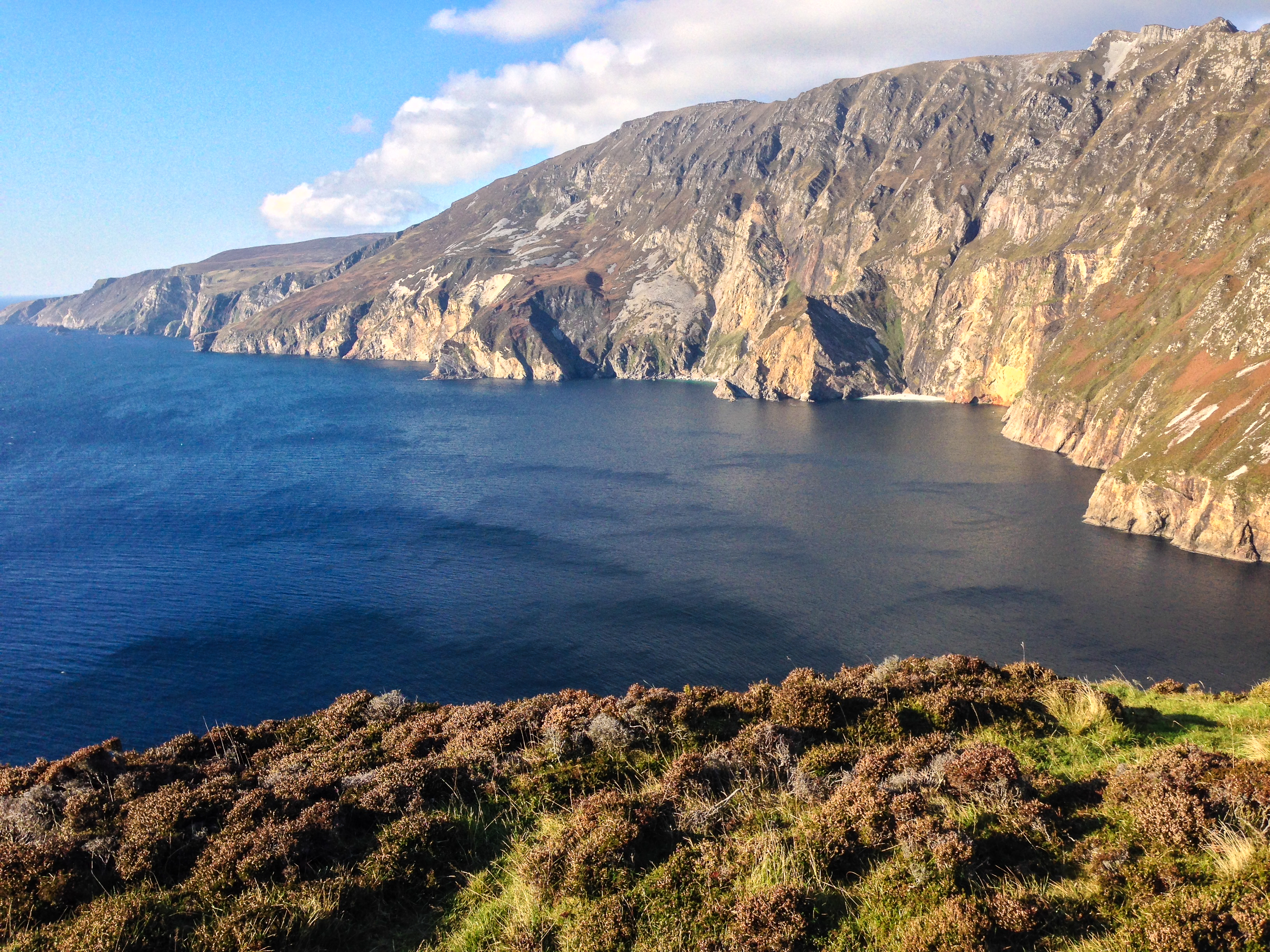
Donegal — Where the Wild Atlantic Begins
The northernmost section of the Wild Atlantic Way is also its wildest. Slieve League's sea cliffs rise 601 metres — nearly three times the height of the Cliffs of Moher — and are among the highest sea cliffs in Europe. Glenveagh National Park protects 16,000 hectares of blanket bog, oak woodland, and mountain. The Gaeltacht areas around Gweedore and the Rosses are among Ireland's last living Irish-speaking communities. Eco accommodation here is genuinely remote — guesthouses, converted cottages, and small hotels where you'll wake to Atlantic views and silence.
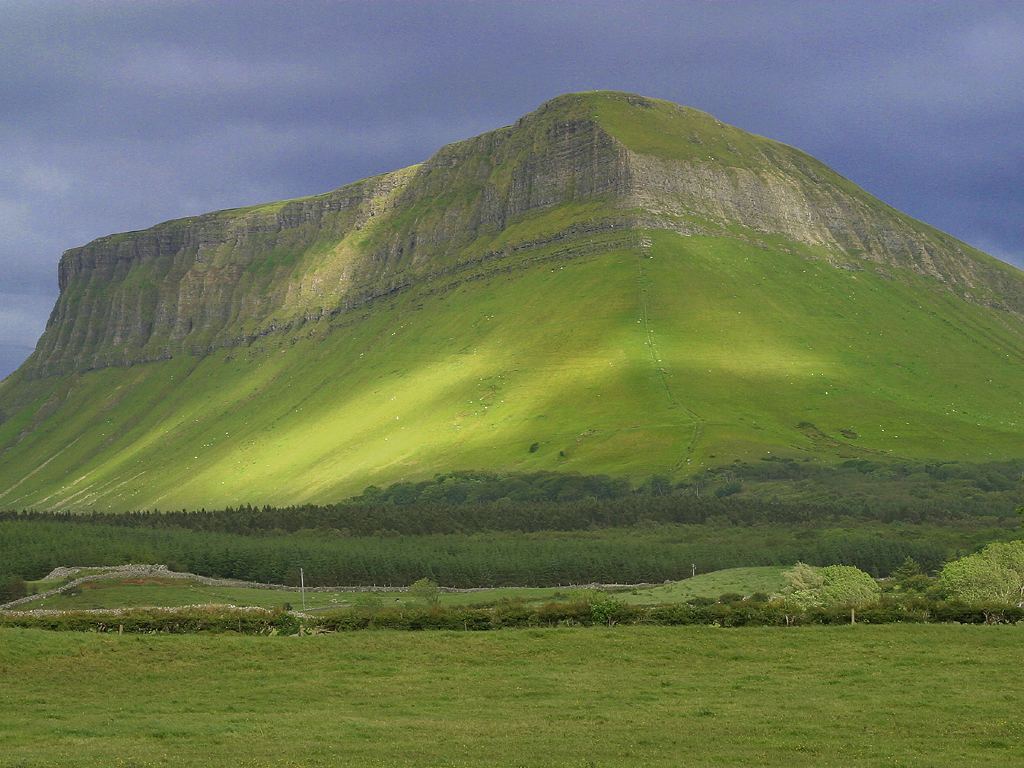
Sligo — Yeats Country & Atlantic Surf
Sligo is the spiritual home of W.B. Yeats and one of Europe's premier surf destinations. Benbulben's dramatic flat-topped quartzite plateau dominates the skyline; Strandhill and Enniscrone have some of Ireland's finest Atlantic swells; Knocknarea is crowned by a 40,000-tonne cairn believed to be the tomb of the mythical Queen Maeve. The Carrowmore megalithic complex — over 60 monuments — is the largest passage tomb cemetery in Ireland. Eco hotels in Sligo range from surf lodges steps from the beach to countryside guesthouses on Benbulben's flanks.

Mayo — Achill Island & Westport
Mayo contains some of the most dramatic coastal scenery on the entire Wild Atlantic Way. Achill Island — connected to the mainland by bridge — has Blue Flag beaches, sea cliffs over 600 metres, and an abandoned famine village at Slievemore. Croagh Patrick (765m) is Ireland's holy mountain, climbed by 25,000 pilgrims on Reek Sunday each July. Westport is a planned Georgian town at the head of Clew Bay — arguably the prettiest town on the entire route. Clew Bay itself contains 365 islands, one for every day of the year. Sustainable hotels in Mayo are excellent value by Irish standards.

Galway — Connemara & the Aran Islands
Galway is the gateway to Connemara — one of Europe's last true wilderness landscapes. The N59 between Galway City and Clifden is one of the world's great scenic drives, passing Kylemore Abbey (in a Victorian castle on a private lake), Lough Corrib (Ireland's largest lake), and vast stretches of blanket bog and mountain. The Aran Islands (Inis Mór, Inis Meáin, Inis Oírr) sit 45 minutes offshore by ferry — Iron Age forts, untouched beaches, and communities where Irish is still the first language. Galway City itself is Ireland's arts capital: the Latin Quarter, Salthill promenade, and renowned restaurant and pub scene.

Clare — Cliffs of Moher & The Burren
Clare is where the Wild Atlantic Way reaches its most iconic point: the Cliffs of Moher, which drop 214 metres into the ocean at O'Brien's Tower and attract 1.5 million visitors a year. But the Burren — 360km² of limestone karst stretching north from Doolin — is Clare's true ecological wonder. In May, the limestone pavement erupts with spring gentians, mountain avens, and early purple orchids in a botanical phenomenon found nowhere else in Europe. The UNESCO Burren and Cliffs of Moher Geopark covers the entire area. Lahinch is Clare's surf hub; Doolin is Ireland's traditional music heartland with live sessions every night of the year.

Kerry — Dingle & the Ring of Kerry
The Kerry section of the Wild Atlantic Way is Ireland's most celebrated stretch. The Ring of Kerry (179km) and the Dingle Peninsula together represent the finest concentration of Atlantic coastal scenery in the country. Killarney National Park — Ireland's oldest national park, covering 10,236 hectares — contains ancient oak woodland, three glacial lakes, and the Macgillycuddy's Reeks mountain range with Ireland's highest peak (Carrauntoohil, 1,038m). Skellig Michael, the 6th-century monastic island visible from the Skellig Ring, is a UNESCO World Heritage Site and one of the world's most extraordinary early Christian monuments. Eco-friendly hotels in Kerry are excellent — there's genuine competition for green credentials in this county.

Cork — Mizen Head & Sheep's Head
West Cork is where the Wild Atlantic Way reaches its southern terminus at Mizen Head — Ireland's most southwesterly point, where an 1910 signal station perches on a clifftop connected by a suspension bridge. But West Cork offers far more: the Sheep's Head Peninsula is the quietest and least-visited of Cork's five peninsulas, popular with walkers and cyclists for its lack of tour buses. Bantry Bay — fed by warm Gulf Stream water — supports Ireland's finest mussel and oyster beds. Kinsale, "the gourmet capital of Ireland", sits 25km south of Cork City. Green hotels in West Cork range from boutique guesthouses in Kinsale to remote farm stays on the Mizen Peninsula.
Why book sustainably
Sustainable Travel on the Wild Atlantic Way
The landscapes of the Wild Atlantic Way are among the most climate-sensitive in Europe. Rising Atlantic sea temperatures are directly affecting the marine ecosystems that define this coastline — from the seabird colonies at the Cliffs of Moher to the cold-water coral reefs off Connemara. The blanket bogs that give Donegal, Mayo, and Connemara their characteristic dark-green colour store enormous quantities of carbon; their drying and degradation releases that carbon back into the atmosphere.
Choosing carbon-neutral accommodation doesn't add a premium to your trip. Every booking through IMPT matches Booking.com prices exactly — the 1 tonne CO₂ removal is funded from IMPT's booking commission. The carbon credits are retired on-chain via the Ethereum blockchain and you receive a public transaction code to verify the removal yourself. The average hotel stay produces approximately 35kg of CO₂; IMPT's 1,000kg removal makes each booking genuinely carbon-negative.
Beyond accommodation, consider: taking the Aran Islands ferry rather than a charter flight; walking or cycling where terrain permits; eating locally sourced seafood and produce; and visiting in shoulder season (May–June or September) when the landscapes are at their most spectacular and the pressure on communities and ecosystems is lower.
Practical guide
How to Drive the Wild Atlantic Way
The official Wild Atlantic Way route is marked by distinctive brown-and-white signs with a wave motif. You do not need a guide or any special equipment — the signs appear at every junction and Discovery Point along the route. The route is suitable for standard hire cars; some of the more remote sections (e.g., the Conor Pass in Kerry, the roads around Malin Head) use narrow single-track roads where passing places are essential.
Getting there: Dublin Airport (DUB) is the main gateway — 2.5 hours to Galway, 3.5 hours to Kerry. Shannon Airport (SNN) in Clare is better for the mid-Atlantic section. Kerry Airport (KIR) and Ireland West Airport Knock (NOC) give direct access to the southern and northern sections respectively.
Car hire: Book early for summer. All major hire companies (Hertz, Enterprise, Europcar, National) have desks at Dublin and Shannon. Manual transmission cars are cheaper; most Irish rural roads are suitable for standard vehicles.
Carbon-neutral stays
Carbon-Neutral Accommodation on the WAW
IMPT is a hotel booking platform with one difference: every booking retires 1,000kg (1 tonne) of verified CO₂ from the atmosphere. The carbon credits come from UNFCCC-registered projects — reforestation, cookstove programmes, and blue carbon (mangrove restoration) — and are retired permanently on-chain via the Ethereum blockchain. You receive a public transaction hash that lets you verify your specific tonne was retired against a named project.
The average hotel stay produces around 35kg of CO₂ (heating, hot water, lighting, laundry). IMPT's 1,000kg offset is approximately 28× the carbon footprint of the stay — making every booking genuinely carbon-negative, not just carbon-neutral. And the price is identical to Booking.com — the offset is funded from IMPT's commission.
For the Wild Atlantic Way specifically, where landscapes depend on stable Atlantic ecology, this is not a symbolic gesture. It's a measurable contribution to the climate stability that keeps the seabirds returning to the Cliffs of Moher each spring, keeps the blanket bogs intact, and keeps the coral reefs off Galway alive.
When to go
Best Time to Drive the Wild Atlantic Way
Questions answered
Wild Atlantic Way — FAQs
How long is the Wild Atlantic Way?
Which direction should you drive the Wild Atlantic Way?
How many days does the Wild Atlantic Way take?
What is the best base for the Wild Atlantic Way?
Are eco hotels on the Wild Atlantic Way expensive?
Is the Wild Atlantic Way a UNESCO site?
What is the best time of year to drive the Wild Atlantic Way?
Can I cycle the Wild Atlantic Way?
Explore the route