Definition
What is a Sustainable Hotel in Ireland?
A sustainable hotel in Ireland is an accommodation property that actively manages and reduces its environmental impact. In practice, this means a combination of: energy efficiency (LED lighting, heat pumps, solar panels), waste reduction (composting, recycling, eliminating single-use plastics), responsible water management, and sourcing food and supplies locally. Many Irish hotels hold certification from recognised green programmes.
The term is used interchangeably with eco hotel, green hotel, and environmentally friendly accommodation in Ireland. What distinguishes a genuinely carbon-neutral hotel from one that simply has recycling bins is the measurement and verification of actual carbon emissions — and a credible, auditable programme to offset what cannot be eliminated.
Ireland's major green hotel certification schemes include the Green Hospitality Programme (the most widely adopted), the EU Ecolabel (the most rigorous European standard), Fáilte Ireland's Sustainability Toolkit, and the global Green Key certification used by premium properties. IMPT's carbon removal is applied on top of any hotel-level green programme — making every IMPT booking genuinely carbon-negative.
How it works
How IMPT's Carbon-Neutral Booking Works
IMPT is a hotel booking platform with a fundamental difference: every completed booking retires 1,000kg (1 tonne) of verified CO₂ from the atmosphere. The carbon credits come exclusively from UNFCCC-registered projects — a combination of reforestation (native forest restoration in South America and Southeast Asia), clean cookstove programmes (replacing wood fires with efficient stoves in Sub-Saharan Africa), and blue carbon projects (mangrove restoration in the Indo-Pacific).
Each credit retirement is tokenised on the Ethereum blockchain. When you complete a booking through IMPT, a smart contract retires the tonne on-chain and you receive a public transaction hash. You can verify the retirement at any time by searching that hash on Etherscan — the specific project, the quantity, and the retirement date are all publicly readable.
The price you pay is identical to Booking.com. IMPT accesses the same live inventory with the same pricing. The 1 tonne CO₂ removal is funded entirely from IMPT's booking commission. There is no premium for choosing carbon-neutral accommodation through IMPT. New members receive €5 free credit on their first booking; 5% cashback in IMPT tokens on all subsequent stays.
Accommodation types
Types of Sustainable Accommodation in Ireland
Ireland's green accommodation sector spans every price point and style — from working organic farms in Wicklow to cliff-top eco lodges in Kerry. Here are the main types available on IMPT.
Certification explained
Green Certified Hotels in Ireland
Ireland has a well-developed green hotel certification ecosystem. The Green Hospitality Programme is the most widely adopted, with hundreds of properties certified across all 26 counties. The programme uses a weighted scoring system across energy, water, waste, transport, and biodiversity — properties must achieve minimum scores in each category to maintain certification.
The EU Ecolabel is the gold standard European green certification, requiring independent audits of energy consumption (kWh per guest-night), water usage (litres per guest-night), and chemical usage. Very few Irish hotels hold the full EU Ecolabel — those that do are genuinely exceptional performers on environmental metrics.
Green Key (operated by the Foundation for Environmental Education) is popular among premium Irish hotels and is particularly common in resort properties in Kerry, Galway, and Clare. It requires annual audits across 13 environmental criteria.
Fáilte Ireland's Sustainability Toolkit provides an industry-wide framework for all accommodation types, including smaller guesthouses and B&Bs that may not have the resources for full certification. It encourages reporting on energy, water, waste, and community impact.
Top destinations
Best Counties for Sustainable Travel in Ireland
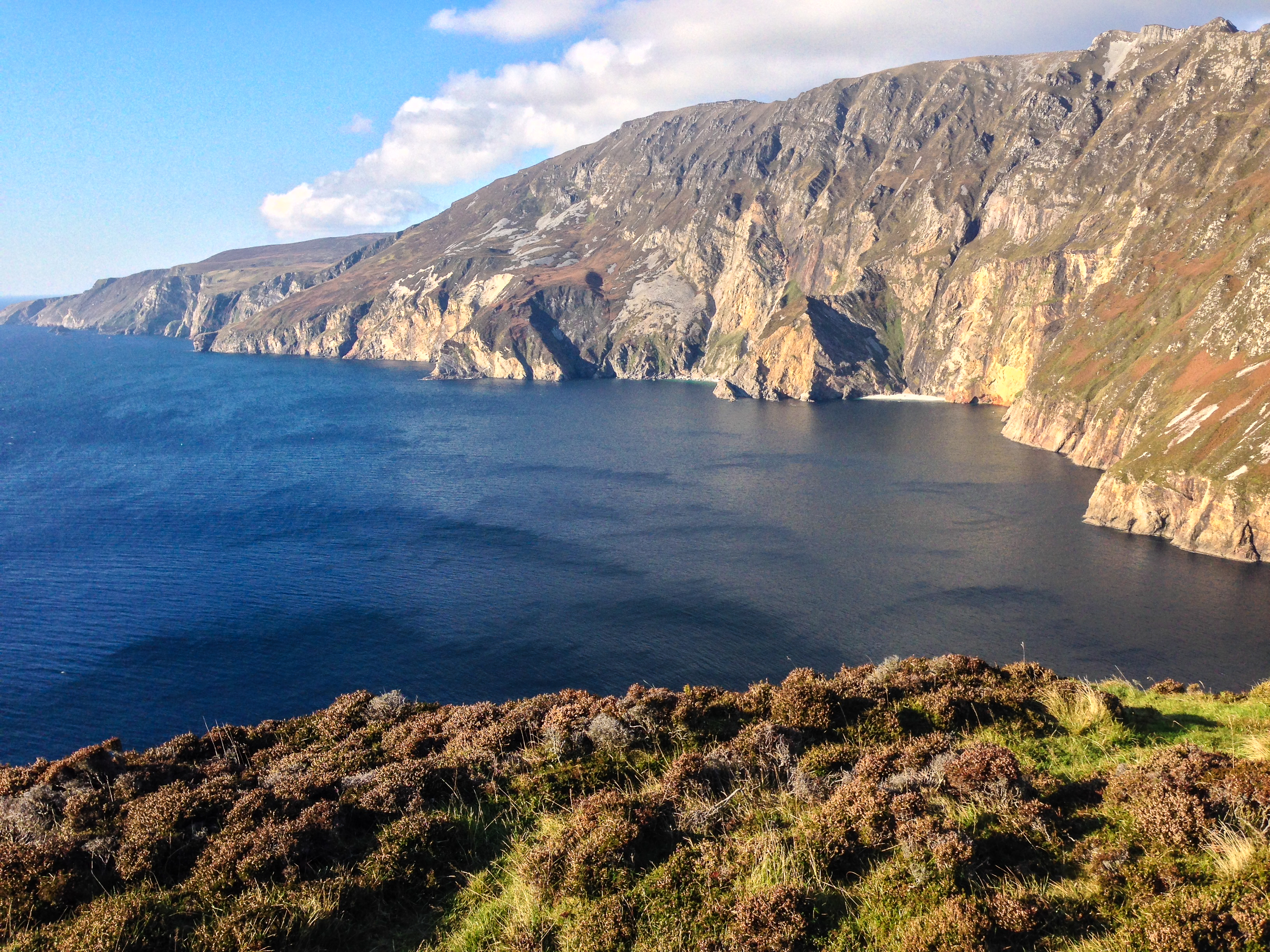
Five counties stand out for sustainable travel in Ireland — each combining significant eco-certified accommodation stock, exceptional natural landscapes, and active green tourism infrastructure.


Practical advice
Sustainable Travel Tips for Ireland
- →Take the DART (coastal rail) for Dublin day trips instead of driving
- →Irish Rail connects Dublin to Galway, Cork, Killarney, and Limerick — all the major eco hotel hubs
- →Aran Islands and Skellig Ring: take the ferry, not a charter flight
- →E-bikes are available for hire on the Aran Islands and along the Wild Atlantic Way
- →Eat Irish seafood: it's wild-caught, low-carbon, and exceptional. Galway oysters, Dingle mussels, Clare Bay crab
- →Look for Bord Bia Origin Green member restaurants — Ireland's sustainable food scheme
- →Farmers' markets run in every county town: Galway Saturday market, Schull in Cork, Killaloe in Clare
- →Stay on marked paths in national parks — blanket bog is particularly fragile and takes hundreds of years to recover from trampling
- →No campfires on the bog — the dry peat can smoulder underground for weeks
- →Visit in May–June or September: lower pressure on landscapes and communities, better weather and light
The numbers
Carbon Footprint of a Hotel Stay — and How IMPT Offsets It
The average hotel night in Europe produces approximately 35kg of CO₂ — across heating and cooling (largest component), hot water, electricity for lighting and appliances, laundry, and food service. A 7-night stay produces roughly 245kg. A 14-night Wild Atlantic Way road trip staying in hotels every night produces approximately 490kg of CO₂ from accommodation alone.
IMPT removes 1,000kg (1 tonne) of verified CO₂ per booking — not per night, but per completed booking transaction. This means even a single night's stay produces a net removal of approximately 965kg of CO₂. A 14-night stay produces a net removal of approximately 510kg (1,000kg removed minus 490kg produced = net -510kg). Every IMPT stay is genuinely carbon-negative.
The offset multiple — the ratio of carbon removed to carbon produced — is approximately 28× for a single night and approximately 2× for a 14-night stay. In both cases, the net result is carbon-negative accommodation at no extra cost to the traveller.
Questions answered