Skift Global Forum 2026: Eco-Certified Hotels for New York's Travel Summit
September 2026 (exact dates TBA) · Likely New York City
New York's hospitality sector has quietly become a laboratory for urban sustainability at scale. From LEED Platinum towers in Hudson Yards to heritage retrofits along the High Line, the city's hotel stock increasingly reflects the climate commitments its executives debate at industry gatherings. Skift Global Forum returns in September 2026—dates to be confirmed—drawing travel C-suite, OTA leaders, and investment teams to a Manhattan venue likely in the west Midtown corridor. For delegates balancing boardroom agendas with carbon accountability, the event window offers a chance to test-drive the accommodations shaping the sector's Net Zero roadmaps while NYC's public-transit backbone keeps trip emissions in check.
Book any eco-certified hotel near the venue — same nightly rate as the big sites, 1 t CO₂ retired per booking from IMPT's commission.
Why New York's Hotel Decarbonisation Matters to Forum Delegates
Skift's annual gathering convenes the architects of tomorrow's travel—executives whose procurement choices will ripple through global supply chains. New York's hotel market, worth approximately 120,000 rooms, has become an early mover on energy-performance disclosure and renewable-procurement contracts. Major chains piloting heat-pump retrofits, greywater-reuse systems, and local-supply commitments often start in Manhattan, where regulatory pressure and reputational scrutiny run high.
For attendees weighing strategic bets on sustainability credentials, a September stay offers field research. LEED-certified properties demonstrate the payback curves of deep-energy retrofits; EarthCheck-verified operations showcase the housekeeping and waste protocols that underpin certification; B-Corp hotels prove that values-aligned messaging can coexist with four- and five-star service. The conversations happening in breakout sessions find their real-world analogues a lift ride away, in the engineering plant rooms and supply-chain dashboards delegates rarely tour but increasingly must understand.
Venue Context and the West Midtown Sustainability Cluster
Prior Skift Global Forum editions have convened at venues including The Glasshouse, a minimalist events space near the High Line. While the 2026 venue remains to be confirmed, the west Midtown and Hudson Yards corridor—bounded roughly by Eighth Avenue, the Hudson River, and the rail yards—concentrates some of the city's most aggressively eco-certified new builds. This district's hotel stock tilts toward properties opened or retrofitted since 2015, when New York's Local Law 97 carbon caps began shaping design briefs.
The High Line itself, the elevated park threading through Chelsea and the Meatpacking District, serves as an infrastructure spine linking eco-conscious accommodation clusters. Hotels along Tenth and Eleventh Avenues benefit from proximate access to the park's pedestrian and cycling routes, reducing reliance on taxis for cross-neighbourhood trips. The 7 subway extension to Hudson Yards, opened in 2015, means Forum venues in this zone sit one stop from Times Square and four from Grand Central, easing onward connections for rail-arriving delegates.
Eco-Certified Accommodation: Green-Key, LEED, and EarthCheck in Practice
Manhattan's certified-sustainable hotel inventory spans heritage conversions and purpose-built towers. Green-Key certification—managed globally by the Foundation for Environmental Education—requires third-party audits of energy, water, waste, and procurement. LEED (Leadership in Energy and Environmental Design) focuses on building fabric: insulation, HVAC efficiency, daylighting, and material sourcing. EarthCheck, an Australian-born standard now widely adopted, audits operational performance annually, tracking year-on-year improvements in carbon intensity per guest-night.
Several properties near likely Forum venues hold multiple certifications. The combination signals depth: a LEED Gold building envelope paired with Green-Key operational protocols means both design and daily housekeeping align on resource efficiency. For delegates tasked with evaluating hotel partners' sustainability claims, staying in a dual-certified property offers firsthand insight into what rigorous third-party verification actually entails—transparency that generic 'eco-friendly' marketing rarely delivers.
B-Corp certification, though less common among hotels, has begun appearing in New York's boutique segment. Certified B-Corporations meet social and environmental standards verified by B Lab, covering governance, worker welfare, community impact, and environmental footprint. A B-Corp hotel in the Forum catchment area demonstrates that sustainability can extend beyond towel-reuse cards into supply-chain wages, local hiring, and verified carbon accounting.
Public Transport, Cycling, and Low-Carbon Arrival Routes
New York's transit infrastructure offers Forum attendees one of North America's most comprehensive low-carbon mobility networks. JFK and Newark airports both connect to Manhattan via rail: the AirTrain–subway combination from JFK, and NJ Transit or PATH trains from Newark. LaGuardia, closer in, links via express bus to subway hubs, though journey times can stretch beyond 45 minutes during peak hours. Delegates arriving from Boston, Washington, or Philadelphia should consider Amtrak Northeast Regional or Acela services into Penn Station or Moynihan Train Hall, eliminating short-haul flight emissions entirely.
Within Manhattan, the subway and bus network runs 24 hours, with night-service routes ensuring late-finish networking events don't default to taxi queues. West Midtown venues sit near the A, C, E, and 7 lines; the 1 train serves the Hudson Yards western edge. For cross-town trips, Citi Bike docking stations cluster densely along the High Line corridor, and protected cycle lanes on Eighth and Ninth Avenues provide safer routes than vehicular streets.
Forum delegates extending their stay beyond the event window can leverage Metro-North and LIRR commuter rail for low-carbon excursions: the Hudson Valley, Long Island's North Fork wine region, and coastal Connecticut all lie within 90 minutes, accessible without hiring a car. A three- or four-night stay spreads the arrival footprint across more guest-nights, lowering per-day emissions intensity—a metric that matters when aggregating Scope 3 travel data for annual sustainability reporting.
Carbon Offsetting via UN-Verified Credits and IMPT's Booking Model
Every booking made through the IMPT Eco-Hotels platform retires one tonne of UN-verified carbon credits on the guest's behalf, funded from the commission IMPT earns. These credits originate from projects registered under frameworks such as the Verified Carbon Standard or Gold Standard, ensuring additionality, permanence, and third-party audit. For a typical two- or three-night New York hotel stay, one tonne covers not only the room's operational footprint—energy, water heating, laundry—but also a meaningful portion of the return flight from European cities.
The offset happens automatically at booking confirmation; guests receive a retirement certificate with the project name and registry ID, enabling transparent reporting in corporate travel logs or personal carbon accounts. Because IMPT negotiates the same nightly rates guests would pay booking direct or via major OTAs, the carbon retirement represents a pure additionality—no surcharge, no opt-in friction. Free cancellation policies apply to most inventory, matching the flexibility business travellers expect.
Beyond the offset, IMPT's Goodness rewards programme returns five per cent of each booking's value as points redeemable against future stays or donated to environmental non-profits. The model aligns immediate traveller incentives—cost parity, flexibility, rewards—with longer-term climate goals, a balance the travel executives attending Skift Forum will recognise from their own product-design challenges.
Timing, Climate, and the September Sustainability Window
September in New York offers mild temperatures—daytime highs typically 22–26°C, evenings cooling to 15–18°C—and lower humidity than the July–August peak. The shoulder-season timing reduces hotel energy loads for cooling, a small but measurable benefit when properties report monthly carbon intensity. Rainfall averages six to eight days across the month, rarely disruptive but enough to justify packing a compact umbrella.
From a sustainability perspective, September travel avoids the peak summer and winter heating/cooling surges, periods when building emissions climb sharply. Delegates scheduling extensions can explore the city's autumn farmers' markets—Union Square's runs year-round—and the early-fall cultural calendar, when Broadway and museum programmes ramp up post-Labor Day without the December holiday crush. Lower visitor volumes also ease pressure on public transport, making cycling and walking more pleasant alternatives to packed subway cars.
What the Forum Fixture Means for Lead-Capture and Stay Planning
Skift typically announces precise Forum dates four to six months ahead, with early-bird registration opening shortly after. The 2026 edition's September timing is confirmed, but exact dates—and the final venue—remain to be locked. Delegates planning around board calendars or investor roadshows should subscribe to Skift's event updates and set fare alerts for transcontinental flights; transatlantic routes see autumn price volatility as business and leisure demand overlap.
For hotel bookings, waiting until dates firm up risks losing certified-sustainable inventory to group blocks. IMPT Eco-Hotels' platform allows delegates to shortlist properties now and set alerts when rooms open for the announced dates. The free-cancellation policies mean early reservations carry minimal downside, and locking mid-September availability—particularly in the west Midtown zone—hedges against last-minute rate spikes once the event schedule goes public.
Eco-certified hotels near the venue
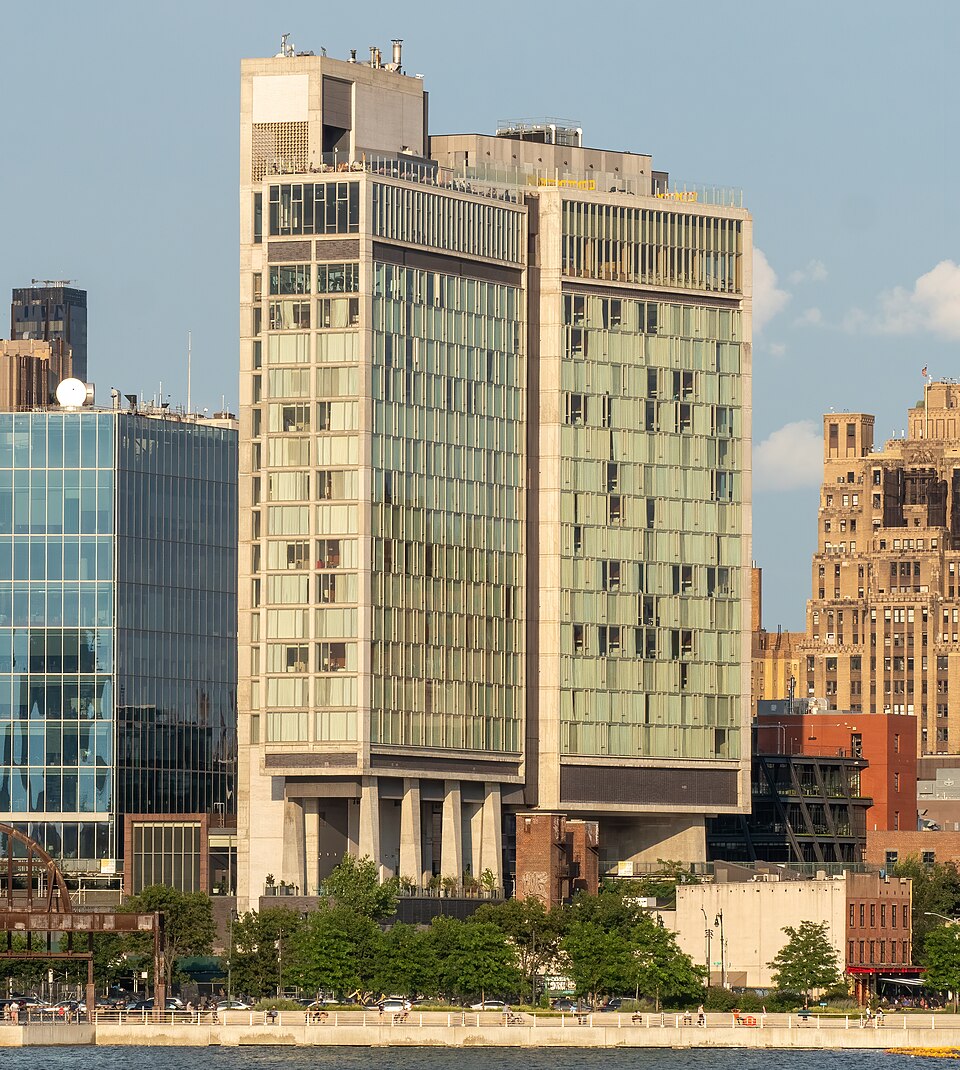
1 Hotel Brooklyn Bridge
5-star · Brooklyn, 15 min subway to west Midtown
LEED Gold certified, reclaimed-timber interiors, rooftop farm supplying the restaurant, in-room water filtration. Brooklyn Bridge Park location offers skyline views and East River esplanade cycling access.
4-star · Garment District, 10 min walk to likely venues
Adaptive reuse of a 1912 hat factory, original brickwork and skylights preserved. Energy-efficient systems retrofitted 2013, locally roasted coffee, bike storage for Citi Bike users.
Micro-hotel format reducing per-room material and energy footprint. Rooftop bar with solar canopy, bike-share integration, partnerships with local zero-waste vendors. Efficient urban-density model.
Rooftop pool heated via building heat-recovery system, LED retrofit, locally sourced breakfast menu. Williamsburg's cycling infrastructure and East River ferry access offer low-carbon exploration routes.
Practical Details: Getting There, Getting Around, and Staying Informed
International delegates arriving via JFK should take the AirTrain to Jamaica or Howard Beach, then transfer to the A, E, or Long Island Rail Road for Manhattan. Total journey time to west Midtown runs 60–75 minutes, costing under $15. Newark arrivals can use NJ Transit's Northeast Corridor line to Penn Station (30 minutes) or PATH trains to 33rd Street. LaGuardia relies on express bus Q70 to subway connections; journey times vary with traffic, so budget 50–70 minutes. Amtrak services into Moynihan Train Hall or Penn Station place arriving delegates within walking distance or a single subway stop of likely Forum venues.
Once in Manhattan, unlimited MetroCard passes—available for seven or 30 days—offer flat-rate subway and bus access, simplifying budgeting and eliminating per-trip decision friction. Citi Bike memberships (day or week) complement the subway for trips under two miles; protected lanes on Eighth and Ninth Avenues run north–south through the hotel corridor. Late finishes pose no mobility challenge: the subway operates 24 hours, and night-bus routes cover gaps in off-peak frequency.
For precise Forum dates and venue confirmation, monitor Skift's official event page and subscribe to updates. Hotel availability in certified-sustainable properties often tightens once event schedules publish, so setting alerts through IMPT Eco-Hotels' platform ensures prompt notification when inventory opens. Most properties offer flexible cancellation up to 48 hours before check-in, reducing the risk of early commitment.
Weather in September is generally stable, but brief afternoon showers occur. Pack layers: mornings can be cool, afternoons warm. Comfortable walking shoes prove essential; Manhattan's grid and public-realm improvements make pedestrian journeys pleasant, and the High Line's accessible design welcomes extended strolls between sessions.
Frequently asked questions
Which New York hotels hold third-party eco-certifications?
Look for LEED (building design), Green-Key (operational standards), EarthCheck (annual performance audits), or B-Corp status. Properties such as 1 Hotel Brooklyn Bridge (LEED Gold), Crosby Street Hotel (EarthCheck Bronze), and several Hudson Yards towers carry verified credentials. IMPT Eco-Hotels filters by certification, ensuring claims are backed by registry records rather than self-awarded labels.
How does the UN-verified carbon offset work when I book?
IMPT retires one tonne of UN-verified carbon credits per booking, funded from our commission—no surcharge to you. Credits come from Verified Carbon Standard or Gold Standard projects. You receive a retirement certificate with project name and registry ID, usable for corporate travel reporting. The offset happens automatically at confirmation; no opt-in required.
Can I reach the Forum venue without taxis or ride-hailing?
Yes. West Midtown venues sit on or near the A, C, E, 1, or 7 subway lines, all of which connect to Penn Station, Grand Central, and major hotel zones. Citi Bike docking stations cluster along Eighth, Ninth, and Tenth Avenues. Protected cycle lanes and the High Line pedestrian route offer car-free alternatives. The subway runs 24 hours, covering late networking events.
What's the carbon footprint of a typical New York hotel stay?
A mid-range Manhattan hotel emits roughly 20–30 kg CO₂ per room-night (energy, water heating, laundry). LEED or EarthCheck properties often achieve 15–20 kg through efficiency measures. IMPT's one-tonne offset (1,000 kg) covers several nights plus a significant portion of flight emissions, particularly for intra-US or short transatlantic journeys.
When will exact Skift Global Forum 2026 dates be announced?
Skift typically confirms precise dates four to six months ahead. For a September event, expect clarity by March or April 2026. Subscribe to Skift's event updates and set an alert on IMPT Eco-Hotels to book certified properties as soon as inventory opens, avoiding last-minute rate spikes and limited availability.
Are there low-carbon options for arriving from other US cities?
Amtrak's Northeast Corridor serves Boston (under four hours), Philadelphia (90 minutes), and Washington DC (under three hours). Emissions per passenger-kilometre on rail average one-fifth of flying. Penn Station and Moynihan Train Hall sit central to likely Forum venues, eliminating onward airport transfers. For cities beyond the corridor, direct flights into JFK or Newark pair with rail connections into Manhattan.
Do eco-certified hotels cost more than conventional properties?
Not necessarily. IMPT negotiates the same rates you'd pay direct or via major OTAs, so certification adds no premium. Some LEED towers command higher nightly rates due to location or luxury tier, but three- and four-star Green-Key properties often match or undercut conventional competitors. The UN-verified offset and Goodness rewards (five per cent back) represent added value at no extra cost.
What's the best way to extend a Forum trip sustainably?
Spread your arrival footprint across more nights. Metro-North trains reach the Hudson Valley (Storm King Art Center, Cold Spring) in 60–90 minutes. LIRR serves Long Island's North Fork wineries. Citi Bike and the Hudson River Greenway offer car-free exploration. Staying four nights instead of two halves your per-day travel emissions, improving overall trip efficiency.
Can I offset flights separately, or does IMPT only cover hotels?
IMPT's automatic one-tonne retirement per booking covers both hotel stays and a material portion of flight emissions—often the entire return flight for shorter routes. If you want additional offsetting for long-haul journeys, some airlines offer programmes, though quality varies. IMPT's UN-verified credits provide transparent additionality; we recommend focusing on the included tonne rather than layering unverified offsets.
What happens if I need to cancel a booking?
Most properties on IMPT Eco-Hotels offer free cancellation up to 24–48 hours before check-in, matching major OTA policies. Cancellation terms appear clearly at booking. Because we negotiate the same rates as direct or competitor sites, you retain the flexibility business travellers expect while securing certified-sustainable inventory and automatic carbon offsetting.
Skift Global Forum assembles the strategists rewriting travel's rulebook—executives for whom sustainability has shifted from peripheral CSR to core product design. New York's hotel market, dense with LEED towers, EarthCheck-verified operations, and B-Corp experiments, offers a working laboratory for the commitments debated in breakout sessions. By choosing certified accommodation, leveraging the city's 24-hour public-transit backbone, and booking through a platform that retires UN-verified carbon credits automatically, delegates align their September visit with the sector's stated Net Zero ambitions. The conversations happening at the Forum gain credibility when the lodging choices behind them reflect the same rigour. Subscribe for date updates, shortlist your eco-certified stays, and arrive ready to test-drive the future your industry is building.
Same price as the big OTAs — IMPT retires 1 t UN-verified CO₂ per booking from our commission. 5% Goodness rewards.