Sustainable Hotels for ITB Berlin 2026: Eco-Certified Stays Near Messe Berlin
3 – 5 March 2026 · Berlin, Germany
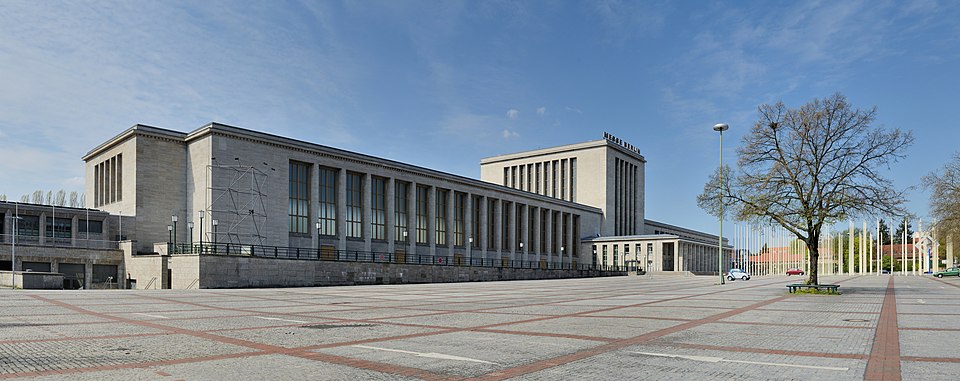
Berlin's hospitality sector has quietly become one of Central Europe's most ambitious on retrofit certification and renewable-energy procurement, a fitting backdrop for the world's largest travel trade fair. ITB Berlin 2026 returns to Messe Berlin on 3–5 March, drawing buyers, DMOs and hoteliers who increasingly expect their own accommodation choices to reflect the sustainability narratives they're selling. The challenge for eco-conscious delegates: the fair sprawls across Charlottenburg during early spring, when most properties fill weeks in advance, yet Berlin's transit network and cycle infrastructure make low-carbon movement straightforward once you know the routes. This guide selects eco-certified stays within easy reach of the venue, explains the UN-verified offsetting embedded in every booking through app.impt.io, and maps the rail-and-tram connections that spare you the rental car.
Book any eco-certified hotel near the venue — same nightly rate as the big sites, 1 t CO₂ retired per booking from IMPT's commission.
Why Berlin's Hotel Stock Leads on European Retrofit Standards
Berlin's divided twentieth-century history left the city with thousands of mid-century buildings that have since undergone deep energy retrofits rather than demolition. Many properties around Charlottenburg and Tiergarten now carry LEED Gold or EarthCheck certification, reflecting upgrades to heat-pump systems, LED lighting, greywater recycling and solar-thermal arrays. The city's utilities grid itself sources a rising share from offshore wind in the Baltic, so even a conventionally heated hotel draws cleaner electrons than equivalents in coal-reliant regions.
For ITB delegates, this means you can secure genuinely low-footprint accommodation without sacrificing the four- or five-star service trade buyers expect. Look for properties advertising Green Key or EU Ecolabel certification in their lobby signage; both require third-party audits of energy, water and waste metrics. Berlin's hotel association has been running a voluntary carbon-disclosure scheme since 2022, so some properties publish annual footprint data on their websites—a level of transparency still rare across Europe.
Event Timing and the March Shoulder-Season Advantage
Early March sits outside Berlin's peak summer window, which keeps room rates somewhat lower than June or September trade fairs, though ITB itself is large enough to drive a sharp uplift across Charlottenburg and Mitte. Expect occupancy above ninety per cent within two kilometres of Messe Berlin, and book by late January if you want certified-green properties. The shoulder season also means cooler weather—daytime highs around 7–10 °C—so heating loads matter; a hotel with a modern heat-pump system and good envelope insulation will have a materially lower per-night footprint than an older property running gas boilers.
The fair runs Tuesday to Thursday, but many buyers arrive Monday evening and depart Friday or Saturday, extending the pressure on availability. If your schedule allows, consider staying through the weekend: rates drop sharply on Friday night, you'll find space in popular restaurants again, and the per-day carbon cost of your outbound journey dilutes across more nights.
Neighbourhood Guide: Charlottenburg, Tiergarten, Mitte
Charlottenburg wraps around Messe Berlin and offers the shortest walk or cycle to the halls. The district retains grand Wilhelmine boulevards and a mix of inter-war apartment blocks converted to boutique hotels, many of which have pursued Green Key certification in the past five years. Expect a quieter, residential feel once you step off Kantstraße; bakeries and Vietnamese cafés outnumber tourist traps.
Tiergarten lies east, bordering the park of the same name. Staying here adds ten to fifteen minutes by S-Bahn or bus but drops you into calmer streets with several LEED-certified new-builds. The neighbourhood's tree canopy and proximity to the Spree make it popular with delegates who jog or cycle before morning sessions.
Mitte—the historic core—sits farther east again, around thirty minutes by U-Bahn or rail to Messe Berlin. You'll pay a premium for location near Brandenburg Gate or Museum Island, but Mitte concentrates Berlin's highest density of EarthCheck-certified properties and offers unmatched public-transit connectivity. Choose Mitte if you plan to explore the city evenings and weekends; the longer commute to the fair is offset by never needing a taxi elsewhere.
Low-Carbon Transit: Rail, Trams, Night Buses
Berlin's S-Bahn and U-Bahn networks run on electricity sourced increasingly from renewables, making them the lowest-footprint option for airport transfers and daily venue commutes. From Brandenburg Airport (BER), take the FEX express train to Hauptbahnhof (thirty minutes), then switch to S-Bahn S5 or S7 toward Westkreuz; alight at Messe Nord/ICC for the north entrance of Messe Berlin. Total journey time under fifty minutes, and you've avoided the emissions of a thirty-kilometre taxi ride.
Within the city, U2 (east-west) and S-Bahn ring lines cover most hotel clusters. Buy a seven-day AB ticket (around forty euros) rather than single fares; it includes buses and trams, and the convenience encourages you to skip ride-hailing apps. Berlin also operates an extensive night-bus network on weekends, useful if you attend evening receptions and want to avoid idling taxis.
Cycling is practical if you're staying in Charlottenburg or Tiergarten. The city's protected lanes run along most major streets, and March weather is cold but rarely icy. Many eco-certified hotels offer secure bike storage and can arrange hire through local co-operatives; a week's rental costs less than two taxi trips and eliminates local emissions entirely.
How UN-Verified Offsetting Works Through IMPT Eco-Hotels
Every booking made via app.impt.io retires one tonne of UN-verified carbon credits on your behalf, funded from the commission IMPT earns rather than added to your bill. The credits come from projects registered under the Gold Standard or Verra VCS, typically clean-cookstove or renewable-energy programmes in emerging economies. You receive a blockchain-recorded certificate showing the serial numbers of the retired credits, which you can include in personal or corporate footprint reporting.
One tonne covers roughly the emissions of a return long-haul flight from East Asia to Europe, or three to four hotel nights in a conventionally heated property, or the embodied carbon in several hundred kilograms of construction materials. It doesn't render your trip carbon-neutral in absolute terms—nothing does—but it demonstrates a quantified commitment that most booking platforms don't offer. Combine the offset with low-carbon transit choices (rail over car, tram over taxi) and an extended stay to spread your travel footprint, and you'll land well below the per-delegate average for a major trade fair.
Choosing Properties with Third-Party Certification
Green Key and EarthCheck are the two certification schemes most widely adopted by Berlin hotels. Both require annual audits covering energy, water, waste, and supply-chain policies; hotels must hit reduction targets year-on-year to retain the badge. EU Ecolabel is similar but less common in Germany. LEED certification applies mostly to new-build or deep-retrofit properties and scores the building envelope, HVAC systems, and materials sourcing.
When comparing hotels, ask whether the certification covers the whole building or only certain floors—some mixed-use developments certify the office levels but not the guest wings. Also check the vintage of the certificate; a Green Key award from 2015 may not reflect current performance if the property hasn't been re-audited. Legitimate eco-certified hotels display the logo in lobby areas and publish the certificate number on their website; if you can't find either, it's worth a polite email to the reservations team before booking.
Beyond formal certification, look for operational signals: keycard-controlled room power, minibar stocked with local rather than imported brands, bathroom dispensers instead of single-use bottles, linen-reuse programmes. None of these alone guarantees a low footprint, but together they suggest a management culture that takes resource efficiency seriously.
Extending Your Stay to Lower Per-Day Footprint
If your calendar permits, staying Friday and Saturday after the fair closes drops your effective per-day emissions sharply. The outbound flight or train journey remains constant whether you stay three nights or six, so the denominator grows while the numerator doesn't. Weekend rates in Berlin typically fall thirty to forty per cent below midweek trade-fair pricing, and you'll have access to museums, galleries and markets without the Wednesday crowds.
Use the extra days to explore Berlin's sustainability infrastructure firsthand: the Futurium museum near Hauptbahnhof covers climate-tech and circular-economy innovation; the Markthalle Neun street-food market in Kreuzberg champions local and organic suppliers; the former Tempelhof airport has been converted to a vast public park with community gardens and wind turbines. These aren't tourism gimmicks—they're working examples of urban transition that many ITB delegates are being asked to advise on for their own destinations.
Eco-certified hotels near the venue
Waldorf Astoria Berlin
5-star · Mitte, 35 min to Messe Berlin via U-Bahn/S-Bahn
LEED Gold–certified tower with tri-generation energy plant, heat-recovery ventilation and rooftop solar-thermal. Floor-to-ceiling glazing over the city, spa sourcing organic products, and zero single-use plastics across F&B. Popular with sustainability officers attending ITB who want evening proximity to Brandenburg Gate.
4-star · Charlottenburg, 12 min walk to Messe Berlin north entrance
Green Key certified boutique on Kurfürstendamm. Converted 1950s building with LED retrofit, keycard power control, refillable bathroom amenities and locally roasted coffee in rooms. Cycle storage and repair stand in courtyard; many delegates bike to the fair from here.
4-star · Tiergarten, 20 min to Messe Berlin via S-Bahn S5
Nordic chain with group-wide EarthCheck certification. Renewable-energy procurement, water-saving showerheads, organic breakfast buffet and elimination of single-use plastics since 2021. Modern glass-and-timber architecture overlooking the Landwehrkanal; quiet despite central location.
5-star · Charlottenburg, 15 min walk or one S-Bahn stop to Messe Berlin
Restored 1890s landmark with recent LEED certification following a gut renovation. Geothermal heating, triple-glazed windows, rainwater harvesting for landscaping. Interiors blend original plasterwork with contemporary sustainability features; attracts design-conscious trade buyers who value heritage and performance.
3-star · Tiergarten, 18 min to Messe Berlin via S-Bahn S5/S7
Budget-design chain with ISO 14001 environmental certification across its portfolio. Energy-efficient modular construction, green electricity contract, and linen-reuse as standard. No frills, but clean and functional; good choice if you're banking carbon budget for flights rather than accommodation luxury.
4-star · Charlottenburg, 10 min walk to Messe Berlin
Former 1960s courthouse transformed into a Green Key–certified boutique. Preserved concrete shell insulated to Passivhaus levels, heat-pump heating, courtyard garden with native planting. Quiet, residential street; many repeat ITB attendees favour it for sustainable credentials and proximity.
5-star · Mitte, 25 min to Messe Berlin via U-Bahn U9 + S-Bahn
EU Ecolabel certified, with tri-generation CHP plant supplying heating, cooling and power. Low-VOC interiors, extensive use of FSC timber, green-roof terrace. Overlooks the Spree; good for delegates combining ITB with government or NGO meetings in the Regierungsviertel district.
3-star · Charlottenburg, 8 min walk to Messe Berlin
Part of Accor's Planet 21 programme: renewable energy, single-use plastic elimination, local-supply-chain policy. Functional mid-tier property ideal for trade buyers on tighter budgets who still want verified sustainability credentials and a sub-ten-minute walk to the halls.
Brandenburg Airport (BER) lies thirty kilometres southeast of Messe Berlin. The lowest-footprint transfer is FEX Airport Express to Hauptbahnhof, then S-Bahn S5, S7 or S75 westbound to Messe Nord/ICC or Westkreuz. Total time under fifty minutes; trains run every twenty minutes throughout the day. Buy an ABC-zone ticket (around four euros single) from the red machines on the platform—contactless payment accepted. Avoid taxis unless you're arriving after midnight; a cab emits roughly fifteen kilograms CO₂ for the trip, versus under one kilogram per passenger on the train.
Within Berlin, a seven-day AB ticket costs around forty euros and covers all S-Bahn, U-Bahn, trams and buses inside the city limits. If you're staying in Charlottenburg or Tiergarten, you'll mostly use S-Bahn S5/S7 and U-Bahn U2; both stop at or near Messe Berlin. Download the BVG app for real-time departures and route planning—it integrates bike-share and e-scooter options, though cycling your own hired bike remains the lowest-emission choice for short hops.
Fair hours run 09:00–18:00 on Tuesday and Wednesday, 09:00–17:00 on Thursday. Morning rush on the S-Bahn peaks 08:00–09:00, so leave your hotel by 08:15 if you want a seat. Evening return crush is 17:30–18:30; many delegates stay on-site for receptions until 20:00, then travel back on quieter trains. If you're cycling, secure bike parking sits on the north side of Hall 1; spaces fill by mid-morning on peak days, so arrive early or lock to street furniture on Masurenallee.
For dining, Charlottenburg's side streets offer Vietnamese, Italian and traditional German options within walking distance of most hotels; avoid the Ku'damm tourist strip. Mitte has higher density but also higher prices. If you want to sample Berlin's farm-to-table scene, book ahead at Nobelhart & Schmutzig (Kreuzberg) or einsunternull (Mitte)—both champion local, seasonal sourcing and publish supply-chain transparency reports that match the ethos many ITB exhibitors are starting to adopt.
Frequently asked questions
Which eco-certification should I prioritise when choosing a Berlin hotel for ITB?
Green Key and EarthCheck are the most rigorous third-party schemes widely used in Berlin, requiring annual audits of energy, water, waste and supply-chain metrics. LEED certification applies mainly to new-builds or deep retrofits and scores building systems comprehensively. EU Ecolabel is recognised but less common in Germany. All four are credible; avoid properties claiming 'eco-friendly' without displaying a certificate number you can verify online.
How does the one-tonne UN-verified offset work on each IMPT booking?
When you book via app.impt.io, IMPT uses its commission to purchase and immediately retire one tonne of carbon credits from Gold Standard or Verra-registered projects—typically renewable energy or clean cookstoves in emerging economies. You receive a blockchain-recorded certificate with the serial numbers of the retired credits, which you can include in personal or corporate footprint reports. The cost is not added to your room rate; you pay the same price as booking direct.
Is rail or air lower-carbon for reaching Berlin from Western Europe?
Rail wins decisively for origins within a thousand kilometres. Paris to Berlin by overnight sleeper or day ICE emits roughly ten to fifteen kilograms CO₂ per passenger; a return flight on the same route emits two hundred to two hundred and fifty kilograms. Amsterdam, Brussels and Prague are similarly rail-viable. From London, Eurostar to Brussels then onward ICE takes around nine hours but cuts emissions by eighty per cent versus flying. Only from Iberia or Scandinavia does air become marginally competitive on time, though emissions remain higher.
Can I cycle safely from Charlottenburg hotels to Messe Berlin in March?
Yes. Berlin has protected cycle lanes along most major streets, including the direct route west from Charlottenburg centre. March weather is cold—typically 3–10 °C—but rarely icy; pack a waterproof and lights. Many Green Key–certified hotels offer secure bike storage and can arrange weekly hire through local co-operatives. The ride from central Charlottenburg to Messe Berlin takes ten to fifteen minutes and eliminates all local emissions.
What's the carbon footprint of a typical three-night ITB stay in a certified-green Berlin hotel?
A LEED or Green Key–certified property with renewable-energy procurement and heat-pump heating typically emits fifteen to twenty-five kilograms CO₂ per room-night when you include heating, lighting, water and laundry. Three nights therefore total forty-five to seventy-five kilograms. Add your return journey: long-haul flight from East Asia or North America contributes one to two tonnes; European rail under fifty kilograms. The one-tonne offset from IMPT covers the accommodation many times over and makes a substantial dent in long-haul travel emissions.
Should I stay in Charlottenburg or Mitte for the best balance of footprint and convenience?
Charlottenburg minimises daily commute emissions—walk or cycle to Messe Berlin in under fifteen minutes—and offers good Green Key and EarthCheck options. Mitte adds twenty to thirty minutes by U-Bahn or S-Bahn but concentrates the highest density of LEED-certified properties and keeps you on the public-transit spine for evening exploration. If your schedule is fair-focused, choose Charlottenburg; if you're extending the stay to explore Berlin's sustainability projects, Mitte's connectivity pays off.
Do IMPT bookings include free cancellation, and how does that affect the carbon offset?
Most properties on app.impt.io offer free cancellation up to twenty-four or forty-eight hours before check-in, matching the policies you'd find booking direct. If you cancel, the one-tonne offset has already been retired in your name and cannot be reversed—carbon credits, once retired, are permanently removed from circulation. You keep the certificate. This means even a cancelled booking contributes to verified emission reductions, though obviously we'd rather you complete the stay.
Are there Green Key–certified hotels within walking distance of Messe Berlin?
Yes. Hotel Indigo Berlin – Ku'damm (twelve-minute walk) and Wilmina Hotel (ten-minute walk) both hold Green Key certification and sit in quiet Charlottenburg streets. Mercure Hotel Berlin City West (eight-minute walk) participates in Accor's Planet 21 programme, which includes third-party environmental audits similar to Green Key. All three combine certified sustainability credentials with proximity that eliminates the need for taxis or even public transport on fair days.
What public-transit option connects Brandenburg Airport to Messe Berlin with the lowest footprint?
Take FEX Airport Express to Hauptbahnhof (thirty minutes, runs on renewable electricity), then S-Bahn S5 or S7 westbound to Messe Nord/ICC or Westkreuz (fifteen minutes). Total journey under fifty minutes and roughly one kilogram CO₂ per passenger. Buy an ABC-zone ticket from platform machines. A taxi covers the same route in thirty-five to forty minutes but emits around fifteen kilograms CO₂—fifteen times higher per passenger.
How can I verify a hotel's eco-certification before booking?
Legitimate schemes publish searchable databases: Green Key lists certified properties at greenkey.global, EarthCheck at earthcheck.org, LEED projects at usgbc.org/projects. Check the hotel's website for the certificate number and logo; if neither appears, email reservations to ask. Hotels that have genuinely invested in third-party certification are proud to share the details. If you receive vague replies or no documentation, the 'eco' claim is likely marketing rather than audited performance.
Berlin's combination of retrofit ambition, transit infrastructure and renewable-energy procurement makes it one of Europe's lower-footprint destinations for a major trade fair, provided you choose certified properties and rail-based movement. ITB's scale means early March availability tightens sharply, so book by late January if Green Key or LEED credentials matter to your decision. Every reservation through app.impt.io retires one tonne of UN-verified carbon on your behalf and earns five per cent Goodness rewards at the same price you'd pay direct, with free cancellation on most stays. Whether you're a DMO representative benchmarking destination sustainability, a hotelier comparing eco-certification schemes, or a tour operator building lower-carbon packages, aligning your own accommodation choice with the narratives you're selling at the fair sends a signal that resonates beyond the three days on the show floor.
Same price as the big OTAs — IMPT retires 1 t UN-verified CO₂ per booking from our commission. 5% Goodness rewards.