Eco-Certified Hotels for FIFA World Cup 2026 Across 16 Host Cities
11 June – 19 July 2026 · Across 16 host cities in USA, Canada and Mexico
The FIFA World Cup 2026 marks the tournament's first tri-national edition, spanning sixteen host cities across the United States, Canada and Mexico. For eco-conscious supporters, that geographical spread presents both a challenge and an opportunity: how do you follow the tournament without carbon costs spiralling? North America's hospitality sector has quietly become a testbed for green building certification—LEED holds more traction here than anywhere else globally, and cities from Vancouver to Mexico City now count dozens of properties audited under frameworks like Green Key and EarthCheck. Below we map sustainable accommodation choices across the key host cities, explain how the booking mechanism funds verified offset, and outline low-carbon transit strategies for a tournament window that runs eleven June to nineteen July 2026.
Book any eco-certified hotel near the venue — same nightly rate as the big sites, 1 t CO₂ retired per booking from IMPT's commission.
The Tri-National Tournament and Its Sustainability Baseline
Hosting across three countries means regulatory patchwork: the U.S. Green Building Council's LEED system dominates American venues, Canada leans heavily on Green Key Global and provincial energy-retrofit programmes, while Mexico's hotel sector is adopting EarthCheck certification at scale in tourist zones. Each framework emphasises different metrics—LEED prioritises whole-building energy modelling and water efficiency, Green Key focuses operational practice and waste diversion, EarthCheck layers biodiversity impact into the audit. For the travelling supporter that translates to real variation in what 'eco-certified' means city to city.
The tournament's official sustainability pledge references low-emission transport, waste-to-landfill reduction targets and renewable-energy procurement at match venues. Hotels fall outside FIFA's direct remit, so the onus sits with individual properties and the platforms intermediating bookings. IMPT's model retires one tonne of UN-verified carbon dioxide equivalent per stay, funded from commission—functionally a zero-uplift offset mechanism that doesn't penalise the guest choosing sustainable accommodation.
United States Host Cities: LEED and Green Key Clusters
Dallas, Los Angeles, the San Francisco Bay Area, Seattle, Kansas City, Atlanta, Houston, Philadelphia, Boston, New York/New Jersey and Miami anchor the U.S. roster. Each market brings distinct green-hospitality maturity. San Francisco and Seattle lead on whole-building LEED Gold and Platinum certifications; you'll find properties there running on hundred-percent renewable electricity contracts and greywater-reuse loops. Los Angeles and New York have deep inventories but also high variability—many older properties retrofitted to LEED Silver, others holding Green Key Eco-Rating at three or four keys.
Dallas—the tournament's operational anchor—has seen a wave of LEED certifications tied to convention and corporate demand. AT&T Stadium itself sits in Arlington, twenty miles west of downtown; light-rail links both, and overnight options cluster around the stadium perimeter as well as central Dallas. Look for properties disclosing Scope 1 and 2 emissions in annual reports, a proxy for serious environmental accounting. Houston and Atlanta similarly offer certified stock around downtown and airport corridors, though summer heat drives high air-conditioning loads that offset other gains unless paired with on-site solar or district cooling.
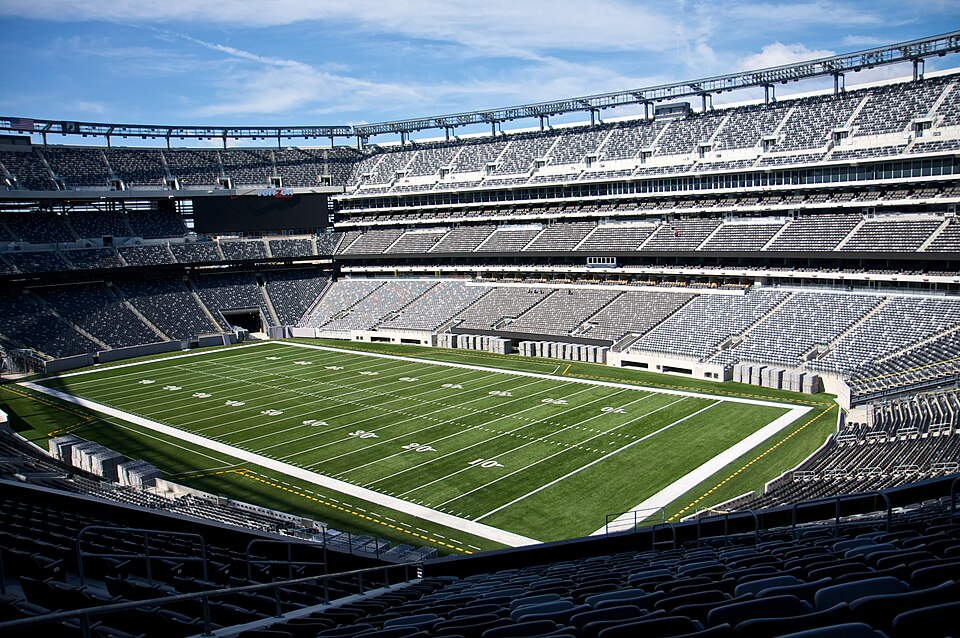
The Northeast corridor—Boston, Philadelphia, New York/New Jersey—benefits from older building stock that has undergone deep energy retrofits rather than ground-up LEED construction. Embodied-carbon advantages often favour renovation over demolition-and-rebuild, so a 1920s property retro-certified to LEED Gold can outperform a contemporary build on lifetime footprint. MetLife Stadium in New Jersey sits accessible via NJ Transit and regional rail; Manhattan and Newark both offer certified choices within an hour's commute.
Canada: Vancouver, Toronto and Green Key Leadership
Vancouver and Toronto host matches at BC Place and BMO Field respectively. Canada's Green Key Eco-Rating programme enjoys stronger market penetration than in the U.S., partly because provincial tourism boards incentivise certification and partly because the hotel sector skews toward mid-scale properties where operational changes—linen-reuse, low-flow fixtures, waste separation—deliver measurable impact without major capital expense.
Vancouver's advantage lies in its electricity grid: over ninety percent hydro, so even older properties without on-site renewables draw low-carbon power. The city's transit backbone—SkyTrain and bus rapid transit—connects the airport, downtown and BC Place efficiently; cycling infrastructure is strong if you're comfortable with hills. Toronto's grid is cleaner than most U.S. comparators but not as decarbonised as Vancouver's; look for properties that have installed heat-recovery ventilation and participate in Toronto Hydro's demand-response schemes. Both cities see sharp rate escalation during the tournament window; book early or consider stays slightly outside the core linked by metro.
Mexico: Guadalajara, Monterrey, Mexico City and EarthCheck Uptake
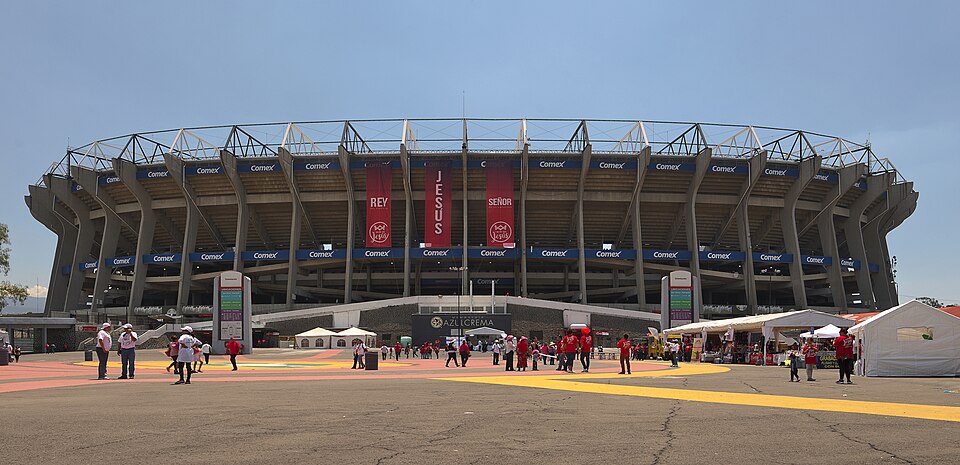
Mexico's three host cities—Guadalajara, Monterrey and Mexico City—bring different sustainability contexts. Mexico City has pushed green-building standards within its historic centre, though enforcement remains patchy; newer properties in Polanco and Santa Fe often hold EarthCheck Bronze or Silver. Estadio Azteca, the iconic venue, sits south of the centre; Metro Line 12 offers direct access, though expect crowding on match days. The altitude—over two thousand metres—means lower air-conditioning loads but higher embodied energy in construction materials hauled uphill.
Guadalajara and Monterrey have smaller certified inventories but growing interest, particularly among internationally branded properties. Water scarcity is a live issue in both cities; prioritise hotels that publish water-use intensity and participate in local watershed programmes. Public transport is less comprehensive than in Mexico City, so plan for ride-sharing or short taxi hops; both cities are investing in bike-share schemes that work well for short trips within the urban core.
Low-Carbon Transit Strategy for Multi-City Itineraries
Following a team across host cities introduces the trip's largest carbon exposure. Flying sixteen legs would overwhelm even generous offset budgets; rail and coach become essential. The U.S. Amtrak network connects the Northeast corridor efficiently—Boston to New York to Philadelphia—and the Pacific Northwest offers Vancouver–Seattle service. Elsewhere, intercity rail is sparse; Los Angeles to San Francisco, Dallas to Houston and cross-border routes require flight or long coach journeys.
Canada's VIA Rail links Toronto and Montreal (not a host city, but a logical stopover), though Vancouver sits isolated on the west coast. In Mexico, bus networks are extensive and often more practical than domestic flights for Guadalajara–Mexico City or Monterrey–Mexico City pairs. The carbon calculus favours grouping geographically clustered matches: a U.S. East Coast swing, a Texan doubleheader, a Canadian weekend, a Mexican triangle. Extending your stay in each city—two or three nights rather than one—lowers per-night transport intensity and opens time for lower-impact exploration on foot or by bike.
Where flights prove unavoidable, direct routings minimise total emissions; takeoff and landing burn disproportionately. The one-tonne offset per booking applies to accommodation, not transport, so separately consider verified aviation offset if you fly between cities. Some rail operators, notably Amtrak and VIA Rail, now offer voluntary offset at checkout; uptake remains low but the mechanism exists.
The Booking Mechanism: How UN-Verified Offset Works in Practice
Every booking made through app.impt.io retires one tonne of carbon dioxide equivalent certified under UN frameworks—predominantly Gold Standard and Verra VCS projects that pass additionality tests. The cost is absorbed from IMPT's commission, so the rate you pay matches the property's direct price; there's no green premium layered onto the transaction. Most stays include free cancellation up to a defined window, typically twenty-four or forty-eight hours before check-in, though always verify the specific property's terms.
Goodness rewards accrue at five percent of booking value, redeemable against future stays or convertible to additional offset if you prefer. The model mirrors loyalty programmes structurally but steers value toward impact rather than ancillary spend. For a tournament spanning five cities and ten nights, you're retiring ten tonnes and earning reward balance that funds a material share of the next trip. That closed-loop mechanic helps ratchet down cumulative footprint over time.
Certification Transparency and What to Ask Properties Directly
Not all green claims withstand scrutiny. LEED, Green Key, EarthCheck and B-Corp certifications require third-party audit and public disclosure; properties holding these badges will display certification numbers and renewal dates. If a listing mentions 'eco-friendly practices' without naming a standard, ask front-desk staff which framework they follow and request evidence. Genuine certified properties are proud to share documentation.
Useful questions: What share of electricity comes from renewable contracts or on-site generation? Does the property measure and publish water-use intensity per guest-night? What waste-diversion rate does it achieve, and where does residual waste go? Does it source food locally, and does the restaurant menu reflect seasonality? These queries signal informed demand, and over time that demand pressure lifts industry practice. Even properties not yet certified often track metrics internally and appreciate the chance to discuss progress.
Eco-certified hotels near the venue
1 Hotel San Francisco
5-star · South Beach, 25-minute BART to Levi's Stadium
LEED Gold tower with reclaimed-timber interiors, living green walls and rooftop urban farm supplying the restaurant. Renewable electricity contract and comprehensive greywater reuse.
Proximity Hotel (Greensboro, for East-Coast stopovers)
4-star · Not a host city but excellent rail-linked stopover
America's first LEED Platinum hotel. Rooftop solar canopy, geothermal wells, regenerative-drive elevators. A benchmark property for green-building design.
Green Key Five-Key certified, with rooftop apiary, herb garden and seawater heating-loop integration. Hydro-powered grid means exceptionally low operational emissions.
5-star · Uptown, TRE rail 35 minutes to Arlington (AT&T Stadium)
LEED Silver certification with energy-management dashboards in every room. Participates in Dallas's district-cooling network, cutting summer peak loads.
3-star · Convention district, 15-minute subway to regional rail for MetLife access
LEED Gold, adaptive-reuse project with high embodied-carbon savings. Local-art installations and partnership with Philadelphia food co-ops for breakfast sourcing.
5-star · Polanco, Metro Line 7 to Estadio Azteca via transfer
EarthCheck Silver certified. Rainwater-harvesting cistern, greywater recycling for landscaping, and partnership with local organic markets for restaurant supply.
Match-Day Transit, Arrival Logistics and Timing Considerations
Stadiums sit at varying distances from city centres. AT&T Stadium in Arlington, SoFi Stadium in Inglewood, Levi's Stadium in Santa Clara and MetLife in New Jersey all require deliberate transit planning—none are downtown walking propositions. Light rail, regional rail and dedicated match-day shuttle services will operate, often with extended hours; confirm timetables closer to kickoff dates. Cycling to stadiums is rarely practical given distances and lack of secure parking, though city-centre exploration by bike remains worthwhile.
Arriving into gateway airports—Dallas/Fort Worth, LAX, SFO, Newark, Toronto Pearson, Vancouver International, Mexico City International—expect heightened passenger volumes throughout June and July. Airport rail links exist for most: BART in San Francisco, UP Express in Toronto, SkyTrain in Vancouver, Metro Line 5 in Mexico City. Where rail isn't available, shared-ride vans or pre-booked transfers lower per-person emissions versus solo taxis. If renting a car, prioritise hybrid or electric vehicles; charging infrastructure is expanding but still patchy outside urban cores.
The tournament window spans peak summer travel in North America. Hotel rates climb sharply; expect premiums of fifty to one hundred percent over shoulder-season pricing in host cities on match weekends. Booking as early as autumn 2025 locks better availability and smoother cancellation terms. Temperatures range from hot and dry (Dallas, Los Angeles) to warm-humid (Houston, Miami, Atlanta) to mild-maritime (Vancouver, Seattle); pack adaptable layers and consider that air-conditioning loads drive much of a hotel's energy footprint. Choosing properties with passive cooling or efficient HVAC directly lowers your stay's operational emissions.
Ticket allocation remains controlled by FIFA, with phased public sales and national-federation allocations. Match schedules will firm up through late 2025; group-stage fixtures are geographically clustered to reduce team travel, so fans following one nation may find successive matches in adjacent host cities. Monitor FIFA's official site for schedule updates and coordinate accommodation bookings once fixture cities are confirmed. Flexibility—holding refundable stays in multiple cities until the draw—costs nothing under free-cancellation terms and avoids scrambling when the knockout bracket clarifies.
Frequently asked questions
Which eco-certifications should I prioritise when choosing a World Cup hotel?
LEED (Gold or Platinum), Green Key (Four or Five keys) and EarthCheck (Silver or higher) are the most rigorous third-party standards in North America. B-Corp certification covers entire business operations and is a strong signal of values alignment. Always ask for certification numbers and verify against the issuing body's registry if in doubt.
How does the one-tonne carbon offset per booking work?
IMPT retires one tonne of UN-verified carbon credits—Gold Standard or Verra VCS projects—funded from the commission earned on your booking. You pay the same rate as booking direct with the property. The offset is automatic; you don't opt in or pay extra. Most projects are renewable-energy or cookstove programmes meeting strict additionality tests.
Are eco-certified hotels more expensive during the World Cup?
Rates across all properties climb during the tournament. Certified hotels typically sit in the upper-mid to luxury tiers, so baseline pricing is higher. However, on a percentage basis, the peak-season uplift is similar across the market. Early booking and flexible dates—arriving a day before or staying a day after match windows—often yield better value.
Can I book stays in multiple host cities through the same platform?
Yes. IMPT's app supports multi-city itineraries; each stay triggers separate one-tonne offset and earns five-percent Goodness rewards. Managing everything in one interface simplifies cancellations and modifications as the tournament fixture list evolves.
What's the best low-carbon way to travel between U.S. host cities?
Rail where available: Amtrak's Northeast Corridor for Boston–New York–Philadelphia, Pacific Northwest for Vancouver–Seattle. Elsewhere, direct flights produce lower total emissions than connecting itineraries. Group geographically clustered matches—West Coast, Texas, East Coast—to minimise inter-city legs. Extending stays reduces per-night transport intensity.
Do Canadian and Mexican hotels use the same green standards as U.S. properties?
Canada predominantly uses Green Key Global; LEED is present but less common. Mexico has growing EarthCheck uptake, especially in tourist zones. The frameworks differ in emphasis—LEED is design-focused, Green Key operational, EarthCheck includes biodiversity—but all require third-party audit. Check which standard a property holds and verify current certification status.
Is public transport reliable for getting to stadiums on match days?
Varies by city. Vancouver, Toronto, San Francisco, Seattle, Mexico City and the Northeast U.S. have robust metro/rail reaching or approaching stadiums. Dallas, Houston, Los Angeles (SoFi) and New Jersey (MetLife) require light rail or regional rail with possible shuttle transfers. Confirm extended service hours for evening kickoffs; operators typically add capacity on match days.
Can I see a breakdown of the carbon offset before booking?
The app provides project details—location, type (renewable energy, forestry, methane capture), verification standard—before checkout. One tonne is a fixed allocation per stay, regardless of length; longer stays don't retire proportionally more, so the offset-per-night ratio favours shorter visits. You can supplement with additional voluntary offset if desired.
What should I ask a hotel to verify its sustainability claims?
Request the certification name and number, then cross-check the issuing registry (USGBC for LEED, Green Key Global for Green Key, EarthCheck for EarthCheck). Ask what percentage of electricity comes from renewables, water-use intensity per guest-night, waste-diversion rate and local-sourcing policies. Genuine certified properties welcome these questions.
Are there eco-certified options near every host stadium?
Not universally. Some cities—San Francisco, Vancouver, Seattle—have deep certified inventory near venues. Others, like Arlington (AT&T Stadium) or Inglewood (SoFi), have limited supply immediately adjacent; you may stay downtown and transit out. Prioritise citywide certified stock over proximity if serious about footprint reduction.
How early should I book to secure eco-certified rooms?
Certified properties represent a minority of total inventory and attract values-aligned travellers. Autumn 2025 is a sensible target once match schedules firm. Free-cancellation policies let you hold multiple options and refine as fixture cities confirm. Delaying into spring 2026 risks sold-out availability in popular properties.
Does IMPT cover carbon offset for flights between host cities?
No. The one-tonne retirement applies to accommodation only. Many airlines and third-party platforms offer voluntary aviation offset at checkout; quality varies, so choose Gold Standard or equivalent verified credits. Rail travel between cities produces dramatically lower emissions and should be your default where practical.
The FIFA World Cup 2026 offers a rare chance to witness the tournament's scale across three nations while demonstrating that mass-attendance sport and rigorous carbon accounting can coexist. Choosing verified eco-certified accommodation, favouring rail over flight where geography allows, and extending stays to lower per-night transport intensity together shape a fundamentally different footprint profile than the default fly-in, one-night, fly-out pattern. The app brings sixteen host cities' sustainable lodging into a single booking flow, retires a tonne of UN-certified offset per stay at no price premium, and rewards continued engagement through the Goodness mechanism. Whether you follow one team or hopscotch the knockout rounds, the decisions you make about where to stay and how to travel between matches accumulate into meaningful impact. Plan early, verify certifications and travel deliberately.
Same price as the big OTAs — IMPT retires 1 t UN-verified CO₂ per booking from our commission. 5% Goodness rewards.