Cannes Film Festival 2026: Certified Eco-Hotels on the Riviera
14 – 24 May 2026 · Cannes, French Riviera
The Côte d'Azur has spent the past decade quietly overhauling its hotel sector, and Cannes—centre of the universe each May for the film festival—now counts a dozen LEED-certified or Green Key properties within walking distance of the Palais des Festivals. The 79th edition, running 14–24 May 2026, will draw fifty thousand delegates, press and industry guests, and the city's accommodation stock has responded with solar arrays, greywater-reuse systems and closed-loop waste contracts. For the eco-aware traveller attending the festival, this represents the rare confluence of a storied cultural event and verifiable low-carbon infrastructure—provided you book early and choose deliberately.
Book any eco-certified hotel near the venue — same nightly rate as the big sites, 1 t CO₂ retired per booking from IMPT's commission.
In 2018 the municipal government launched a retrofit programme requiring all new hotel builds above fifty rooms to meet HQE (Haute Qualité Environnementale) standards, and the larger heritage properties began pursuing EU Ecolabel and Green Key certification. By 2024 sixteen hotels held active Green Key gold or platinum status, and another eight had completed LEED Core & Shell audits. The Palais des Festivals itself installed a 320-panel rooftop solar array in 2022, feeding surplus electricity back to the Boulevard de la Croisette grid during off-peak months.
For delegates arriving in mid-May, this infrastructure matters. The festival coincides with Cannes's shoulder-to-peak transition: daytime temperatures average 21°C, air-conditioning demand is moderate, and the municipal grid still runs a meaningful share of renewable baseload before the summer cruise influx. A week-long stay during the festival window carries a materially lower grid-carbon footprint than the same booking in July or August, when cooling load spikes and fossil peakers come online.
Certified Properties Within the Festival Perimeter
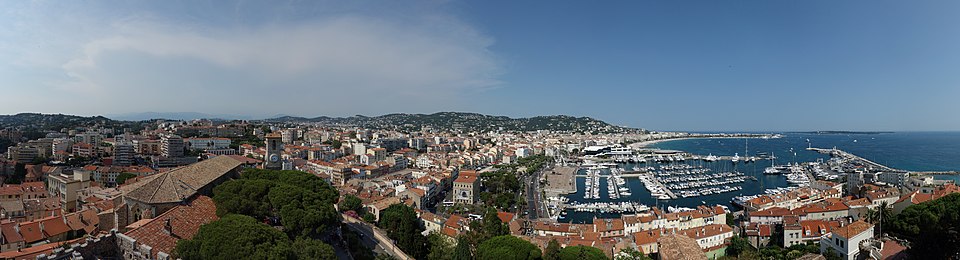
The Palais sits at the eastern end of La Croisette; the nearest certified eco-hotels cluster in three bands. Immediately west, between the Palais and Rue d'Antibes, you'll find the highest concentration of LEED and Green Key properties—ideal for delegates attending morning screenings who want a five-minute walk. The second band runs along Rue d'Antibes itself, one block inland, where mid-tier three- and four-star hotels have embraced retrofit certification to compete with seafront luxury. The third cluster lies in Le Suquet, the old quarter west of the port, where a handful of boutique conversions hold EarthCheck silver or B-Corp status and offer a quieter alternative to Croisette foot traffic.
All three areas are walkable to the Palais, but Le Suquet requires a gentle uphill return after late-night galas. Delegates prioritising carbon footprint should weigh proximity against building certification: a Green Key platinum property 800 metres away will almost certainly deliver lower lifecycle emissions than a non-certified seafront tower, even accounting for the extra walking distance. The festival's official transport partner runs electric shuttle loops, but these are sponsored vehicles and routes are not published until April.
What Certification Means in Practice
Green Key, the Foundation for Environmental Education's hospitality standard, requires annual re-audit across thirteen criteria: energy sourcing, water management, waste separation, supply-chain traceability, chemical procurement and staff training. Gold tier mandates at least 40 per cent renewable electricity, closed-loop towel and linen policies, and elimination of single-use plastics in guest-facing areas. Platinum adds greywater reuse or rainwater harvesting and third-party verification of Scope 1 and 2 emissions.
LEED (Leadership in Energy and Environmental Design) certifies the built asset rather than operations, focusing on construction materials, HVAC efficiency, daylighting and indoor air quality. A LEED Gold hotel in Cannes typically features high-performance glazing, heat-recovery ventilation and low-VOC finishes, which together reduce operational energy by 25–35 per cent against conventional builds. EarthCheck, the Australian science-based standard, sits between the two: it audits operational performance annually but also tracks embodied carbon in renovations and supply-chain emissions from food and beverage.
When choosing a hotel for the festival, look for certification logos on the property's own website—not just on booking platforms—and check the issue date. A Green Key certificate older than eighteen months suggests the property may have lapsed; LEED certification does not expire but operational performance can drift if building management changes hands.
Transit and the Last-Mile Carbon Question
Cannes sits on the main SNCF coastal line; direct TGV services from Paris Gare de Lyon take five hours twenty minutes, and regional TER trains connect to Nice, Antibes and Monaco every fifteen minutes during festival hours. The Gare de Cannes is 1.2 kilometres north-west of the Palais, a flat twenty-minute walk or a short ride on the number 8 bus, which runs on compressed natural gas and stops directly outside the venue on Boulevard de la Croisette.
Nice Côte d'Azur Airport, 27 kilometres east, is the usual air gateway. Express bus 210 runs every thirty minutes to Cannes centre (€1.50, forty-five minutes), but during the festival window expect the service to run at capacity and plan for standing room. A faster option is the airport's rail link: take the free shuttle to Nice-Saint-Augustin station, then a TER west to Cannes (€6.90, thirty-five minutes including the shuttle). Both options dramatically undercut the carbon cost of a taxi or private transfer, which will idle in La Croisette traffic during festival arrival days.
Once in Cannes, walking suffices. The Croisette stretches 2.5 kilometres from the Palais to Pointe Croisette; the old port, Forville market and Le Suquet hill all lie within a fifteen-minute radius. The city's Vélo Bleu bike-share scheme operates April through October, with stations every 300 metres, though bicycle traffic is prohibited on the red-carpet security perimeter during festival hours.
Carbon Accounting for a Festival Booking
A ten-night stay during Cannes—the typical delegate window—accumulates carbon from three sources: travel to and from the city, the hotel's operational footprint, and on-ground transport. For a UK-based traveller, the London–Cannes leg dominates. Eurostar to Paris plus TGV to Cannes totals roughly 28 kg CO₂e per person one-way (57 kg return); a direct flight from Heathrow to Nice emits approximately 180 kg CO₂e return, and a connecting flight via Paris or Amsterdam pushes past 240 kg.
Hotel operational emissions vary widely. A LEED Platinum property with 80 per cent renewable electricity and heat-recovery systems will allocate roughly 8–12 kg CO₂e per room-night (Scope 1 and 2); a non-certified property in the same postcode may allocate 25–35 kg. Over ten nights the gap is 170 kg versus 300 kg—equivalent to an extra short-haul return flight. On-ground transport adds minimally if you walk and use the bus; a week of taxis can add another 40–60 kg depending on distance and traffic.
The carbon offset embedded in every booking via app.impt.io—one tonne of UN-verified voluntary credits retired at confirmation—covers the median festival stay (rail travel, certified hotel, local bus use) approximately four times over. For higher-footprint itineraries, such as long-haul flights from North America or daily car hire, the offset covers roughly half to two-thirds, which remains materially better than uncompensated travel but highlights the importance of modal choice wherever feasible.
Extended Stays and Per-Diem Footprint Reduction
Festival delegates often arrive the day before opening night and depart the morning after the Palme d'Or ceremony, compressing ten days of screenings, markets and parties into an eleven-night booking. From a carbon perspective, stretching the trip by three or four days—arriving earlier or staying beyond the 24th—lowers the per-day travel footprint without adding significant operational emissions, because the marginal cost of an extra hotel night (8–12 kg CO₂e for a certified property) is fractional compared to the return journey.
Cannes in late May, once the festival security perimeter comes down, reverts to a quieter Riviera rhythm. The Lérins Islands, a twenty-minute ferry from the old port, offer car-free walking trails and the Cistercian abbey on Île Saint-Honorat; the Musée de la Castre in Le Suquet holds pre-Columbian and Mediterranean antiquities in a converted medieval chapel; and the Forville market resumes its everyday scale, making self-catered picnics from local vegetables and cheese a low-footprint dining alternative. Extending the stay also smooths hotel pricing: rates drop sharply after the 25th, so a three-night post-festival addition can cost less than a single peak night during the main window.
Fallback Options in Antibes and Juan-les-Pins
When Cannes-centre inventory is full—common by February for the May festival—Antibes and Juan-les-Pins, ten minutes east by TER train, offer certified alternatives. Antibes holds three active Green Key properties and one EarthCheck-certified boutique conversion in the old town, all within 800 metres of the Gare d'Antibes. The train to Cannes runs every twelve minutes during festival hours, and the journey (including platform-to-platform time) is under twenty minutes, making a morning commute to the Palais feasible.
Juan-les-Pins, the beachfront quarter south of Antibes station, skews younger and less formal; its two Green Key hotels cater to delegates attending the festival's market and buyers' events rather than the main competition screenings. Both Antibes options carry the advantage of lower baseline pricing—typically 30–40 per cent below equivalent Cannes properties during the festival window—and quieter evenings, though you surrender the ability to walk back from late-night Croisette events. The carbon cost of the daily train commute is negligible (roughly 0.4 kg CO₂e return per day), so the trade-off hinges on time and convenience rather than footprint.
Eco-certified hotels near the venue
Five Seas Hotel
5-star · 650 metres west of Palais des Festivals, Rue Notre-Dame
LEED Gold-certified boutique with rooftop solar, greywater reuse and closed-loop linen service. Modernist interiors, spa using locally sourced thalassotherapy products, and a plant-forward restaurant sourcing from Forville market.
5-star · 400 metres west of Palais along La Croisette
Green Key Platinum since 2021. Heat-recovery chillers, 55 per cent renewable electricity contract, and a waste-separation protocol audited quarterly. Belle Époque facade with contemporary energy systems behind the scenes.
5-star · Adjacent to Palais des Festivals, eastern Croisette
LEED Silver core-and-shell certification. High-performance glazing, LED throughout, and electric vehicle charging in the basement garage. Design-led interiors with low-VOC finishes and FSC-certified timber.
4-star · Le Suquet, 1 kilometre west of Palais, uphill walk
B-Corp certified boutique in a converted townhouse. Solar thermal hot water, organic linens, refillable amenity dispensers and a partnership with local zero-waste grocers. Quiet terraces overlooking the old port.
4-star · Rue Hoche, 700 metres north-west of Palais
Green Key Gold. Modular construction with low embodied carbon, heat-pump HVAC, and a no-plastic policy across all guest touchpoints. Compact rooms designed for efficiency; complimentary evening aperitif using Provençal wines.
4-star · Rue Jean Jaurès, 1.1 kilometres north of Palais
EarthCheck Silver-certified. Rainwater harvesting for garden irrigation, double-glazed retrofit, and third-party-verified carbon accounting. Quieter location one street back from the train station; reliable ten-minute walk to the venue.
3-star · Rue Félix Faure, 900 metres north-west of Palais
Green Key Gold since 2019. Family-run property with solar panels, composting partnership with a local permaculture farm, and bicycles available for guest use. Simple, clean rooms; good value during the festival peak.
EU Ecolabel certified. Low-flow fixtures, bulk-dispenser toiletries, and a linen-reuse incentive programme. Provençal-tile interiors, small courtyard garden, and walking distance to both the Palais and Forville market.
The festival opens on the evening of 14 May with the competition premiere; most delegates arrive on the 13th or morning of the 14th. Cannes hotels during this window implement strict check-in protocols—expect queues from midday onward and plan accordingly. If arriving by morning TGV, many properties offer luggage hold from 08:00, allowing you to drop bags and walk the Croisette before your room is ready. Check-out on the final day (24 May or 25 May depending on your schedule) is typically 11:00, though some certified hotels offer flexible late check-out as a loyalty perk.
Festival screenings run from 08:30 (press and industry) through to midnight galas. The Palais operates a strict accreditation system; even if you hold delegate credentials, red-carpet events require separate evening dress codes and timed entry. The security perimeter extends 200 metres around the Palais, closing Croisette pavements and beach access from 16:00 on gala nights. Walking back to a Le Suquet hotel after a 23:00 finish means a twenty-minute uphill route; factor this into your property choice if you plan to attend multiple evening events.
Cannes's public transport runs extended hours during the festival. The number 8 bus operates until 01:15 on weeknights and 02:30 Friday and Saturday, covering the Gare de Cannes–Palais–Pointe Croisette route every twelve minutes. Night buses (Noctambus lines) serve outer suburbs but are less relevant for festival delegates staying centrally. Taxis queue at designated ranks on Rue Félix Faure and outside the Palais, though availability is unpredictable during simultaneous gala finishes; ride-hailing apps work but expect surge pricing after 22:00.
For those combining the festival with pre- or post-event travel along the coast, the SNCF coastal line is the low-carbon backbone. Eastbound TER trains reach Monaco in 55 minutes, Nice in 30, Menton in 80; westbound services reach Saint-Raphaël (gateway to the Esterel massif) in 35 minutes and Marseille in two hours. All trains carry bicycles in designated carriages, and the coastal route itself—hugging the Mediterranean between tunnels—is one of Europe's most scenic rail journeys.
Frequently asked questions
Which Cannes hotels hold active Green Key or LEED certification?
As of early 2025, sixteen properties in Cannes hold Green Key Gold or Platinum status, including Hôtel Barrière Le Majestic, Okko Hotels Cannes Centre, and Hôtel Renoir. LEED-certified properties include Five Seas Hotel (Gold), Mondrian Cannes (Silver), and the newly renovated JW Marriott Cannes (Core & Shell). EarthCheck and EU Ecolabel certifications are held by smaller boutique hotels; check the property's own website for current certification badges and issue dates, as third-party platforms do not always reflect lapses.
How does the 1-tonne carbon offset work on my booking?
Every confirmed reservation via app.impt.io triggers the retirement of one tonne of UN-verified voluntary carbon credits (typically Gold Standard or Verra-registered renewable-energy or forestry projects). Retirement happens at booking confirmation and is recorded on an immutable ledger; you receive a digital certificate with the project name and serial-number range. One tonne covers the median Cannes festival stay—rail travel from the UK, ten nights in a certified hotel, local bus and walking—approximately four times over. For long-haul flights or non-certified properties, the offset covers a smaller fraction but remains additional to any airline schemes.
Is it better to stay in Cannes centre or fallback to Antibes for lower environmental impact?
From a pure carbon-accounting perspective, a Green Key Platinum property in Cannes centre delivers lower lifecycle emissions than a non-certified hotel in Antibes, even accounting for the daily train commute (which adds roughly 0.4 kg CO₂e return per day). If Cannes-centre certified inventory is full, however, a certified Antibes property plus the train commute will outperform a non-certified Cannes fallback. The real trade-off is convenience and time: Antibes works well for market and buyers' delegates who don't need to attend every evening screening, less so for press or competition jury members with unpredictable schedules.
What public transport runs between Nice airport and Cannes during the festival?
Express bus 210 runs every thirty minutes from Nice Côte d'Azur Terminal 1 and 2 to Cannes Gare routière (€1.50, forty-five minutes), though expect standing-room capacity during festival arrival days. A lower-carbon and often faster option is the airport's rail link: take the free T2 shuttle to Nice-Saint-Augustin station, then board any westbound TER to Cannes (€6.90, twenty to twenty-five minutes train time plus ten-minute shuttle). Both options beat a taxi on emissions by roughly 90 per cent and avoid Croisette traffic, which can add thirty minutes to a road transfer during festival hours.
Can I cycle between my hotel and the Palais during the festival?
Cannes's Vélo Bleu bike-share scheme operates throughout the festival, with stations on Rue d'Antibes, near the Gare de Cannes, and at Pointe Croisette. However, the red-carpet security perimeter prohibits bicycles on Boulevard de la Croisette and adjacent streets from 16:00 on gala evenings, so you may need to lock up 300–400 metres away and walk the final stretch. For daytime industry screenings and market access, cycling is viable and low-carbon; for evening events, expect to combine bike and walking or simply walk the full route.
How much do hotel rates climb during the festival window?
Cannes hotel pricing during 14–24 May is the highest of the year on the Côte d'Azur. Expect certified properties on or near La Croisette to command a 200–350 per cent premium over April or June rates, with minimum stays (often seven to ten nights) enforced. Three- and four-star properties one or two streets inland offer better value, typically 150–200 per cent of shoulder-season pricing. Rates drop sharply on 25 May; extending your stay by three or four post-festival nights can cost less in aggregate than shortening the booking, and the per-day carbon footprint falls because the travel component is amortised over more nights.
What does EarthCheck certification audit that Green Key does not?
EarthCheck, developed by Australia's Sustainable Tourism Cooperative Research Centre, includes supply-chain Scope 3 emissions in its annual benchmarking—specifically food and beverage procurement, laundry services and waste haulage—whereas Green Key focuses on on-site operations (Scope 1 and 2 energy, water, waste). EarthCheck also tracks embodied carbon in renovations and capital expenditure, making it a stronger indicator of lifecycle impact for properties undergoing frequent refurbishment. Both are credible; EarthCheck is rarer in France (only a handful of Riviera properties hold it), so when you encounter the certification it often signals a serious institutional commitment rather than a compliance exercise.
Are there car-free day trips from Cannes that avoid adding to my footprint?
The Lérins Islands, twenty minutes by ferry from Cannes old port, are car-free and offer walking trails, Cistercian monastery tours on Île Saint-Honorat, and beach coves on Île Sainte-Marguerite. Ferries run hourly; round-trip tickets are €15–17. For a mainland option, take the TER east to Antibes (twelve minutes) and walk the Cap d'Antibes coastal path, a six-kilometre loop with negligible elevation and no vehicle access. Both trips add fewer than 2 kg CO₂e per person and provide a low-stimulus break from festival intensity.
Will I pay the same price booking via IMPT as booking direct with the hotel?
Yes. The rate you see on app.impt.io matches the hotel's publicly available direct rate (often called the Best Available Rate or BAR). IMPT earns a commission from the property—standard practice in hotel distribution—and uses that commission to fund the 1-tonne carbon offset and the 5 per cent Goodness rewards credited to your account. You are not surcharged; the hotel pays the same net commission it would pay to any other distribution channel, but the economics are redirected toward verified carbon retirement rather than shareholder profit.
Can I cancel or modify a Cannes festival booking without penalty?
Most properties listed on app.impt.io offer free cancellation up to seven or fourteen days before check-in, though a minority of festival-window bookings carry stricter policies due to the event's compressed demand. The cancellation deadline is stated clearly at the time of booking and in your confirmation email. If you cancel within the free window, the 1-tonne carbon offset already retired is not reversed—it remains a permanent atmospheric benefit—but the 5 per cent Goodness rewards are not awarded until after a completed stay. For modifications (date or room-type changes), contact the property directly or via the app; flexibility depends on inventory and the hotel's internal policy.
How early should I book for Cannes Film Festival 2026?
Certified eco-hotels within walking distance of the Palais typically sell out by late February or early March for the May festival. If your dates are confirmed and you want first choice of Green Key or LEED properties, booking in January or early February is prudent. Pricing does not usually escalate further once inventory tightens—hotels set their festival rates in autumn and hold them—but room categories (size, view, floor) disappear quickly. Fallback options in Antibes and Juan-les-Pins remain available longer, often into April, though certified properties in those towns also tighten by mid-March.
Cannes in mid-May represents European cinema at its most concentrated, and the host city's decade-long shift toward verifiable eco-certification means that choosing a low-carbon stay no longer requires compromise on location or experience. Whether you are attending market screenings, covering the competition for press, or simply drawn by the confluence of film and Riviera light, the combination of Green Key and LEED properties within the festival perimeter, reliable coastal rail, and embedded carbon offsetting delivers one of the lowest-footprint routes to a major cultural event. Book early, choose certification deliberately, and consider extending the stay beyond the closing ceremony—the per-day carbon cost falls, the crowds disperse, and the city's quieter character emerges once the red carpets are rolled away.
Same price as the big OTAs — IMPT retires 1 t UN-verified CO₂ per booking from our commission. 5% Goodness rewards.