Sustainable Travel · Italy
Eco Hotel a Sicily — Your 2026 Guide to Soggiorni Sostenibili
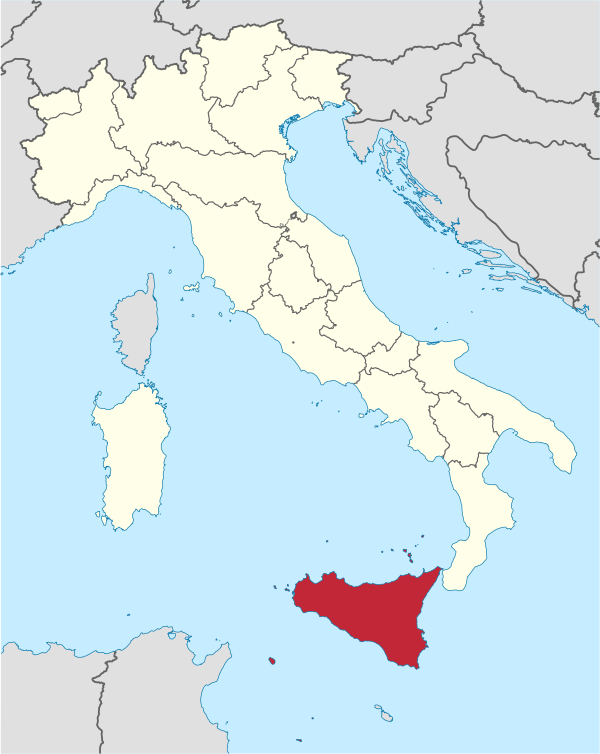
Sicily is the largest island in the Mediterranean and one of the most layered places on Earth. Every civilisation that crossed this sea left its fingerprints here — Phoenician salt pans still harvest sea salt at Trapani, Greek temples at Agrigento stand more complete than most in Greece itself, Arab-Norman churches in Palermo fuse Byzantine mosaics with Islamic geometric arches, and Baroque towns rebuilt after the 1693 earthquake created an entire UNESCO-listed architectural movement in the Val di Noto. At the island's heart sits Mount Etna, Europe's tallest and most active volcano at 3,357 metres, its fertile slopes producing some of Italy's most exciting wines from vineyards planted in black volcanic soil at altitudes where grapes have no business thriving. Sicily is a destination where 3,000 years of history collide with raw natural power — and when you book through IMPT, every single night removes 1 tonne of UN-verified CO₂ from the atmosphere, 28 times more than your stay produces, at rates stesso prezzo di Booking.com o migliore.
Why Sicily for Sustainable Travel
Sicily holds seven UNESCO World Heritage Sites — more than most entire countries. The Valley of the Temples at Agrigento preserves a row of Doric temples from the 5th century BC, including the Temple of Concordia, one of the best-preserved Greek temples anywhere in the world. Palermo's Arab-Norman itinerary — the Cappella Palatina, the Cathedral, the Zisa palace — represents a unique period when Christian, Muslim, and Byzantine craftsmen worked together to create buildings of staggering beauty under Norman rule. The eight Baroque towns of the Val di Noto, rebuilt after the catastrophic earthquake of 1693, represent what UNESCO calls "the culmination and final flowering of Baroque art in Europe."
Mount Etna, itself a UNESCO site since 2013, is not just a geological spectacle but an ecological one. Its slopes host over 1,000 plant species across distinct altitude bands — from citrus groves and olive terraces at the base, through chestnut and birch forests, to the endemic Astragalus siculus that somehow survives in lava fields above 2,500 metres. The Parco dell'Etna, established in 1987, protects 59,000 hectares of this volcanic ecosystem. The vineyards on Etna's north slope — around Randazzo, Passopisciaro, and Linguaglossa — produce Nerello Mascalese wines from pre-phylloxera vines growing in mineral-rich volcanic soil, making the Etna DOC one of the most celebrated wine regions in 2026.
Sicily's food culture is a sustainability story in itself. The island is Italy's largest agricultural producer of citrus, olive oil, almonds, and pistachios — the bright green pistachios of Bronte, grown on Etna's western slopes, are protected by DOP status and considered among the world's finest. Trapani's salt pans, worked since Phoenician times, still use wind-powered mills to evaporate seawater into sea salt. The Modica chocolate tradition, brought by the Spanish from the Aztecs, uses a cold-processing method that requires no conching machines or industrial heat — just cacao, sugar, and a stone metate, exactly as it was made in the 16th century.
IMPT gives you Sicily at the same nightly rate — or up to competitively priced — than Booking.com. The difference? IMPT retires 1 tonne of verified carbon credits on-chain for every booking. No green premium. No feel-good certificate. Real, auditable carbon removal funded from our commission. Search Sicily hotels now →
Best Areas for Eco-Conscious Stays in Sicily
Palermo — The Chaotic Capital
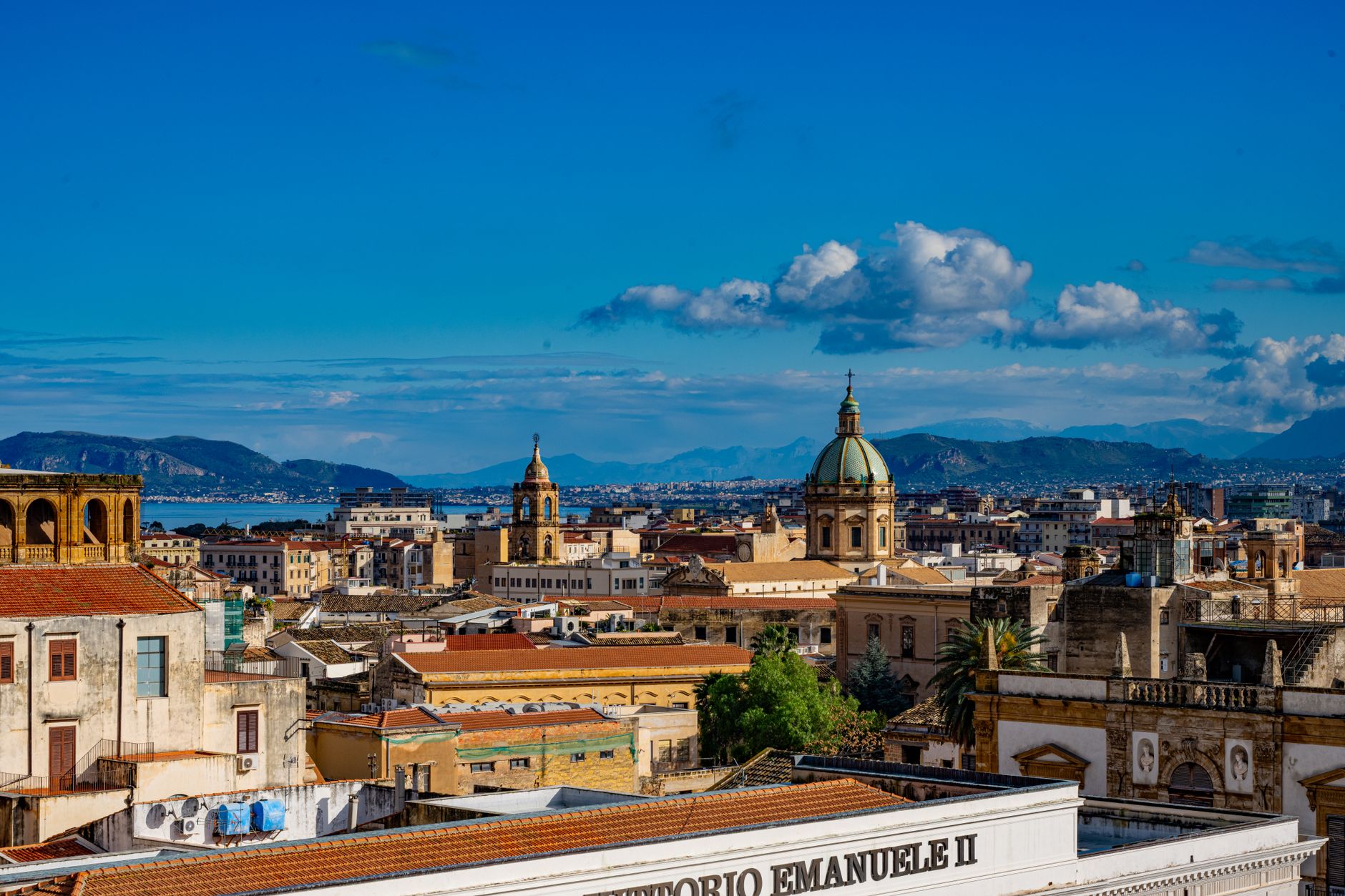
Palermo is loud, layered, and utterly unlike any other Italian city. The historic centre — compressed into the four quarters of Kalsa, Albergheria, Vucciria, and Capo — is entirely walkable and home to three of the island's UNESCO sites. The Ballarò and Vucciria street markets, running continuously since the Arab period, are living demonstrations of zero-waste food culture: nothing is discarded, everything is used. Hotels in the centro storico range from converted 17th-century palazzi to affordable guesthouses in restored Arabic-quarter buildings. Palermo has good public transport, including a modern tram system, and the central train station connects directly to the airport.
Taormina & Etna's Northern Slopes
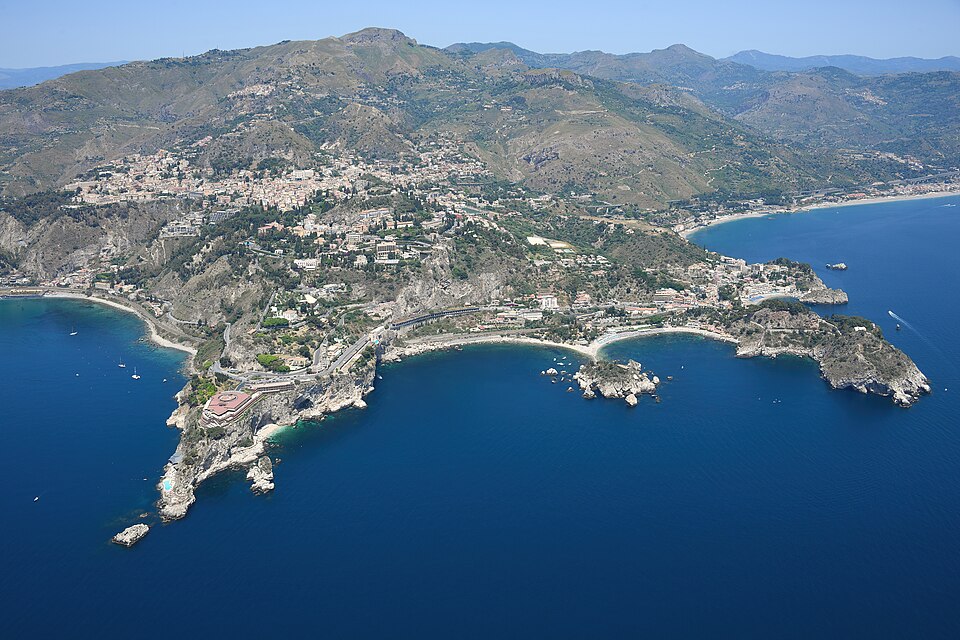
Taormina's Greek Theatre, carved into a cliff above the Ionian Sea with Etna as a backdrop, is one of the most photographed views in Italy. The town itself is small, pedestrianised along its main Corso, and reachable by bus or the Taormina-Giardini train station below. For something more immersive, stay in one of the agriturismos on Etna's northern slopes — villages like Linguaglossa and Randazzo sit among vineyards and chestnut forests at 600–800 metres, offering volcanic hiking and winery visits without the resort-town prices of Taormina. The Circumetnea railway, a narrow-gauge train circling the volcano's base, connects these villages to Catania without a car.
Val di Noto — The Baroque Triangle
Noto, Modica, Ragusa Ibla, and Scicli form a constellation of Baroque towns in Sicily's southeast corner, all UNESCO-listed, all built from the same warm honey-coloured limestone. Ragusa Ibla — the old town perched on a hilltop — is one of Sicily's most atmospheric places to spend a night, with baroque churches illuminated against the evening sky and restaurants serving ragusano DOP cheese and Modica chocolate in candlelit courtyards. Hotels here are often restored palazzi with thick stone walls that stay cool without air conditioning. Regioneeal buses connect the Val di Noto towns, though schedules require patience.
The Aeolian Islands — Volcanic Archipelago
The seven Aeolian Islands — Lipari, Vulcano, Salina, Stromboli, Panarea, Filicudi, and Alicudi — are a UNESCO site of extraordinary volcanic beauty. Stromboli's persistent eruptions, visible from the sea every 15–20 minutes after dark, are one of nature's most reliable spectacles. Salina, the greenest island, produces the renowned Malvasia delle Lipari dessert wine and capers that grow wild on volcanic stone walls. Accommodation is small-scale by necessity — family-run pensioni and boutique hotels, most without cars (Panarea, Stromboli, and Alicudi are car-free). Hydrofoils from Milazzo connect the islands year-round.
City Guides — Erice & Monreale
Two of Sicily's most rewarding overnight towns sit close to Palermo and Trapani. Perched at 751 metres above the Tyrrhenian coast, Erice is a medieval hilltop labyrinth with a Norman castle, the Balio Gardens and views over the salt pans and Egadi islands — reachable by cable car from the coast. Just south of Palermo, Monreale holds the greatest treasure of Norman Sicily: a cathedral covered in golden mosaics, with a cloister of 228 carved columns and a belvedere over the Conca d'Oro.
How IMPT Makes Your Sicily Stay Carbon-Negative
Una notte media in hotel produce circa 35 kg of CO₂ — from air conditioning, laundry, lighting, and food service. When you book any Sicily hotel through IMPT, we retire 1,000 kg of UN-verified carbon removal credits. That's 28 times what your stay produces. Not carbon neutral — carbon-negative.
The cost to you? Zero. IMPT funds the removal from its booking commission. You pay the standard nightly rate — in fact, IMPT is consistently stesso prezzo di Booking.com o migliore on the same room. The carbon credits are tokenised on Ethereum, retired against a named project, with a public retire code anyone can verify. No double-counting. No greenwashing. Just verified carbon removal, every night.
- €5 di credito gratuito when you sign up — applied to your first Sicily booking
- 5% back on every stay — 3% funds carbon projects, 2% as travel credit
- 8M+ hotels worldwide, 195 countries — Sicily is just the start
- Cancellazione gratuita on most rates, typically up to 48 hours before check-in
Sustainable Cosa Fare a Sicily
Hiking Mount Etna is Sicily's defining outdoor experience. The volcano is accessible from the Rifugio Sapienza on the south side (reachable by bus from Catania) or the Piano Provenzana on the north. Guided summit excursions take you above 3,000 metres into a lunar landscape of smoking craters and solidified lava rivers. Lower-altitude trails through the Etna Park — particularly the Sentiero Altomontana, a 35-kilometre path circling the volcano at around 1,800 metres — pass through ancient birch forests and lava caves without requiring technical climbing.
In Palermo, the Ballarò market walk is an education in sustainable food culture. Vendors sell arancine (deep-fried rice balls) made that morning, panelle (chickpea fritters) fried in the same style since the Arab period, and sfincione (Palermo's thick-crust pizza topped with onion, anchovy, and breadcrumbs) from bakeries that haven't changed recipes in generations. Everything is local, seasonal, and sold without packaging. The Cappella Palatina, just steps from the market, houses what are arguably the finest Byzantine mosaics in existence — an entire interior covered in gold tesserae depicting Biblical scenes under a painted Islamic muqarnas ceiling.
The Valley of the Temples at Agrigento is best visited at dawn or sunset, when the Doric columns cast long shadows across the olive groves and the tour groups have thinned. The almond trees between the temples bloom in late January and early February, celebrated with Agrigento's annual Sagra del Mandorlo in Fiore — one of Sicily's oldest festivals.
After exploring, shop through IMPT's 25,000+ retail partners for up to cashback on Italian fashion, travel accessories, and sustainable products — every purchase offsets additional carbon. Send someone a trip credit gift so they can discover Sicily themselves, or pick up carbon vouchers to offset a friend's flight to Palermo or Catania. Want to understand your environmental impact better? Try IMPT's AI assistant for personalised insights.
Aziende Travel to Sicily? IMPT Has You Covered
Sicily is an increasingly popular destination for corporate retreats, incentive travel, and team offsites — Taormina's combination of history, scenery, and excellent dining makes it a natural choice for high-end events, while Palermo offers more affordable group rates with richer cultural programming. IMPT's B2B Aziende Travel platform provides access to exclusive business rates, automatic ESG reporting across Scope 1, 2 and 3, and a single dashboard tracking every booking's carbon impact.
The Starter plan is free — no setup cost, no integration needed. Business plans at $99/month add department labels, corporate invoicing, and an extra 5% hotel discount. Enterprise plans at $250/month include dedicated account management and custom API integration. For companies with CSRD compliance requirements, IMPT's automated sustainability reporting documents every tonne removed — ready for your next ESG audit. Explore the verified carbon projects that your team's bookings support.
Own the IMPT Franchise in Italy
Italy receives over 60 million international tourists annually and is Europe's fourth-largest outbound travel market. Sicily alone is Italy's fifth-most-visited region. IMPT Country Ownership lets you become the sole IMPT representative in Italy — earning 50% of every IMPT transaction from Italian-registered users, for life. With 8% APY staking yield over two years and a transferable digital asset you can pass on or resell, it's a sustainability business opportunity matched to one of the world's most travel-passionate nations. Learn more about IMPT's Goodness initiative driving environmental change across the travel industry. Book a call with the rollout team →
Domande Frequenti
Are hotel ecologici in Sicily more expensive?
No. IMPT hotels in Sicily cost the same as — or the same as — Booking.com for the identical property. The 1-tonne carbon removal per booking is funded entirely from IMPT's commission, not added to your room rate. You pay no green premium. New members also receive a €5 di credito di benvenuto applied to their first booking.
How does carbon neutral hotel booking work in Sicily?
When you book a Sicily hotel through IMPT, 1 tonne (1,000 kg) of UN-verified CO₂ is physically removed from the atmosphere — funded from IMPT's booking commission. A typical hotel night generates about 35 kg of CO₂. IMPT removes nearly 28 times that amount. The removal credits are tokenised on Ethereum's blockchain and retired with a verifiable receipt — real accountability, not a marketing claim.
What is the best area to stay in Sicily for sustainable travel?
Palermo's walkable historic centre puts you in the heart of Sicily's largest city with Arab-Norman UNESCO sites, vibrant street food markets, and no need for a car. Taormina offers a compact hillside town with bus connections and train access to Catania. The Val di Noto — including Ragusa, Modica, and Noto — is a cluster of UNESCO Baroque towns connected by regional buses. For volcanic landscape immersion, stay on the slopes of Mount Etna in one of the agriturismos surrounded by vineyards growing at 1,000+ metres altitude.
Can I visit Sicily without a car?
Yes, though it requires some planning. Trenitalia connects Palermo, Catania, Messina, Syracuse, and Taormina by rail. AST and Interbus run coaches between smaller towns. Ferries and hydrofoils connect the Aeolian Islands, Pantelleria, and the Egadi Islands to the mainland. Within Palermo and Catania, public transport, walking, and cycling cover most needs. For the interior and Val di Noto, occasional bus services or shared transfers are the car-free option.
How much can I save booking Sicily hotels through IMPT?
IMPT rates are consistently stesso prezzo di Booking.com o migliore on the same Sicily property. New members receive a €5 di credito di benvenuto. You earn 5% back on every stay — 3% funding verified carbon projects and 2% as travel credit for future bookings. Sicily's excellent value compared to northern Italy means these savings stretch even further, especially in shoulder season (April–May, October–November).
← Back to Italy Eco-Hotels · Browse All Countries · Aziende Travel · Gift a Trip · Carbon Vouchers
📱 Daily hotel deals on Telegram
Join @IMPThotels →Eco Hotels
Showing 12 eco-friendly hotels. Book on IMPT — the same price as Booking.com.