

Sustainable Travel · Italy
Eco Hotel a Calabria — Your 2026 Guide to Soggiorni Sostenibili
Calabria occupies the toe of Italy's boot, a sun-scorched peninsula between the Tyrrhenian and Ionian seas that remains one of Europe's most underexplored corners. Here, two coastlines collide with three national parks: the Aspromonte Massif rising to 1,955m inland, the Sila plateau carpeted in ancient Calabrian pines, and the spectacular Pollino range straddling the border with Basilicata. Tropea — the region's jewel — sits on a sheer volcanic cliff above a turquoise sea so clear the sand turns golden in its reflection. Scilla's Norman castle, perched above the Strait of Messina, marks the site of Homer's mythical Charybdis. And in Reggio Calabria's national museum reside the Bronzes of Riace — two 5th-century BC Greek warrior statues recovered from the Ionian seabed, ranked among the finest surviving works of ancient Greek sculpture. Book via IMPT for carbon-negative stays in this unspoiled corner of southern Italy.
Tropea & the Costa degli Dei
Tropea is the single most photographed place in Calabria: a medieval town perched on a sheer volcanic cliff face 36 metres above a white-sand beach with waters of an improbable blue. The Sanctuary of Santa Maria dell'Isola — a church on a sea rock reached by a long stone staircase — appears on virtually every image of southern Italy. The town's covered market sells the region's most celebrated product: the cipolla rossa di Tropea IGP — a sweet red onion with protected geographic status, prized by Italian chefs nationwide for its mildness and complex flavour.
South of Tropea, Capo Vaticano has some of Calabria's clearest water and least-developed coastline. North, Pizzo sits on a cliff above a small fishing harbour and is the birthplace of tartufo di Pizzo — a chocolate and hazelnut ice cream bomb invented here in the 19th century, now found across Italy. The stretch from Pizzo south through Tropea to Capo Vaticano is the Costa degli Dei (Coast of the Gods) — a name that understates nothing. Water temperatures reach 26°C in July and August; the Tyrrhenian here is genuinely transparent to 10 metres depth from the shore.
🏛️ The Sanctuary of Santa Maria dell'Isola (Tropea) is built directly on a sea rock — one of Italy's most dramatic Christian sites. Free to visit. Open daily.
Three National Parks: Aspromonte, Sila & Pollino
Calabria's interior is one of Italy's last genuine wildernesses. Aspromonte National Park, covering the southern tip of the Apennines, protects wolves, golden eagles, and rare Bonelli's eagles in landscapes that feel pre-industrial. Its highest peak, Montalto (1,955m), offers views across to Sicily and the Aeolian Islands. The park's river gorges — fiumare — are dramatic dry riverbeds in summer that transform into torrents after autumn rains, carving through ancient metamorphic rock.
The Parco Nazionale della Sila, one of Italy's earliest forest parks (established 1968), protects silver firs, black pines, and wolves reintroduced after local extinction in the 1980s. The Sila Piccola area around Lake Arvo offers mountain biking in summer and Nordic skiing in winter. Pollino National Park — Italy's largest, 192,000 hectares — straddles the Calabria-Basilicata border. Its ancient pino loricato (Bosnian pine) trees, some over 1,000 years old, are among Europe's most ancient living organisms and a UNESCO Biosphere Reserve designation species.
- Aspromonte: wolves, golden eagles, river gorges, sea-to-summit views
- Sila Plateau: ancient forest, freshwater lakes, wolf reintroduction zone
- Pollino: Italy's largest national park, ancient pines, limestone canyons
Culture, Food & the Bronzes of Riace
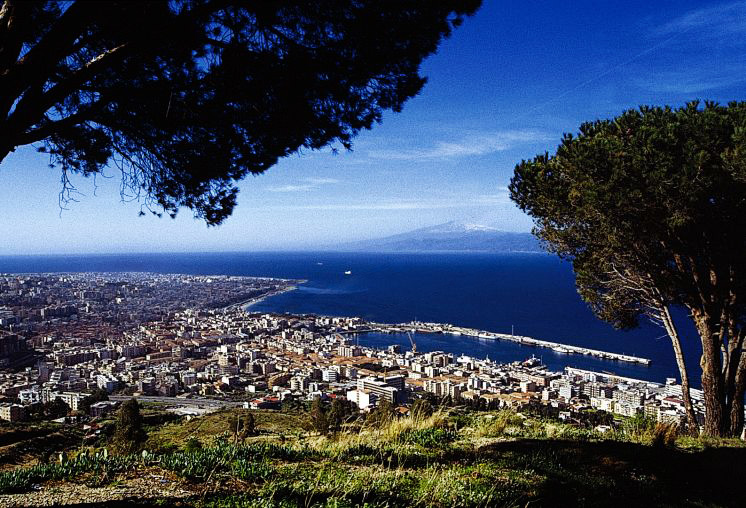
Reggio Calabria, Calabria's largest city, sits on the Strait of Messina with a direct view of Sicily — close enough to read the names of passing boats. The Museo Nazionale della Magna Graecia houses the Bronzes of Riace: two full-size Greek warrior statues cast around 460–450 BC, discovered by snorkelling teacher Stefano Mariottini in 1972 at just 8 metres depth. These are among the most perfectly preserved ancient bronzes in existence — the original Greek pupils and eyelashes survive intact, the lips inlaid with copper. The museum is one of Italy's most undervisited world-class destinations.
Calabrian cuisine deserves far greater recognition. 'Nduja (spreadable spicy pork salami from Spilinga, near Tropea) has become Italy's trendiest ingredient. Bergamot grows only on a narrow strip of Calabrian coast near Reggio — 95% of the world's supply comes from here — and is used in Earl Grey tea, Chanel No. 5, and the local liquore al bergamoto. Gerace, an almost entirely intact Byzantine-Norman hill town accessible only by a steep mountain road, and Rossano — home of the Codex Purpureus Rossanensis (a 6th-century illustrated Gospel) — are cultural treasures routinely missed by Italy's northern-focused tourist infrastructure.
How IMPT Makes Your Calabria Stay Carbon-Negative
Una notte media in hotel produce circa 35 kg of CO₂. When you book any Calabria hotel through IMPT, we retire 1,000 kg of UN-verified carbon removal credits on Ethereum — 28 times your stay's footprint. Zero extra cost: IMPT funds removal from its booking commission. Same price as Booking.com on the same room.
- €5 di credito gratuito when you sign up — applied to your first Calabria booking
- 5% back on every stay — 3% funds certified carbon projects, 2% travel credit
- 8M+ hotels worldwide in 195 countries
- Cancellazione gratuita on most rates, up to 48 hours before check-in
For corporate travel to Calabria — conferences in Reggio, team retreats in the Sila, or filming locations in Tropea — IMPT's B2B Aziende tier includes automatic CSRD/ESG reporting from €0/month. Gift a Calabria trip with IMPT Trip Credit, or explore cashback shopping through IMPT's 25,000+ retail partners.
Domande Frequenti — Calabria
When is the best time to visit Calabria?
June–September for coastal tourism: sea temperatures reach 26°C and Tropea is at its most photogenic in July and early August light. May and October are ideal for hiking in Aspromonte, Sila, and Pollino — cool enough for the mountains, still warm at sea level. Easter week sees extraordinary processions in Catanzaro, Crotone, and other historic towns. Avoid peak August if you dislike crowds; Tropea, in particular, gets very busy.
How do you get to Tropea?
The nearest airport is Lamezia Terme (SUF), served by Ryanair, easyJet, and Italian carriers from most European hubs. Tropea is 70km south by car (1 hour) or by direct Trenitalia train on the Reggio–Lamezia coastal line (40 minutes, several daily). Car hire from Lamezia is strongly recommended for exploring the coast and national parks. Alternatively fly into Reggio Calabria (REG) airport for southern Calabria, or Rome/Naples and connect by overnight train.
What are the must-see sites in Calabria beyond Tropea?
The Bronzes of Riace in Reggio's Museo Nazionale are world-class — among the finest surviving ancient Greek bronzes, displayed in a custom climate-controlled room. Scilla (Norman castle, Homer's Charybdis). La Cattolica di Stilo (10th-century Byzantine church in near-perfect condition). Gerace (intact medieval hill town, extraordinary Norman cathedral). Aspromonte National Park. The Greek ruins of Locri Epizefiri (one of Magna Graecia's most extensive archaeological sites on the Ionian coast).
Is Calabria safe for tourists?
Yes — unequivocally. Calabria's negative reputation lags decades behind reality. It is a safe, hospitable region where tourist areas along the coast and in national parks are genuinely welcoming. The organised crime issue is hyperlocal and has no bearing on visitor experience. Italian domestic tourism to Calabria has grown significantly every year since 2015 precisely because it offers authentic southern Italy at a fraction of the cost and crowds of Puglia, Amalfi, or Sicily.
How does IMPT work when booking a Calabria hotel?
Search 8M+ hotels across Tropea, Scilla, Reggio Calabria, Pizzo, Palmi, and the Sila/Aspromonte mountain towns on IMPT. Every booking retires 1 tonne CO₂ on Ethereum — 28× what a hotel night produces. Same price as Booking.com. Earn 5% back on every stay (3% to certified carbon causes, 2% as travel credit). I nuovi membri ricevono €5 free signup credit immediately applied to first booking.
← Back to Italy Eco-Hotels · Browse All Countries · Aziende Travel · Gift a Trip · Carbon Vouchers